

How to Start a Reflection Paper: A Complete Guide to Reflection Papers and Reflective Writing
Reflective writing is an essential component of academic learning and professional development, providing a structured approach to examining experiences, evaluating personal responses, and developing a deeper understanding of different situations. Unlike traditional academic essays that primarily focus on presenting information, explaining concepts, or supporting arguments with evidence, a reflection paper encourages writers to examine their thoughts, feelings, decisions, and lessons gained from particular experiences, readings, or academic concepts. It goes beyond describing what happened by exploring why an experience was significant, how it influenced existing ideas or assumptions, and what could be learned or approached differently in the future. Through this process, reflection papers connect personal experiences with theoretical knowledge, helping writers develop critical thinking, self-awareness, analytical skills, and the ability to apply lessons from previous situations to new circumstances.
In nursing education and professional practice, reflective writing is particularly valuable because healthcare professionals regularly encounter situations that require sound judgment, effective communication, ethical awareness, and continuous learning. Reflecting on clinical experiences allows nurses to examine their decisions, evaluate the quality of their interactions with patients, and recognize how their knowledge and actions influence patient care. For example, a nurse who experiences difficulty communicating with an anxious patient may reflect on the circumstances surrounding the interaction, the communication techniques used, the patient’s response, and the factors that may have affected the outcome. This type of experiential reflection helps identify areas of strength and opportunities for improvement while encouraging the application of theoretical knowledge to practical situations. Similarly, reflecting on medication administration, teamwork, patient safety incidents, or ethical dilemmas can provide valuable insights into clinical judgment, professional responsibilities, and evidence-based practice. Reflection is therefore not simply an account of personal experiences; it is a process of examining those experiences critically to understand their significance and identify meaningful lessons.
Learning how to start a reflection paper is an important part of this process because the introduction establishes the subject being examined and provides direction for the rest of the essay. A well-developed opening paragraph introduces the experience, text, or concept under discussion, provides sufficient background information, and establishes the central reflection that guides the paper. It also helps distinguish a reflective essay from a general description or summary by indicating the particular insight, question, or lesson that the discussion will explore. Since a reflection paper requires a balance between personal interpretation and analytical discussion, the opening should communicate the writer’s main idea without attempting to explain every aspect of the experience. A clear thesis statement or central reflection gives the paper focus, while the subsequent body paragraphs provide an opportunity to examine specific events, personal reactions, relevant theories, and lessons learned.
Developing an effective reflection essay also involves understanding how its different components work together. Before beginning to write, it is important to understand the assignment requirements, identify an appropriate experience or subject, record initial observations, and determine the main insight to explore. The approach may differ depending on the type of reflection paper being written. For instance, a personal experience reflection may focus on an event and its influence on personal beliefs, while an academic or text-based reflection may examine how a reading, theory, or classroom concept challenges or reinforces existing knowledge. Professional and clinical reflection papers, on the other hand, often require a closer examination of decisions, professional conduct, patient interactions, and the relationship between theory and practice. Regardless of the type, effective reflective writing requires more than simply expressing thoughts and opinions; it involves examining experiences, supporting interpretations with relevant examples, and demonstrating how reflection contributes to deeper understanding.
A strong reflection paper therefore combines personal insight, critical analysis, and a clear academic structure. Its effectiveness depends on the writer’s ability to move beyond describing an experience and examine what it means, why it matters, and how the lessons gained can influence future actions. By developing these skills, reflective writing can help strengthen academic performance, improve professional awareness, and encourage continuous development in nursing and other disciplines.
Understanding Reflection Papers and Their Purpose
A reflection paper is a form of academic writing that examines an experience, observation, reading, or situation to develop a deeper understanding of its meaning and significance. Rather than simply presenting information or recounting events, it requires the writer to examine personal responses, evaluate decisions, question existing assumptions, and identify lessons that can inform future thinking or actions. The process involves connecting individual experiences with relevant knowledge, theories, concepts, and evidence to explain how an event influenced one’s understanding of a particular subject. Although personal opinions and experiences are central to this form of writing, they must be supported by thoughtful analysis and a clear explanation of the insights gained.
In academic settings, reflection papers are used to assess how well individuals can interpret information, relate theoretical concepts to practical situations, and recognize changes in their understanding. An assignment may require reflection on a classroom discussion, textbook chapter, research article, clinical placement, group activity, or professional encounter. For example, after studying infection prevention, a writer may reflect on observing hand hygiene practices in a healthcare facility. Instead of simply describing the procedures observed, the discussion would examine why hand hygiene is important, how healthcare professionals’ practices influence infection prevention, and whether the observations reinforced or challenged previously held assumptions about patient safety.
A reflection paper is an essay, but it follows a different approach from many traditional academic assignments. While a conventional research paper generally emphasizes investigating a topic, presenting findings, and supporting an argument with published evidence, reflective writing places greater emphasis on personal interpretation and learning. It allows the writer to use personal pronouns such as “I,” “my,” and “me” when discussing experiences, thoughts, and reactions. However, this personal perspective does not mean that the writing should be informal, unstructured, or based entirely on emotions. A well-developed reflection combines personal observations with academic reasoning, relevant evidence, and critical evaluation.
The purpose of reflection extends beyond completing an academic assignment. It provides a systematic way of examining how knowledge is acquired, how decisions are made, and how experiences influence personal and professional development. In nursing, this is particularly important because healthcare practice involves continuous learning, complex clinical decisions, ethical responsibilities, and interactions with individuals from different backgrounds. Reflecting on these experiences allows nurses to examine their actions, recognize areas requiring improvement, and consider how theoretical knowledge can be applied more effectively in clinical practice.
For instance, consider a situation in which a nurse has difficulty communicating with a patient who refuses a prescribed medication. A descriptive account might explain that the patient declined the medication and that the nurse informed the supervising clinician. A reflective discussion would go further by examining the possible reasons for the refusal, the nurse’s communication approach, the patient’s right to make informed decisions, and the ethical principles involved. It would also consider whether additional education, active listening, or a different communication strategy could have improved the interaction. This demonstrates how reflection transforms an ordinary clinical encounter into an opportunity for professional learning.
Understanding the purpose and characteristics of reflection papers is important before beginning to write because it determines the depth, direction, and organization of the discussion. It helps distinguish meaningful reflection from simple storytelling and establishes the expectation that personal experiences should be examined rather than merely reported. Several features contribute to an effective reflection essay, including personal engagement, critical analysis, the integration of relevant knowledge, and the identification of meaningful learning outcomes.
Characteristics of a Reflection Essay
A reflection essay has several distinctive characteristics that differentiate it from other forms of academic writing. Although its structure may resemble a conventional essay, its content focuses on examining experiences, interpreting personal responses, and explaining how particular events or ideas contribute to learning. The writer is expected to demonstrate an understanding of the subject while showing the ability to evaluate personal perspectives and connect individual experiences with broader academic or professional knowledge.
The following characteristics are particularly important:
1. Personal Perspective and Self-Examination
One of the defining characteristics of a reflection essay is its emphasis on the writer’s personal perspective. Unlike assignments that require an entirely objective discussion, reflective writing allows individuals to examine their own experiences, thoughts, feelings, beliefs, and reactions. The writer can explain what they observed, how they responded, what they initially believed, and whether their understanding changed after examining the situation more closely.
Writing in the first person is generally acceptable because the subject of reflection often involves personal experiences. Expressions such as “I realized,” “I observed,” “I initially believed,” and “I learned” help communicate the writer’s involvement in the experience. However, personal perspective should be used purposefully rather than turning the assignment into an informal diary entry.
For example:
- Simple personal account: “I was nervous when I had to communicate with a patient about a medical procedure.”
- Reflective account: “I initially felt nervous when explaining the procedure to the patient because I was uncertain about how to address their concerns. However, the interaction helped me recognize the importance of clear communication, active listening, and providing information at a pace the patient could understand.”
The second example demonstrates self-examination because it identifies an emotional response, explains the circumstances surrounding it, and establishes what was learned from the experience.
2. Critical and Analytical Examination
A reflection essay requires more than expressing feelings or describing personal experiences. It involves examining the reasons behind particular events, evaluating the decisions made, and considering the factors that influenced the outcome. This analytical approach helps the writer develop a deeper understanding of an experience instead of accepting their initial interpretation without question.
For example, when reflecting on a medication administration experience, a writer should not simply state that the correct medication was administered. A more analytical discussion could examine:
- Whether the appropriate medication administration checks were followed.
- How the nurse verified the patient’s identity and prescription.
- Whether the patient’s concerns were addressed before administration.
- What factors contributed to the successful completion of the procedure.
- Whether any aspects of the process could have been improved.
This approach demonstrates the ability to evaluate an experience from different perspectives. It also encourages the writer to consider alternative explanations, identify possible weaknesses in their actions, and support their conclusions with relevant clinical knowledge.
3. Connection Between Personal Experiences and Academic Knowledge
Another important characteristic is the relationship between individual experiences and established academic concepts. Reflection papers should demonstrate how an experience relates to theories, principles, research findings, or concepts discussed in an academic course. This connection is particularly important in professional disciplines such as nursing, where theoretical knowledge provides a foundation for clinical decision-making and patient care.
For example, a reflection on caring for a patient experiencing severe pain could incorporate concepts such as pain assessment, therapeutic communication, patient-centered care, and evidence-based pain management. The writer might explain how the experience demonstrated the importance of using an appropriate pain assessment tool and considering the patient’s own description of discomfort when planning care.
Connecting experiences with academic knowledge helps prevent the discussion from becoming a collection of unsupported personal opinions. It demonstrates an understanding of how established principles apply in real situations and allows the writer to evaluate whether theoretical concepts are consistent with practical experiences.
4. Clear Organization and a Logical Structure
Although reflection essays allow personal expression, they still require an organized structure. Ideas should be presented in a logical sequence so that the reader can understand the experience being examined, the writer’s interpretation, and the lessons gained.
A typical reflection essay contains three main components:
- Introduction: Introduces the experience, text, or subject being examined and establishes the central reflection or main idea.
- Body paragraphs: Examine the experience in greater detail, including relevant observations, personal responses, analytical discussion, and connections to academic knowledge.
- Conclusion: Brings together the main insights and explains how the experience has influenced the writer’s understanding or future approach.
Each body paragraph should contribute to the central idea rather than introduce unrelated observations. For instance, a reflection on a challenging clinical interaction might organize the discussion around the circumstances of the interaction, the communication challenges encountered, the relevant professional principles, and the lessons that can guide future practice.
5. Evaluation of Learning and Personal Development
A reflection essay should demonstrate what the writer has learned from the experience and how that learning may influence future decisions or behavior. This involves recognizing both positive and negative aspects of the situation, identifying areas of strength, and acknowledging opportunities for improvement.
For example, after reflecting on a situation involving ineffective communication during a patient handover, a nurse might recognize that important patient information was omitted because the handover was rushed. The reflection could identify the need to improve information organization, use a structured communication framework such as SBAR (Situation, Background, Assessment, Recommendation), and allow sufficient time for questions or clarification.
The emphasis is not simply on identifying a mistake but on understanding the circumstances that contributed to it and determining how similar situations could be managed more effectively. This forward-looking element makes reflection useful for continuous learning and professional development.
6. Use of Relevant Examples and Supporting Evidence
Although personal experiences form the foundation of reflective writing, a strong discussion should include specific examples and appropriate academic support. Examples make abstract observations easier to understand, while scholarly sources provide a basis for evaluating the experience against established knowledge and professional standards.
For instance, a writer reflecting on patient confidentiality could discuss an encounter in which sensitive patient information was discussed in a shared clinical area. The discussion could then connect the experience to confidentiality principles, professional codes of conduct, and relevant healthcare policies. This would provide a stronger academic discussion than simply stating that patient privacy is important.
Taken together, these characteristics demonstrate that reflective writing is both personal and academic. It gives individuals an opportunity to examine their experiences while requiring them to explain their interpretations, support their reasoning, and identify meaningful learning outcomes. Understanding these features also makes it easier to distinguish reflection from other forms of writing, particularly summary and descriptive writing.
Reflection Versus Summary and Description
Reflection, summary, and description are related forms of writing, but they serve different purposes and involve different levels of analysis. Understanding these differences is important because one of the most common weaknesses in reflection papers is spending too much time explaining what happened without examining its meaning. Although a reflection may include descriptive information and brief summaries, these elements should provide context for the analysis rather than dominate the discussion.
Descriptive writing focuses on presenting facts, events, observations, or circumstances. It explains what happened, who was involved, where an event occurred, and when it took place. Its main purpose is to provide information without necessarily examining the deeper meaning or implications of the situation.
For example, consider a clinical experience involving a patient who experienced difficulty breathing:
Descriptive writing: “During my clinical placement, I observed a patient who was experiencing shortness of breath. The nurse assessed the patient’s respiratory rate, oxygen saturation, and general condition before notifying the supervising clinician.”
This account communicates the events clearly, but it does not explain why the assessment was important, what the observations revealed, or what the writer learned from the situation.
Summary writing, on the other hand, involves presenting the main ideas or essential information from a longer source, experience, discussion, or reading in a shortened form. It focuses on capturing the central points without reproducing every detail. In academic assignments, summarizing is particularly useful when responding to a textbook chapter, research article, lecture, or professional guideline.
For example:
Summary writing: “The clinical experience demonstrated the importance of respiratory assessment in identifying changes in a patient’s condition. The nurse monitored oxygen saturation and respiratory rate before escalating concerns to the supervising clinician.”
Although this version condenses the important information, it still does not explore the writer’s personal response or critically examine the significance of the experience.
Reflective writing moves beyond both description and summary by examining why an event occurred, how it influenced the writer’s understanding, and what lessons can be applied in future situations. It involves interpreting observations, evaluating decisions, questioning assumptions, and relating experiences to relevant knowledge.
Using the same clinical example:
Reflective writing: “Observing the respiratory assessment helped me understand why changes in respiratory rate and oxygen saturation must be interpreted alongside the patient’s overall clinical presentation. Before this experience, I mainly viewed oxygen saturation as an isolated measurement of respiratory status. However, observing the nurse assess the patient’s breathing pattern, work of breathing, and general condition demonstrated the importance of considering multiple clinical indicators. I also recognized that early identification and escalation of respiratory deterioration are essential components of patient safety. In future clinical situations, I would pay closer attention to changes in a patient’s overall respiratory condition rather than relying on a single measurement.”
This version demonstrates reflection because it identifies an initial understanding, explains how the experience influenced that understanding, and establishes how the learning may affect future practice.
The main differences can be summarized as follows:
| Writing approach | Main focus | Questions it addresses | Expected outcome |
|---|---|---|---|
| Description | Presenting facts and events | What happened? Who was involved? Where did it happen? | Clear understanding of the situation |
| Summary | Condensing essential information | What were the main points? What was the central message? | Brief presentation of important information |
| Reflection | Examining meaning, responses, and learning | Why did it happen? How did I respond? What did I learn? What would I do differently? | Deeper understanding and future improvement |
These approaches can also be used together within the same reflection essay. Description establishes the circumstances surrounding an experience, while a brief summary can introduce the main ideas from a relevant reading or academic concept. Reflection then examines the significance of that information and connects it to personal understanding.
For example, when reflecting on an assigned article about patient-centered care, a writer may briefly summarize the article’s main argument, describe an encounter in which a patient’s preferences influenced care planning, and critically examine how the experience relates to the principles discussed in the reading. The summary provides academic context, the description establishes the practical situation, and the reflection demonstrates personal learning.
A useful way to distinguish the three approaches is to consider the depth of the discussion:
- Description establishes the facts: Explain the relevant events or observations without unnecessary detail.
- Summary identifies the main information: Present the central ideas of an experience, reading, or discussion.
- Reflection examines the significance: Interpret what happened, consider why it matters, evaluate personal responses, and identify what can be learned.
The distinction is particularly important in nursing because clinical experiences often involve complex decisions and situations that require more than recalling procedures or documenting observations. A nurse may accurately describe how a patient assessment was performed, but reflection requires examining the clinical reasoning behind the assessment, considering whether the approach was appropriate, and identifying how the experience can inform future care. This deeper level of examination leads to critical reflection and more purposeful professional learning.
Critical Reflection and Reflective Thinking
Critical reflection is a deeper form of reflection that involves systematically examining experiences, decisions, beliefs, and assumptions to understand their underlying meaning and implications. Rather than accepting events at face value, it encourages individuals to question why something happened, consider the factors that influenced the outcome, evaluate different perspectives, and determine whether their initial understanding was accurate. It involves examining not only personal actions but also the knowledge, values, attitudes, professional expectations, and environmental circumstances that shape decisions.
Reflective thinking is the mental process that supports this examination. It involves deliberately revisiting an experience, identifying relevant information, questioning initial reactions, considering alternative interpretations, and drawing conclusions from what occurred. Critical reflection uses this thinking process to evaluate the significance of an experience and determine how the insights gained can influence future actions.
For example, consider a situation in which a nurse notices that a patient is reluctant to participate in a prescribed rehabilitation activity. An initial reaction might be to assume that the patient is uncooperative or unwilling to follow instructions. However, through reflective thinking, the nurse may begin to question this assumption:
- Could the patient be experiencing pain or physical discomfort?
- Does the patient understand the purpose of the rehabilitation activity?
- Are fear, anxiety, cultural beliefs, or previous experiences influencing the patient’s response?
- Was the activity explained in a way the patient could understand?
- Could the timing or approach be adjusted to make participation more comfortable?
Critical reflection takes this examination further by evaluating how the nurse’s assumptions may have influenced the interaction, considering the patient’s perspective, and comparing the situation with principles of patient-centered care. The nurse may recognize that the initial interpretation was incomplete and that effective care requires understanding the reasons behind the patient’s behavior rather than making immediate judgments.
Key elements of critical reflection
Several interconnected elements contribute to a meaningful critical reflection:
1. Examining Personal Assumptions and Beliefs
People interpret experiences through their existing knowledge, values, attitudes, and expectations. These assumptions can influence how they respond to situations, sometimes without their awareness. Critical reflection involves identifying these underlying beliefs and considering whether they are accurate, appropriate, or influenced by incomplete information.
For example, a healthcare professional may initially believe that patients who repeatedly ask questions about their medication are simply anxious or difficult to reassure. Reflecting critically on this assumption may reveal that patients have different levels of health literacy, previous experiences with medication, cultural concerns, or fears about adverse effects. Recognizing these factors can encourage a more respectful and individualized approach to patient education.
2. Examining Situations from Different Perspectives
Critical reflection requires considering the viewpoints of other people involved in an experience. This is particularly important in healthcare, where patients, families, nurses, physicians, and other professionals may interpret the same situation differently.
For instance, a nurse may believe that a patient is refusing care without a reasonable explanation, while the patient may feel that their concerns have not been adequately addressed. Examining both perspectives helps identify communication gaps, misunderstandings, and differences in expectations. It also encourages professional empathy and reduces the likelihood of making decisions based solely on personal assumptions.
3. Connecting Experience with Theory and Evidence
An important part of critical reflection is relating personal observations to established knowledge. Academic theories, clinical guidelines, research findings, and professional standards provide a framework for evaluating whether actions were appropriate and whether alternative approaches may have been more effective.
For example, when reflecting on a patient handover, the writer may connect the experience with communication frameworks such as SBAR. This allows the discussion to examine whether the information shared was sufficiently organized, relevant, and complete. The writer can also consider how structured communication contributes to continuity of care and reduces the risk of important information being overlooked.
4. Evaluating Decisions, Actions, and Outcomes
Critical reflection involves examining what went well, what did not go as expected, and why. It requires looking beyond the final outcome to understand the reasoning and circumstances behind particular decisions.
For example, if a nurse successfully identifies early signs of patient deterioration, the reflection may examine which clinical indicators were recognized, how the information was interpreted, and why escalation was necessary. If the response was delayed, the discussion could examine whether workload, communication difficulties, incomplete assessment, or uncertainty contributed to the delay. This helps identify specific areas for improvement without reducing the reflection to assigning blame.
5. Identifying Alternative Actions and Future Improvements
Reflection should produce meaningful conclusions that can guide future behavior. After examining an experience, the writer should consider whether a different approach would have been more appropriate and identify practical steps for improving similar situations.
For example, after reflecting on difficulty explaining a treatment procedure, a nurse may decide to use simpler language, check the patient’s understanding through teach-back, provide written information, and allow more time for questions during future interactions.
These elements demonstrate that critical reflection is not simply about judging whether an experience was good or bad. It is about understanding the factors that shaped the experience, examining the reasoning behind actions, and developing a more informed approach to similar situations.
Reflective Thinking as a Process of Learning
Reflective thinking generally develops through a sequence of connected activities. Although different reflective models organize these activities in different ways, the underlying process often involves the following stages:
- Revisiting the experience: Recall the relevant event, observation, reading, or situation and identify the details necessary to understand it.
- Examining initial reactions: Consider the thoughts, emotions, expectations, and assumptions that influenced the response.
- Questioning and analyzing: Explore why events unfolded as they did, identify contributing factors, and consider alternative explanations.
- Connecting with existing knowledge: Relate the experience to relevant theories, research, professional standards, or concepts.
- Drawing conclusions: Identify what the experience revealed, what was learned, and whether existing beliefs or understanding changed.
- Planning future action: Determine how the insights gained can inform decisions, behavior, or professional practice in similar situations.
For example, after observing a medication administration error, a reflective discussion might begin by describing the circumstances without including unnecessary patient-identifying details. The writer could then examine the factors contributing to the error, such as interruptions, unclear communication, or gaps in medication knowledge. Relevant medication safety principles could be used to evaluate the situation, followed by a discussion of measures that could reduce the likelihood of similar incidents.
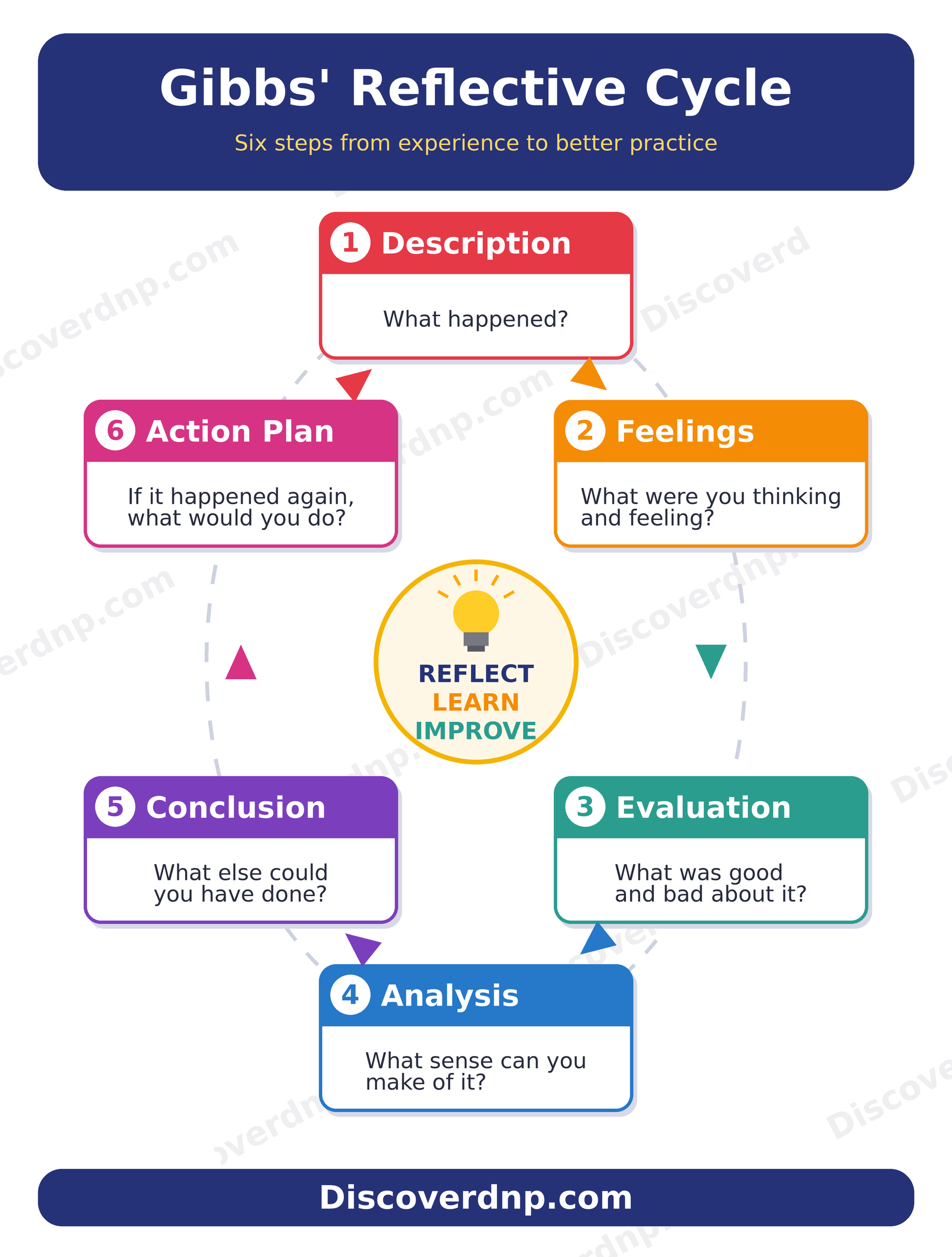
Reflective thinking is also supported by structured approaches such as Gibbs’ Reflective Cycle, which guides the examination of experiences through description, feelings, evaluation, analysis, conclusion, and action planning. Such frameworks help organize reflection and ensure that the discussion progresses beyond recalling events to examining their meaning and implications.
Critical reflection is therefore an important component of professional learning because it encourages individuals to examine not only what they know but also how they apply that knowledge, how their assumptions influence their actions, and what they can improve. In nursing, this ability is particularly valuable because clinical environments are constantly changing and require professionals to make informed decisions while responding to individual patient needs.
Benefits of Reflective Writing in Nursing Practice
Reflective writing plays an important role in nursing education and professional practice because it provides a structured way to examine clinical experiences, evaluate professional decisions, and identify opportunities for improvement. Nursing involves more than applying technical knowledge or following established procedures. It requires clinical judgment, communication, ethical awareness, emotional intelligence, teamwork, and the ability to respond appropriately to changing patient needs. Reflecting on experiences allows nurses to examine how these different competencies influence the quality of care and how they can be strengthened through continuous learning.
Unlike informal recollection, reflective writing requires individuals to organize their thoughts, explain their interpretations, and evaluate the lessons gained from particular situations. This process can reveal gaps in knowledge, reinforce effective practices, and encourage more thoughtful approaches to future clinical encounters. The benefits extend beyond academic assignments because the insights gained can inform everyday professional decisions and contribute to the development of safe, patient-centered care.
Some of the major benefits include:
1. Strengthening Critical Thinking and Clinical Reasoning
Critical thinking is essential in nursing because patient care involves interpreting information, recognizing changes in health conditions, identifying potential risks, and selecting appropriate interventions. Reflective writing encourages nurses to examine the reasoning behind clinical decisions instead of focusing only on the actions performed.
For example, a nurse reflecting on the care of a patient with diabetes may examine how blood glucose readings, reported symptoms, dietary intake, medication history, and other clinical findings influenced the care plan. Rather than simply documenting that blood glucose was monitored, the reflection could explore why monitoring was necessary, how the findings were interpreted, and what additional assessments or interventions were considered.
This type of examination encourages nurses to:
- Question initial clinical judgments rather than accepting them without evaluation.
- Recognize relevant information when assessing patient conditions.
- Consider alternative explanations for observed symptoms.
- Evaluate the appropriateness of clinical interventions.
- Make better-informed decisions in future situations.
By repeatedly examining clinical experiences, nurses can become more aware of their reasoning processes and identify areas where additional knowledge or guidance may be required.
2. Improving Clinical Competence and Connecting Theory with Practice
Nursing education combines classroom instruction, laboratory activities, simulations, and clinical experiences. However, understanding a concept theoretically does not always mean that it can be applied confidently in a real healthcare environment. Reflective writing helps bridge this gap by encouraging nurses to examine how academic knowledge relates to practical situations.
For instance, a nursing professional may understand the principles of aseptic technique from classroom instruction but encounter difficulties maintaining a sterile field during a procedure in a busy clinical environment. Reflecting on the experience provides an opportunity to examine which steps were followed correctly, what challenges occurred, and how environmental factors influenced the procedure.
The discussion may connect the experience with infection prevention principles, professional guidelines, and evidence-based recommendations. This allows the writer to recognize the importance of maintaining aseptic technique even when working under pressure.
3. Developing Self-Awareness and Professional Accountability
Self-awareness involves understanding one’s strengths, limitations, emotions, attitudes, and the ways these factors influence professional behavior. In nursing, this is particularly important because personal responses can affect communication, teamwork, clinical judgment, and interactions with patients and families.
Reflective writing encourages nurses to examine their behavior and recognize how their personal characteristics influence the delivery of care.
For example, a nurse who becomes frustrated when attending to a patient who repeatedly requests assistance may use reflection to examine the reasons behind that reaction. The discussion could explore whether workload, fatigue, communication difficulties, or personal expectations contributed to the frustration. It could also consider how the nurse’s response may have affected the patient’s experience.
Through this process, the nurse may recognize the need to manage emotional responses, practice patience, and approach patients with greater empathy.
Reflection also supports professional accountability because it encourages individuals to take responsibility for their decisions and recognize when their actions require improvement. Rather than blaming circumstances or other healthcare professionals, a reflective approach examines personal contributions to an outcome and identifies appropriate corrective measures.
4. Enhancing Communication and Interpersonal Skills
Effective communication is fundamental to safe nursing practice. Nurses regularly interact with patients, families, physicians, and other healthcare professionals, often in situations involving uncertainty, emotional distress, or complex medical information. Reflective writing helps examine these interactions and identify ways to improve communication.
For example, consider a nurse who provides discharge instructions to a patient recovering from surgery. During the interaction, the patient appears to understand the instructions but later demonstrates uncertainty about medication schedules and wound care.
A reflection on this encounter may reveal that the nurse provided too much information at once, used unfamiliar medical terminology, or did not confirm the patient’s understanding. The writer may identify the need to use simpler language, encourage questions, and apply the teach-back method to assess comprehension.
Reflecting on communication experiences can help nurses:
- Recognize barriers to effective communication.
- Develop more effective listening techniques.
- Improve the clarity of patient education.
- Respond more appropriately to emotional and cultural differences.
- Strengthen communication during patient handovers and multidisciplinary collaboration.
5. Promoting Empathy and Patient-Centered Care
Nurses encounter patients with different health conditions, cultural backgrounds, beliefs, emotional needs, and personal circumstances. Providing patient-centered care requires understanding these differences and considering how individual experiences influence healthcare decisions.
Reflective writing allows nurses to examine patient interactions from perspectives beyond their own. It encourages them to consider how patients may experience illness, treatment procedures, hospitalization, and communication with healthcare professionals.
For example, a nurse may reflect on caring for a patient who declines a particular treatment because of personal or cultural beliefs. Rather than interpreting the refusal as noncompliance, the nurse can examine the patient’s concerns, consider the importance of informed decision-making, and evaluate whether adequate information and support were provided.
This process encourages greater awareness of individual preferences, respect for patient autonomy, and sensitivity to cultural and personal differences. It also helps nurses recognize how their own assumptions may influence interactions with patients.
6. Supporting Ethical Decision-Making and Professional Judgment
Nursing practice frequently involves situations in which professional responsibilities, patient preferences, institutional policies, and ethical principles must be considered together. These situations may not always have straightforward solutions, making ethical reasoning an important part of professional competence.
Reflective writing provides an opportunity to examine ethical challenges, consider competing responsibilities, and evaluate the reasoning behind decisions.
For example, a nurse may encounter a patient who refuses a recommended intervention despite the healthcare team’s concerns about potential complications. Reflecting on this situation may involve examining:
- The patient’s right to make informed healthcare decisions.
- The nurse’s responsibility to provide accurate information.
- The importance of respecting patient autonomy.
- The professional obligation to communicate concerns appropriately.
- The need to involve the appropriate healthcare professionals when additional support is required.
Examining these considerations helps nurses understand the ethical dimensions of clinical decisions and develop a more thoughtful approach to similar situations.
7. Encouraging Continuous Professional Development
Professional development requires nurses to continually evaluate their knowledge, skills, and performance as healthcare practices, technologies, and patient needs evolve. Reflective writing supports this process by helping individuals recognize learning needs and establish practical goals for improvement.
For example, a nurse who reflects on difficulty caring for a patient with a complex wound may recognize the need to improve knowledge of wound assessment, dressing selection, infection prevention, and documentation. The reflection can lead to specific learning activities, such as reviewing current clinical guidelines, seeking guidance from an experienced wound care nurse, or attending relevant professional training.
This makes reflection useful for identifying areas in which additional education or supervised practice may be beneficial. It also encourages nurses to take an active role in maintaining their professional competence rather than relying exclusively on formal training opportunities.
8. Improving Emotional Awareness and Coping with Challenging Clinical Experiences
Healthcare environments can involve emotionally demanding situations, including patient deterioration, unexpected complications, death, family distress, and difficult interactions with colleagues. Reflecting on these experiences can help nurses recognize their emotional responses and understand how those responses may influence their professional behavior.
For instance, after caring for a patient who experiences an unexpected deterioration, a nurse may reflect on feelings of anxiety, uncertainty, or frustration. Examining these reactions can help identify what aspects of the situation were particularly challenging and whether additional knowledge, support, or preparation would have been helpful.
Reflective writing may also help nurses recognize when they need support from supervisors, colleagues, mentors, or appropriate professional resources. It should not replace formal psychological support when distress is significant, but it can contribute to emotional awareness and constructive processing of professional experiences.
9. Supporting Patient Safety and Quality Improvement
Patient safety depends on the ability of healthcare professionals to recognize risks, evaluate clinical processes, communicate concerns, and learn from both successful and unsuccessful outcomes. Reflective writing can contribute to this process by encouraging nurses to examine events that may have affected patient safety and identify opportunities for improvement.
For example, after reflecting on a near-miss medication incident, a nurse may recognize that an interruption during medication preparation contributed to a risk of administering the wrong medication. The discussion could examine the medication administration process, relevant safety procedures, environmental distractions, and the importance of following institutional reporting and escalation policies.
The reflection may identify practical improvements, such as minimizing avoidable interruptions, following medication verification procedures, and communicating safety concerns promptly.
However, reflective writing should not be treated as a substitute for formal incident reporting, clinical supervision, or organizational quality improvement systems. Its value lies in supporting individual learning and encouraging a broader understanding of how clinical practices and working conditions influence patient safety.
Overall, reflective writing contributes to nursing practice by connecting experience with knowledge, supporting critical evaluation, and encouraging continuous professional learning. A nurse who regularly examines clinical encounters can become more aware of personal strengths, recognize limitations, and make more informed decisions about future practice. These benefits demonstrate why reflection is valuable not only as an academic exercise but also as an important component of professional nursing development.
Types of Reflection Papers
Reflection papers can take different forms depending on the subject being examined, the purpose of the assignment, and the type of learning the writer is expected to demonstrate. Some focus on personal experiences and individual development, while others examine academic readings, theories, classroom discussions, professional situations, or practical experiences. Although these forms share the central purpose of examining meaning and identifying lessons, each requires a slightly different approach to reflection and analysis.
Understanding the different types of reflection papers helps determine what to include, which experiences or materials to examine, and how to organize the discussion. For example, a personal experience reflection paper may focus on how a particular event influenced an individual’s beliefs or behavior. An academic reflection paper may examine how a reading or theoretical concept changed the writer’s understanding of a subject. A professional or clinical reflection paper, on the other hand, may evaluate a workplace experience, professional decision, or interaction with a patient or colleague.
The type of reflection paper also influences the tone, evidence, and level of personal detail appropriate for the assignment. While personal experiences are important in most reflective writing, academic and professional reflections generally require a stronger connection to established concepts, research, professional standards, or evidence-based practice.
The three common types of reflection papers are personal experience reflection papers, academic and text-based reflection papers, and professional and clinical reflection papers.
Personal Experience Reflection Papers
A personal experience reflection paper examines an event, situation, interaction, or significant moment from the writer’s life to explore its meaning and influence. It focuses on how an experience shaped personal beliefs, attitudes, emotions, decisions, relationships, or understanding of a particular issue. Rather than simply narrating an event, the writer examines what happened, how they responded, why the experience was significant, and what they learned from it.
Personal experiences can include everyday situations as well as major life events. Examples include overcoming a difficult challenge, participating in a community activity, resolving a disagreement, adapting to a new environment, experiencing failure, taking responsibility for a mistake, or developing a new understanding of another person’s circumstances. The experience does not necessarily have to be extraordinary. Even an ordinary interaction can provide meaningful material for reflection if it reveals something important about the writer’s attitudes, behavior, or assumptions.
For example, an individual may write about an experience involving teamwork during a group project. A descriptive account might explain how the group divided responsibilities, completed the assignment, and presented the final work. A personal reflection would examine how the writer contributed to the group, how communication influenced the outcome, and whether the experience changed their understanding of collaboration.
The discussion could explore questions such as:
- What were my expectations before the experience?
- How did I feel during the situation, and why?
- What decisions did I make, and what influenced those decisions?
- Did the experience challenge any of my existing beliefs or assumptions?
- What did I learn about myself or other people?
- How might I respond differently if I encountered a similar situation again?
These questions encourage the writer to explore personal insights rather than simply recount events. They also help establish a central idea around which the reflection paper can be developed.
Common subjects for personal experience reflection papers
Personal experience reflection papers can address a wide range of topics. The most effective subject is usually an experience that provides sufficient material for meaningful examination and demonstrates some form of learning, change, or personal development.
Common subjects include:
1. Overcoming a personal challenge: Reflecting on an experience involving difficulty, uncertainty, or failure and examining how the situation influenced resilience, problem-solving, and personal confidence. For example, a writer may examine how preparing for an important examination despite competing responsibilities changed their approach to time management.
2. Learning from a mistake: Examining a situation in which a decision or action did not produce the expected result. The discussion may explore what contributed to the mistake, how the writer responded, and what could be done differently in the future.
3. Developing communication skills: Reflecting on an interaction that revealed the importance of listening, expressing ideas clearly, or understanding different perspectives. For example, a disagreement with a colleague or classmate may demonstrate how assumptions and poor communication can contribute to conflict.
4. Experiencing cultural differences: Examining an interaction with someone whose beliefs, customs, or values differ from one’s own. The reflection may explore how the experience challenged existing assumptions and encouraged greater cultural awareness and respect.
5. Participating in community service: Reflecting on volunteering, public health campaigns, outreach programs, or other community activities. The writer may examine how direct involvement influenced their understanding of social responsibility, community needs, or barriers to accessing essential services.
6. Experiencing personal growth: Examining an event that influenced confidence, independence, decision-making, or emotional maturity. The reflection may explain how the writer’s thoughts and behavior changed following the experience.
How to approach a personal experience reflection paper
When writing about a personal experience, the writer should select an event that can be examined from more than one perspective. The most important consideration is not how dramatic or unusual the event was, but whether it provides an opportunity to explore personal responses, evaluate decisions, and identify meaningful lessons.
A useful approach involves the following steps:
- Introduce the experience: Briefly explain what happened, when it occurred, and why the situation is worth examining. Include only the background information needed to help the reader understand the context.
- Describe your initial response: Explain the thoughts, emotions, expectations, or assumptions that influenced your reaction.
- Examine the experience: Consider what contributed to the situation, how different people were involved, and whether your actions or decisions affected the outcome.
- Identify the learning gained: Explain how the experience influenced your understanding, beliefs, or behavior.
- Consider future application: Discuss what you would repeat, change, or approach differently if you encountered a similar situation.
For example, consider a reflection paper about participating in a community health awareness campaign. The writer may begin by explaining that they initially felt uncomfortable approaching unfamiliar people to discuss preventive healthcare. During the activity, they noticed that some community members were hesitant to engage because they had limited knowledge of the health topic or concerns about the information being presented.
A meaningful reflection would examine how the writer responded to these challenges, whether their communication approach was effective, and what they learned about the importance of listening and adapting health information to different audiences. The paper could conclude that effective health education requires more than providing facts; it also involves understanding people’s concerns, communicating respectfully, and creating opportunities for questions.
This example demonstrates how a personal experience can become a meaningful piece of writing when the writer connects events with personal responses and practical lessons.
Using personal experiences appropriately
Although personal experience reflection papers allow considerable freedom of expression, they still require thoughtful organization and an appropriate academic tone. The writer should avoid including unnecessary personal details or allowing emotions to replace analysis. A strong reflection explains feelings and reactions while examining why they occurred and how they influenced the experience.
First-person language is generally appropriate because the discussion centers on the writer’s own perspective. However, expressions such as “I felt,” “I thought,” and “I learned” should contribute to the analysis rather than appear repeatedly without adding meaning. Each personal observation should help explain the central insight of the paper.
It is also important to distinguish between personal interpretation and established facts. If the writer discusses another person’s behavior, for example, they should avoid presenting assumptions about that person’s intentions as confirmed information. Instead of stating that someone deliberately ignored them, the writer might explain that they interpreted the behavior as dismissive at the time and later considered other possible explanations.
Personal experience reflection papers are therefore most effective when they combine honest self-examination, relevant examples, critical thinking, and clear learning outcomes. They allow writers to explore their own ideas while demonstrating how experience can contribute to greater awareness and personal development.
Academic and Text-Based Reflection Papers
Academic and text-based reflection papers examine ideas, concepts, theories, arguments, research findings, or information presented in academic materials. These materials may include textbooks, journal articles, lectures, case studies, documentaries, research reports, professional guidelines, or assigned readings. The purpose is to explain how the material influenced the writer’s understanding of a subject, challenged existing assumptions, or encouraged further consideration of an academic issue.
Unlike a personal experience reflection paper, which begins with an event from the writer’s life, an academic reflection usually begins with a specific source or learning experience. The writer examines the main ideas presented, considers their significance, and explains how they relate to existing knowledge, personal perspectives, or practical situations.
However, an academic reflection paper should not become a simple summary of the assigned material. Summarizing the source may be necessary to establish context, but the main discussion should focus on interpretation, evaluation, and learning. The writer should explain what they found significant, why particular arguments were convincing or questionable, and how the material influenced their understanding.
For example, an assignment may require a reflection on an academic article discussing the importance of patient-centered care in healthcare delivery. A summary would present the article’s main arguments, such as the importance of involving patients in decisions, respecting individual preferences, and providing appropriate information. A reflective discussion would examine how these ideas influenced the writer’s understanding of patient autonomy and whether they challenged previously held beliefs about the role of healthcare professionals in treatment decisions.
Common subjects for academic and text-based reflection papers
Academic reflection papers can be based on different learning materials and intellectual activities. The selected material should provide enough information for the writer to examine its central ideas, relevance, strengths, limitations, and implications.
Common subjects include:
1. Textbook chapters: Reflecting on concepts introduced in a particular chapter and explaining how they contributed to the writer’s understanding of a subject. For example, a reflection on a chapter about infection prevention may examine how the principles discussed relate to practices in healthcare environments.
2. Scholarly journal articles: Examining research findings, arguments, or conclusions presented in an academic publication. The writer may discuss whether the findings changed their perspective, how the research relates to existing knowledge, and what questions remain unanswered.
3. Classroom lectures and discussions: Reflecting on information presented during a lecture or an issue raised during a group discussion. The paper may examine how the discussion expanded the writer’s understanding or introduced alternative perspectives.
4. Documentaries and educational videos: Analyzing the ideas, evidence, and viewpoints presented in an audiovisual source. For example, a documentary about healthcare inequality may encourage reflection on social determinants of health and barriers to accessing medical services.
5. Academic theories and models: Examining how a particular theory explains a subject and whether its principles can be applied to real-world situations. The discussion may also consider the theory’s limitations or how it compares with other approaches.
6. Case studies: Reflecting on a fictional or real-world case used for academic learning. The writer may examine the decisions made, the factors influencing the outcome, and the relevance of the case to concepts discussed in the course.
How to approach an academic and text-based reflection paper
Writing an academic reflection requires careful engagement with the selected material. The writer should demonstrate an understanding of the source while explaining how its content influenced their thoughts and learning. This involves reading or reviewing the material carefully, identifying its central arguments, and examining the relationship between its ideas and existing knowledge.
A practical approach includes the following steps:
1. Identify the central ideas of the source
Begin by determining what the material is mainly about. Identify its key arguments, findings, theories, or concepts. If the assignment involves a research article, for example, consider its purpose, research question, main findings, and conclusions. If it involves a textbook chapter, identify the concepts that are most relevant to the assignment.
The goal is not to reproduce the entire source but to understand the information that will provide the foundation for the reflection.
2. Examine your initial understanding and response
Consider what you thought about the subject before engaging with the material. Did you already understand the concept? Did the reading introduce an unfamiliar perspective? Did any argument challenge your existing ideas or assumptions?
For example, before reading an article about health literacy, a writer may have believed that patients who do not follow treatment instructions are simply unwilling to comply. After examining the material, they may recognize that limited health literacy, language barriers, financial difficulties, and inadequate communication can influence a patient’s ability to follow a treatment plan.
This comparison between initial understanding and new knowledge provides a meaningful basis for reflection.
3. Evaluate the ideas and arguments presented
Academic reflection should involve some degree of analysis. The writer should consider why the source’s ideas are important, whether the arguments are supported by appropriate evidence, and what limitations or alternative perspectives may exist.
For example, when reflecting on a study examining the relationship between nurse staffing levels and patient outcomes, the writer may consider how the findings relate to patient safety and quality of care. They may also examine whether factors such as patient acuity, staff experience, healthcare resources, and organizational policies influence the relationship being discussed.
The objective is not to criticize every source but to demonstrate the ability to engage with academic material thoughtfully rather than accepting every statement without examination.
4. Connect the material with other knowledge or practical experiences
A strong academic reflection explains how the material relates to other concepts, previous learning, or real-world situations. This connection helps demonstrate that the writer can apply information rather than simply repeat it.
For example, a reflection on a textbook chapter about therapeutic communication may connect the concepts discussed with an observed interaction between a nurse and a patient. The writer could explain how active listening, appropriate questioning, and nonverbal communication helped establish trust and encouraged the patient to express concerns.
This approach demonstrates the relationship between academic knowledge and practical application.
5. Explain how your understanding has changed
An important part of academic reflection is identifying what the writer learned. This may involve a new understanding of a concept, a change in perspective, greater awareness of a problem, or recognition of an area requiring further study.
The writer should explain the specific insight gained rather than making a general statement such as “the article was informative.” A stronger explanation would identify which idea was particularly meaningful and why it influenced their thinking.
Example of an academic and text-based reflection
Suppose an assignment requires a reflection on a research article about the role of effective communication in improving patient safety.
A summary-based response might state:
“The article discusses the importance of communication among healthcare professionals and explains how effective information sharing can reduce errors and improve patient outcomes.”
A more developed reflective response could state:
“Before examining the article, I mainly understood communication in healthcare as the exchange of information between nurses, physicians, and patients. However, the discussion of communication-related safety risks helped me recognize that the quality and structure of information sharing are just as important as the information itself. I found the discussion of patient handovers particularly significant because incomplete or unclear communication can result in missed clinical information and delays in care. This reinforced my understanding of structured communication approaches such as SBAR and their role in promoting continuity of care. I also recognized that effective communication requires active listening, confirmation of understanding, and an environment in which healthcare professionals feel able to raise concerns.”
The second response is more reflective because it identifies an initial understanding, explains what the academic material contributed, and connects the new knowledge with professional practice.
Using academic evidence in text-based reflection
Although reflective writing is personal, academic reflection papers may require scholarly sources to support the discussion. This is particularly important when the assignment asks the writer to examine a theory, evaluate a research finding, or relate a reading to established academic knowledge.
Evidence can be incorporated in several ways:
- Supporting an interpretation: Use relevant research to explain why a particular concept or finding is important.
- Comparing perspectives: Discuss how the assigned source agrees or differs from other academic viewpoints.
- Connecting theory with practice: Use established theories or professional guidelines to explain how an idea applies in a practical setting.
- Examining limitations: Consider whether the source’s findings can be applied broadly or whether certain circumstances may affect their relevance.
For instance, a reflection on an article about evidence-based practice may discuss how research findings, clinical expertise, and patient preferences work together when making healthcare decisions. The writer can use additional academic sources to support this interpretation while explaining how the reading influenced their understanding of clinical decision-making.
The use of evidence should remain relevant to the reflection. A paper should not become a traditional research essay filled with information from external sources while giving little attention to the writer’s own interpretation. The personal and analytical response should remain central.
Academic and text-based reflection papers are therefore useful for demonstrating the ability to engage with scholarly information, evaluate ideas, and develop a deeper understanding of a subject. They show how reflective writing can support academic skills such as critical reading, interpretation, argument development, and the application of theoretical knowledge.
Professional and Clinical Reflection Papers
Professional and clinical reflection papers examine experiences encountered in workplaces, professional environments, healthcare facilities, and other settings where individuals apply specialized knowledge and skills. In nursing, these papers commonly focus on clinical placements, patient interactions, nursing procedures, communication with healthcare teams, ethical challenges, clinical decision-making, and experiences involving patient safety.
The purpose is to examine how professional knowledge and responsibilities are applied in real situations. The writer considers what happened, how they or other professionals responded, whether the actions were appropriate, and what the experience revealed about professional practice. This type of reflection also provides an opportunity to evaluate how workplace conditions, available resources, communication, policies, and individual judgment influence outcomes.
Professional and clinical reflection papers are particularly important in nursing because theoretical knowledge must be translated into safe and effective patient care. Nurses regularly encounter situations that require them to assess patient needs, prioritize interventions, communicate with other healthcare professionals, and respond to unexpected changes in a patient’s condition. Reflecting on these situations helps identify strengths, recognize learning needs, and develop more effective approaches to future practice.
For example, a nurse may reflect on caring for a patient who developed signs of respiratory distress during a clinical shift. The reflection could examine the initial observations, the nurse’s clinical reasoning, the assessment performed, the decision to escalate concerns, and the communication that followed. It could also explore whether the response was timely, what clinical knowledge guided the actions, and what could be improved in similar circumstances.
Unlike a purely personal reflection, a professional or clinical reflection must consider the responsibilities, standards, and expectations associated with the relevant profession. Personal feelings and experiences remain important, but they should be examined in relation to professional competence, ethical conduct, evidence-based practice, and the quality of service provided.
Common subjects for professional and clinical reflection papers
Professional and clinical reflections can examine successful experiences, challenging situations, unexpected outcomes, or routine activities that provide opportunities for learning. Common subjects include:
1. Patient assessment and clinical decision-making: Reflecting on an assessment, the interpretation of clinical findings, and the reasoning behind selected interventions. For example, a nurse may examine how changes in a patient’s vital signs influenced decisions about further assessment and escalation.
2. Medication administration: Examining an experience involving medication preparation, administration, patient education, or medication safety. A reflection may consider whether appropriate verification procedures were followed and how the experience reinforced safe medication practices.
3. Patient communication and education: Reflecting on interactions involving explanations of diagnoses, medication instructions, treatment procedures, or discharge plans. The writer may examine whether the communication approach met the patient’s needs and how understanding could have been improved.
4. Infection prevention and control: Examining the application of hand hygiene, personal protective equipment, sterile procedures, or environmental cleaning. The discussion may explore challenges encountered and the importance of consistently following infection prevention protocols.
5. Ethical and professional dilemmas: Reflecting on situations involving confidentiality, informed consent, patient autonomy, professional boundaries, or disagreements about care. The writer may examine the ethical principles involved and the professional responsibilities that guided the response.
6. Teamwork and interdisciplinary collaboration: Examining communication and cooperation among nurses, physicians, pharmacists, therapists, and other healthcare professionals. A reflection may explore how collaboration influenced patient care and identify opportunities to improve coordination.
7. Patient safety incidents and near misses: Reflecting on situations in which a potential error or safety risk was identified. The discussion may examine contributing factors, the response taken, reporting responsibilities, and measures that could prevent recurrence.
8. End-of-life and bereavement care: Examining experiences involving patients with life-limiting conditions, communication with families, emotional support, dignity, and respect for individual preferences. The writer may explore the emotional and ethical dimensions of providing compassionate care.
How to approach a professional and clinical reflection paper
A professional or clinical reflection should be structured around a specific experience or workplace situation. The writer should provide enough context to explain what occurred while maintaining confidentiality and focusing on the professional learning gained.
The following approach can help organize the discussion:
1. Select a relevant professional experience
Choose an event that provides an opportunity to examine professional knowledge, judgment, communication, behavior, or responsibilities. The experience may involve a successful intervention, a challenging interaction, an unexpected outcome, or a situation that revealed a gap in knowledge or skills.
For example, a nurse may choose to reflect on an experience involving a patient who became increasingly confused and disoriented during hospitalization. This situation provides an opportunity to examine assessment, communication, patient safety, and the importance of recognizing changes in mental status.
2. Provide a brief and objective description of the situation
Introduce the circumstances surrounding the experience, including the relevant setting, people involved, and events that occurred. Avoid unnecessary details, personal judgments, or information that could identify a patient or colleague.
The description should provide enough context for the reader to understand the situation without taking up most of the paper. The main emphasis should remain on examining the experience rather than reproducing a detailed clinical record.
3. Examine professional actions and decision-making
Consider the actions taken during the experience and the reasoning behind them. Examine whether relevant procedures, clinical principles, professional standards, and communication practices were followed.
For example, when reflecting on a patient who experienced a sudden change in consciousness, the writer might examine whether appropriate observations were performed, whether the change was recognized promptly, and whether concerns were escalated through the appropriate clinical channels.
This discussion should explain not only what actions were taken but also why they were appropriate or what factors may have limited their effectiveness.
4. Connect the experience with professional knowledge and standards
Professional reflection should demonstrate how the experience relates to established nursing knowledge, clinical guidelines, ethical principles, or professional expectations.
For example, a reflection on patient confidentiality may examine how information was handled during a multidisciplinary discussion. The writer could relate the experience to professional responsibilities concerning privacy, appropriate information sharing, and the need to protect sensitive patient information.
This connection helps demonstrate that professional practice is guided by more than individual judgment; it is also shaped by established standards and evidence-based principles.
5. Evaluate the outcome and identify areas for improvement
Consider the outcome of the situation and whether the actions taken achieved the intended purpose. Identify what went well, what challenges occurred, and what could have been done differently.
For example, a reflection on patient discharge education may reveal that the patient received the necessary information but did not fully understand the medication schedule. The writer may recognize that providing information alone was insufficient and that understanding should have been assessed through questions or teach-back.
6. Establish an action plan for future practice
A professional reflection should explain how the experience will influence future actions. The writer may identify additional learning needs, changes in communication techniques, improvements in clinical procedures, or opportunities to seek guidance and supervision.
For instance, after reflecting on difficulty communicating with a patient who has limited understanding of medical terminology, a nurse may plan to use simpler explanations, appropriate educational materials, and teach-back techniques during future interactions.
The action plan should be realistic and specific. Rather than stating, “I will improve my communication,” the writer could explain, “In future patient education sessions, I will use plain language, invite questions, and ask patients to explain the instructions in their own words to confirm their understanding.”
Example of a professional and clinical reflection paper
Consider a nurse reflecting on an experience involving a patient who expressed reluctance to take prescribed medication. The situation may have initially appeared to be a straightforward medication administration issue, but closer examination revealed important communication and ethical considerations.
A descriptive account might state:
“During a clinical shift, a patient declined to take a prescribed medication. The nurse explained the purpose of the medication and informed the supervising clinician about the patient’s decision.”
A more developed professional reflection could state:
“During this experience, I initially focused on explaining why the prescribed medication was important. However, I recognized that I had not fully explored the patient’s reasons for refusing it. After listening more carefully, I understood that the patient was concerned about possible side effects and had previously experienced an unpleasant reaction to a similar medication. This experience helped me recognize that medication administration involves more than following a prescription; it also requires effective communication, respect for patient autonomy, and an understanding of individual concerns. I learned that patients should be given appropriate information and an opportunity to discuss their concerns before making informed decisions about their care. In future situations, I would begin by asking open-ended questions, listening to the patient’s concerns, and communicating relevant information to the appropriate healthcare professional.”
This example demonstrates several important features of professional reflection. It identifies the initial approach, examines the limitations of that approach, considers the patient’s perspective, connects the experience with professional responsibilities, and identifies a practical change for future interactions.
Important considerations when writing professional and clinical reflections
Professional and clinical reflection papers require particular care because they may involve sensitive workplace experiences, patient information, and situations with ethical or legal implications.
Several considerations should guide the writing process:
- Maintain confidentiality: Do not include patient names, addresses, identification numbers, or other details that could reveal someone’s identity. Use general descriptions or appropriate pseudonyms when permitted by the assignment.
- Use an objective and respectful tone: Discuss actions and outcomes without making unsupported accusations or presenting personal judgments as established facts.
- Follow professional standards: Evaluate experiences in relation to appropriate nursing responsibilities, clinical guidelines, ethical principles, and institutional policies.
- Distinguish observation from assumption: Clearly separate what was observed from what was interpreted or believed to have occurred.
- Recognize professional limitations: Acknowledge when a situation required additional knowledge, supervision, or support. Reflection should encourage appropriate learning rather than promote actions outside one’s competence.
- Avoid replacing formal procedures with reflection: A reflective paper does not substitute for incident reporting, clinical documentation, safeguarding procedures, or appropriate escalation of patient safety concerns.
- Focus on learning rather than blame: Examine the contributing factors behind an event and identify opportunities for improvement instead of concentrating exclusively on who was responsible.
In addition, professional reflection should recognize that clinical outcomes are often influenced by several interacting factors. Staffing levels, workload, communication systems, available equipment, patient conditions, and organizational procedures may all affect how care is delivered. A thoughtful reflection considers these circumstances while still examining the writer’s own responsibilities and decisions.
Professional and clinical reflection papers therefore help connect academic knowledge with the realities of workplace practice. They encourage nurses to evaluate clinical experiences, strengthen professional judgment, recognize ethical responsibilities, and develop practical strategies for improving patient care.
Although personal experience, academic, and professional reflection papers differ in their subject matter, they share an important feature: each requires the writer to move beyond describing or summarizing information and examine what the experience or material means. Selecting the appropriate type of reflection paper provides a foundation for developing a focused discussion, choosing relevant examples, and identifying the central insight that the paper will communicate.
Preparing to Write a Reflection Paper
Preparing before writing is an important part of producing a focused, meaningful, and well-organized reflection paper. Although reflective writing allows individuals to express personal thoughts, opinions, and experiences, it still requires careful planning, critical thinking, and a clear understanding of the assignment. Beginning to write without preparation can result in an essay that focuses too heavily on describing events, includes unrelated information, or fails to communicate a clear central insight.
The preparation process involves understanding what the assignment requires, selecting an appropriate experience or subject, recording initial reactions, and identifying the main lesson or idea that will guide the discussion. These activities help establish the direction of the paper before the introductory paragraph and body paragraphs are developed. They also make it easier to determine which examples, academic concepts, and supporting evidence should be included.
For example, a nursing assignment may ask for a reflection on an experience involving patient communication during clinical placement. Before writing, the nurse should establish whether the assignment requires an account of a specific interaction, an analysis of communication techniques, or an examination of how the experience influenced professional development. The writer should then select an appropriate encounter, record relevant observations, and identify the central lesson gained. This preparation makes it easier to develop a reflection that connects personal experience with professional knowledge rather than simply describing what happened.
A well-prepared reflection paper generally demonstrates three important qualities: relevance to the assignment, depth of analysis, and a clear connection between the experience and the learning gained. The following steps provide a practical foundation for preparing to write.
Understanding Assignment Requirements
The first step in preparing to write a reflection paper is understanding the assignment requirements. Before selecting an experience or drafting an introduction, carefully examine the instructions provided by the instructor, institution, or organization. These instructions establish the purpose of the assignment, the subject to be examined, the expected depth of reflection, and any academic or professional standards that must be followed.
Reflection papers can vary considerably in their requirements. Some assignments ask writers to reflect on a personal experience, while others focus on a specific reading, classroom discussion, clinical encounter, professional challenge, or theoretical concept. Some require a relatively personal response, whereas others expect a more formal discussion supported by scholarly evidence and reflective models. Understanding these differences helps determine the appropriate approach, tone, structure, and content.
For example, consider two reflection assignments:
- Assignment A: “Reflect on a personal experience that changed your understanding of effective communication.” This instruction emphasizes personal experience, self-examination, and the identification of lessons learned.
- Assignment B: “Critically reflect on how therapeutic communication principles influence patient-centered nursing care, using an example from clinical practice.” This instruction requires a connection between professional experience, nursing knowledge, and critical analysis.
Although both assignments involve communication, they require different approaches. The first allows the writer to explore a broad personal experience, while the second requires a more focused examination of professional practice and relevant academic concepts.
To understand the assignment properly, examine the following elements.
1. Identify the Main Purpose of the Assignment
Begin by determining what the assignment is intended to assess. A reflection paper may be designed to evaluate personal development, understanding of academic concepts, clinical reasoning, professional behavior, or the ability to apply theoretical knowledge to practical situations.
The purpose determines what the writer should emphasize throughout the paper.
For example:
- If the purpose is to examine personal growth, the discussion should explore how an experience influenced beliefs, attitudes, confidence, or behavior.
- If the purpose is to evaluate academic learning, the writer should explain how a reading, lecture, or theory influenced their understanding of a subject.
- If the purpose is to assess professional development, the reflection should examine workplace experiences, professional responsibilities, decision-making, and areas for improvement.
- If the purpose is to evaluate clinical reasoning, the discussion should focus on assessment, interpretation of information, decision-making, interventions, and patient outcomes.
Identifying the purpose prevents the paper from becoming too broad or moving away from the main idea. It also helps determine which experiences and examples are relevant to the discussion.
2. Pay Attention to Instructional and Action Words
Assignment instructions often contain specific words that indicate the expected level of discussion. These words, sometimes called command words or instructional verbs, help establish whether the writer should describe, explain, analyze, evaluate, compare, or critically reflect on a subject.
Common instructional words include:
| Instructional word | What it requires |
|---|---|
| Describe | Present the relevant details of an experience, event, or situation. |
| Explain | Clarify how or why something happened and provide supporting details. |
| Discuss | Examine different aspects of a subject and develop a reasoned explanation. |
| Analyze | Break down an experience or idea to examine its components, causes, and implications. |
| Evaluate | Assess the strengths, weaknesses, effectiveness, or significance of something. |
| Compare | Identify similarities and differences between experiences, ideas, or approaches. |
| Critically reflect | Examine assumptions, decisions, perspectives, evidence, and lessons gained through deeper analysis. |
| Apply | Demonstrate how a concept, theory, or principle relates to a practical situation. |
Understanding these words is essential because they determine the depth of the reflection required.
For instance, an instruction to “describe an experience involving patient education” may require a clear account of what happened and the communication methods used. However, an instruction to “critically reflect on an experience involving patient education” requires a deeper examination of the interaction, including what influenced the communication process, whether the approach was effective, how the patient responded, and what could have been done differently.
A common mistake is treating every reflection assignment as a descriptive task. Even when an assignment asks the writer to explain an experience, the broader purpose may be to demonstrate what was learned from it. Therefore, the writer should pay attention to all the instructions rather than focusing on a single word.
3. Identify the Required Subject or Scope
Some reflection assignments provide a specific topic, while others allow the writer to choose an experience or subject. Understanding the scope helps determine how much information should be included and which aspects deserve attention.
For example, an assignment asking for a reflection on “communication in nursing practice” covers a broad subject. The writer may need to narrow the discussion to a specific experience, such as communicating with a patient who has difficulty understanding discharge instructions.
In contrast, an assignment asking for a reflection on “an experience involving communication with a patient who has limited health literacy” already establishes a narrower focus. The writer should concentrate on that particular issue rather than discussing every aspect of nursing communication.
A focused subject makes it easier to develop a clear thesis statement and organize the body of the paper around relevant ideas.
4. Check the Required Structure and Formatting
Assignment instructions may specify how the reflection paper should be organized. Some require a conventional essay structure with an introduction, body, and conclusion, while others may require a particular reflective framework, such as Gibbs’ Reflective Cycle or another structured approach.
Check whether the assignment specifies:
- Required headings or subheadings.
- A particular reflection model.
- The number of paragraphs or sections.
- Whether the paper should be written in the first person.
- The required citation and referencing style.
- Whether scholarly sources or professional guidelines must be included.
- Any restrictions on the use of personal experiences or examples.
For instance, an assignment may require a reflection paper using Gibbs’ Reflective Cycle. In this case, the writer should organize the discussion around the model’s stages: description, feelings, evaluation, analysis, conclusion, and action plan. Ignoring this requirement and using an unrelated structure may result in a paper that does not meet the assignment expectations, even if the discussion itself is thoughtful.
5. Understand the Word Count and Submission Requirements
The word count influences how much detail the writer can include. A short reflection paper requires careful selection of the most important observations and insights, while a longer assignment allows more extensive analysis and supporting evidence.
For example, a 500-word reflection may require the writer to focus on one central experience and a few important lessons. A 1,500-word paper may allow a more detailed examination of the circumstances, personal reactions, relevant theories, alternative perspectives, and future action.
The writer should also check the submission deadline, document format, formatting requirements, and any other instructions provided. Planning around these requirements helps avoid unnecessary last-minute changes.
6. Clarify Any Unclear Instructions
If the assignment contains unfamiliar terminology or ambiguous instructions, seek clarification before beginning to write. This may involve consulting the assignment rubric, reviewing course materials, or asking the instructor to explain what is expected.
For example, the instruction “critically reflect on your professional development” may require clarification about whether the paper should focus on a single experience, several experiences, or a broader evaluation of professional learning. Understanding this distinction can prevent the writer from developing an essay that does not address the intended subject.
A useful way to prepare is to convert the assignment instructions into a short checklist:
- What subject or experience must I reflect upon?
- What is the main purpose of the assignment?
- What level of analysis is expected?
- Am I required to use a particular reflective model?
- Must I incorporate academic sources or professional evidence?
- What structure, word count, and referencing style are required?
Answering these questions provides a clear direction before the writer begins drafting. It also helps ensure that the final reflection paper addresses the assignment rather than becoming a general discussion of a related topic.
Selecting an Experience, Text, or Topic
After understanding the assignment requirements, the next step is selecting an appropriate experience, text, or topic for the reflection paper. This decision is important because the chosen subject provides the foundation for the entire discussion. A suitable topic should be relevant to the assignment, specific enough to support meaningful analysis, and rich enough to provide opportunities for examining personal reactions, existing knowledge, and lessons learned.
The best subject is not necessarily the most dramatic or complicated experience. An ordinary situation can provide valuable material for reflection if it reveals something important about personal beliefs, communication, professional behavior, or decision-making. What matters is whether the writer can examine the situation critically and explain its significance.
For example, a nursing professional may choose to reflect on an experience involving a patient who repeatedly asked questions about a prescribed medication. Although the interaction may appear routine, it can provide an opportunity to examine patient education, therapeutic communication, medication safety, health literacy, and respect for patient concerns.
The selection process depends on the type of reflection paper being written.
1. Selecting a Personal Experience
For a personal experience reflection paper, choose an event that had a noticeable influence on your thoughts, emotions, decisions, or understanding. The experience should provide enough material to examine what happened, why it was significant, and how it contributed to personal learning.
Possible experiences include:
- A situation in which you had to overcome a difficult challenge.
- An interaction that changed your opinion about another person or issue.
- An experience that exposed a weakness or limitation.
- A situation in which you had to make a difficult decision.
- An event that strengthened your confidence or independence.
- A disagreement that helped you understand the importance of communication.
- An experience that challenged an existing belief or assumption.
For example, a writer may select an experience involving difficulty balancing academic responsibilities with personal commitments. The reflection could examine how the situation affected time management, decision-making, stress levels, and personal priorities. Rather than simply describing a demanding period, the writer would explain what the experience revealed about planning, self-discipline, and the importance of seeking support when necessary.
When selecting a personal experience, consider whether it offers an opportunity to discuss change or learning. If the event provides nothing beyond a straightforward account of what happened, it may be difficult to develop a strong reflective analysis.
2. Selecting an Academic Text or Learning Material
For an academic and text-based reflection paper, select the reading, lecture, research article, theory, or other learning material specified by the assignment. If the assignment allows you to choose your own source, select material that contains ideas you can examine, question, compare, or connect with existing knowledge.
A useful academic source should:
- Relate directly to the assignment topic.
- Present ideas or findings that can be examined critically.
- Provide opportunities to connect theory with practical situations.
- Be sufficiently detailed to support meaningful discussion.
- Come from a credible academic or professional source when scholarly evidence is required.
For example, a writer may select a scholarly article about the relationship between nurse-patient communication and treatment adherence. The reflection could examine how the article’s findings influenced their understanding of patient education, whether the findings reinforced existing beliefs, and how the information could be applied in clinical practice.
The writer should avoid choosing a source simply because it is easy to summarize. The goal is to select material that encourages reflective thinking and provides opportunities to explore personal insights.
3. Selecting a Professional or Clinical Experience
Professional and clinical reflection papers require particular attention to relevance, confidentiality, and professional learning. The selected experience should relate to workplace responsibilities, clinical practice, ethical decision-making, teamwork, or another area of professional development.
Examples include:
- Observing a change in a patient’s clinical condition.
- Participating in a patient assessment.
- Communicating with a patient or family member about treatment.
- Experiencing difficulty performing a clinical procedure.
- Participating in a patient handover.
- Encountering an ethical concern involving confidentiality or informed consent.
- Observing a healthcare team respond to an emergency.
- Identifying a potential medication or patient safety risk.
For example, a nurse may select an experience involving a patient who refused a recommended treatment. The situation could provide an opportunity to examine patient autonomy, communication, informed decision-making, professional responsibilities, and the importance of understanding individual concerns.
When selecting a clinical experience, avoid choosing a situation solely because it involved a serious medical condition or dramatic outcome. A routine interaction may provide more useful reflective material if it reveals a specific area of professional learning.
Confidentiality is also essential. Patient names, identification details, and other information that could reveal an individual’s identity should not be included. Clinical experiences should be discussed in a manner consistent with institutional policies, professional standards, and assignment requirements.
4. Choose a Specific and Manageable Focus
One of the most important considerations when selecting a subject is keeping it manageable. Broad topics often produce unfocused reflection papers because they require the writer to cover too many ideas without examining any of them in sufficient depth.
For example, “My Experience in Nursing” is too broad to provide a clear direction for a reflection paper. It could involve clinical procedures, patient interactions, teamwork, medication administration, professional challenges, and many other subjects.
A more focused topic would be:
“Reflecting on the Importance of Therapeutic Communication During Patient Education.”
This narrower subject gives the writer a clear area to examine. The discussion could focus on one patient interaction, the communication methods used, the challenges encountered, and the lessons gained.
Similarly, instead of reflecting on an entire textbook about patient safety, a writer might focus on a particular chapter discussing medication administration errors. This makes it easier to identify relevant ideas and develop a focused thesis.
A useful way to narrow a topic is to move from a general subject to a specific experience or question:
| Broad subject | More focused reflection topic |
|---|---|
| Communication | Communicating discharge instructions to a patient with limited health literacy |
| Patient safety | Reflecting on the importance of medication verification |
| Teamwork | Examining communication during a multidisciplinary patient handover |
| Personal development | Reflecting on how overcoming a challenging assignment improved time management |
| Ethics | Examining patient autonomy during a treatment refusal |
| Infection prevention | Reflecting on challenges associated with maintaining aseptic technique |
A specific focus makes it easier to develop a central reflection and organize the body of the paper around related points.
5. Consider the Potential for Critical Analysis
Before settling on a subject, consider whether it offers enough material for critical reflection. A strong topic should allow the writer to explore more than one dimension of an experience or idea.
Ask yourself:
- Can I explain why the experience or material was significant?
- Can I examine my initial reactions and assumptions?
- Are there decisions or actions that can be evaluated?
- Can I connect the subject to relevant academic concepts or professional knowledge?
- Are there alternative perspectives worth considering?
- Can I identify specific lessons or areas for improvement?
For instance, a reflection on a patient handover may allow the writer to examine communication techniques, accuracy of information, professional accountability, teamwork, and patient safety. This provides several related areas for analysis without moving away from the central subject.
By contrast, a topic that offers little opportunity for examination may lead to a paper dominated by description. Selecting a subject with sufficient depth makes it easier to write reflectively and develop a meaningful discussion.
6. Establish the Relevance of the Selected Subject
The selected experience, text, or topic should have a clear connection to the purpose of the assignment. A writer may have many interesting experiences, but not all of them are suitable for every reflection paper.
For example, if an assignment focuses on professional communication in nursing, a reflection on personal financial management may not be appropriate, even if the experience taught the writer valuable lessons about organization and responsibility. A more relevant subject would involve communication with a patient, colleague, supervisor, or healthcare team.
The writer should also consider the relevance of the experience to the intended learning outcomes. If the assignment is designed to assess clinical reasoning, the chosen experience should provide an opportunity to examine assessment findings, decisions, and clinical judgment.
Selecting an appropriate subject ensures that the reflection remains focused, meaningful, and connected to the assignment requirements. Once the topic has been chosen, the next step is to record initial reactions and observations before memory becomes less detailed or the writer begins interpreting the experience too narrowly.
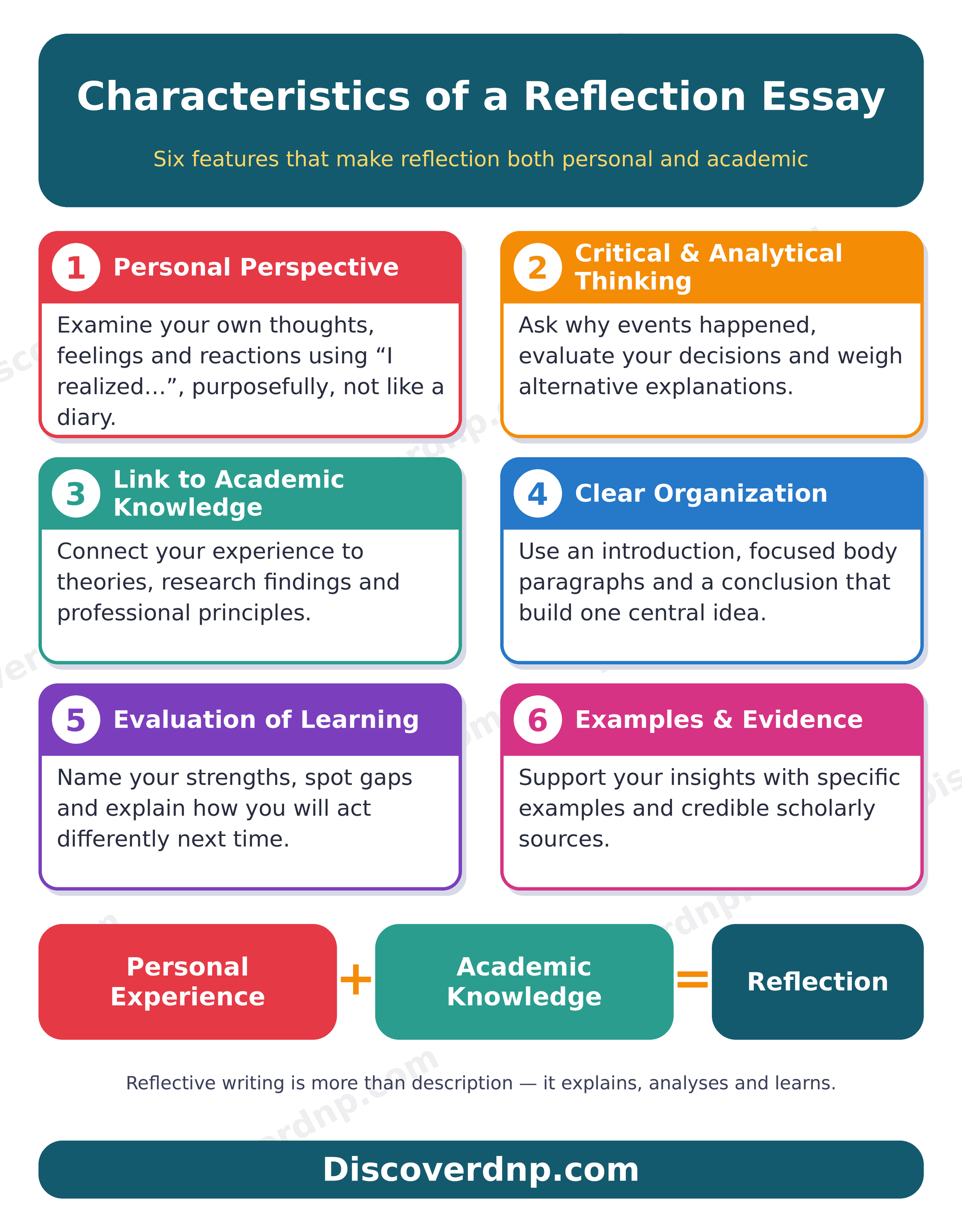
Recording Initial Reactions and Observations
After selecting an experience, text, or topic, take time to record initial reactions and observations. This stage involves documenting what was noticed, what happened, how the writer responded, and which aspects appeared particularly important. It provides raw material for the reflection paper and helps preserve details that may be forgotten or distorted over time.
Recording observations is especially useful when reflecting on personal or clinical experiences because memory does not always preserve every detail accurately. People may remember the general outcome of an event but forget the sequence of actions, the specific information exchanged, or the feelings that influenced their decisions. Making brief notes soon after the experience helps maintain a clearer understanding of the situation.
For academic and text-based reflection papers, recording initial reactions is equally valuable. A writer who immediately notes their response to a research article or classroom discussion may identify questions and personal insights that become less obvious after repeatedly reviewing the material.
However, the purpose of recording initial reactions is not to produce the final essay immediately. It is to collect relevant information and identify ideas that can be examined more carefully during the writing process.
1. Record What Happened Before Interpreting It
Begin by writing down the main facts and observations surrounding the experience. Focus on the relevant sequence of events, the people involved, the setting, and the actions taken. At this stage, avoid making assumptions or drawing conclusions before considering the available information.
For example, after observing a nurse provide discharge instructions, initial notes might include:
- The patient was preparing to leave the healthcare facility.
- The nurse explained the prescribed medication schedule.
- The patient asked several questions about possible side effects.
- The nurse provided additional explanations.
- The patient appeared uncertain about when to take the medication.
These observations provide a factual foundation for later analysis. They also help the writer distinguish between what was directly observed and what was inferred.
For instance, stating that “the patient did not understand the instructions” may be an interpretation rather than a confirmed observation. A more precise note would be that the patient asked repeated questions about the medication schedule and appeared uncertain. This distinction becomes important when developing an objective and credible reflection.
2. Record Your Initial Thoughts and Emotions
Reflective writing involves examining personal responses, so it is useful to record how the experience affected you. Consider what you were thinking, how you felt, and what expectations or concerns influenced your behavior.
Emotions may include:
- Anxiety or uncertainty when facing an unfamiliar situation.
- Confidence when applying a skill successfully.
- Frustration when communication becomes difficult.
- Satisfaction after completing a challenging task.
- Concern when a patient experiences an unexpected complication.
- Disappointment when an expected outcome is not achieved.
- Surprise when new information challenges an existing belief.
For example, a nurse reflecting on a patient who refused medication may initially record:
“I felt uncertain about how to respond because I was concerned that refusing the medication could affect the patient’s condition. I initially focused on explaining the benefits of the medication but did not immediately consider whether the patient had specific concerns.”
These notes provide a starting point for examining how personal feelings influenced the interaction. Later, the writer can consider whether the initial response was appropriate and how it could be improved.
Recording emotions does not mean that the reflection should become an account of feelings alone. The writer should examine why those emotions occurred, how they influenced behavior, and what they reveal about personal or professional development.
3. Identify Significant Observations and Details
Not every detail from an experience deserves equal attention. The writer should identify the observations that have the greatest relevance to the assignment and the central lesson being explored.
For example, when reflecting on a patient assessment, relevant observations may include changes in vital signs, patient-reported symptoms, the assessment techniques used, communication with the healthcare team, and the decisions that followed. Details unrelated to the central issue may be unnecessary.
A useful approach is to identify:
- What was unexpected?
- Which actions or decisions influenced the situation?
- What information was particularly important?
- Were there communication difficulties or misunderstandings?
- Did the experience reveal a gap in knowledge or skill?
- Was there a moment when your understanding changed?
- What appeared to work well, and what could have been improved?
These questions help separate meaningful information from background details. They also provide a foundation for developing the body of the paper, where each paragraph should contribute to the central reflection.
4. Record Questions That Require Further Examination
Initial observations often raise questions that can guide deeper analysis. Instead of immediately accepting the first interpretation of an event, write down questions about the causes, decisions, assumptions, and outcomes.
For example, after observing a patient who refused to participate in a rehabilitation activity, a writer might record:
- Why was the patient reluctant to participate?
- Was pain affecting the patient’s willingness to engage?
- Did the patient understand the purpose of the activity?
- Was the timing appropriate?
- Did the healthcare professional explain the expected benefits clearly?
- Were the patient’s concerns considered when planning the next step?
These questions encourage critical reflection by opening the discussion to different explanations. They also help the writer avoid making unsupported judgments about the behavior of other people.
For academic materials, similar questions may include:
- What is the main argument presented by the author?
- Which ideas were most convincing?
- Did the material challenge anything I previously believed?
- How does the information relate to concepts discussed elsewhere?
- What limitations or unanswered questions did I identify?
- How might this information influence professional practice?
The answers can later be developed into analytical paragraphs supported by appropriate examples and academic evidence.
5. Connect Initial Observations with Existing Knowledge
Once the relevant details have been recorded, consider how they relate to what you already know. This may involve connecting the experience with classroom learning, professional guidelines, previous experiences, academic theories, or established principles.
For example, a nurse reflecting on an experience involving infection prevention may record that maintaining a sterile field became difficult during a procedure because of interruptions in the clinical environment. The writer can connect this observation with existing knowledge about aseptic technique, contamination risks, and the importance of following infection prevention procedures.
This connection helps establish the difference between what was previously understood and what the experience revealed in practice.
In an academic reflection, the writer may compare an initial understanding of a theory with the explanation presented in an assigned reading. If the material introduces a different approach, the writer can record how the new information changed or expanded their interpretation.
6. Use a Reflective Journal or Notes to Organize Your Thoughts
A reflective journal is a useful tool for recording experiences, questions, observations, and lessons over time. It can help individuals identify patterns in their thoughts and behavior, recognize recurring challenges, and track changes in their understanding.
A journal entry does not need to be a complete essay. Brief notes, questions, bullet points, or short paragraphs can be sufficient. The important thing is to record information that may be useful when preparing the final paper.
For example, a simple preparation table might look like this:
| Area | Initial notes |
|---|---|
| Experience | Explaining discharge medication instructions to a patient |
| What happened | The patient asked repeated questions about medication timing and possible side effects |
| Initial reaction | I felt concerned that the patient might leave without understanding the instructions |
| What went well | The nurse explained the medication purpose and answered questions |
| What was challenging | The patient remained uncertain about the schedule |
| Questions to examine | Was the explanation clear? Could teach-back have been used? Were written instructions provided? |
| Relevant knowledge | Health literacy, patient education, therapeutic communication |
| Possible lesson | Patient understanding should be assessed rather than assumed |
This type of preparation makes it easier to identify the central issue and determine how the paper should develop.
7. Distinguish Initial Reactions from Later Conclusions
One important aspect of reflective writing is recognizing that initial reactions may change after further examination. A writer may initially interpret an event in one way but develop a more informed understanding after considering additional information or alternative perspectives.
For example, a nurse may initially believe that a patient was unwilling to cooperate with treatment. After examining the interaction, the nurse may recognize that the patient was experiencing fear, pain, or uncertainty about the procedure.
Recording the initial interpretation alongside the later understanding can make the reflection more meaningful. It demonstrates how reflective thinking challenged an assumption and led to a more informed perspective.
Similarly, when reflecting on an academic article, the writer may initially disagree with the author’s argument but later recognize that the evidence provides a reasonable explanation for the position presented. Explaining this change can demonstrate critical engagement with the material.
8. Protect Confidentiality When Recording Clinical Experiences
When recording observations from clinical practice, confidentiality must be maintained. Notes should not contain patient names, identification numbers, addresses, or other details that could reveal a person’s identity. Writers should follow relevant institutional policies and assignment guidelines when documenting clinical experiences.
It is also important to avoid including unnecessary details about colleagues or other individuals. The focus should remain on the professional learning gained, not on exposing or criticizing identifiable people.
Recording initial reactions and observations helps preserve important details, organize ideas, and identify questions that require deeper examination. It also creates a bridge between the experience itself and the analytical discussion that follows. Once the relevant observations have been collected, the writer can begin identifying the main lesson or insight that will give the reflection paper its central direction.
Identifying the Main Lesson or Insight
After understanding the assignment, selecting an appropriate subject, and recording initial observations, the next step is identifying the main lesson or insight. This is the central understanding that the writer wants to communicate through the reflection paper. It explains why the experience, reading, or situation matters and what meaningful knowledge or change emerged from examining it.
A reflection paper should not simply list everything that happened or present several unrelated opinions. It needs a central idea that connects the introduction, body paragraphs, and conclusion. This idea may relate to personal growth, a change in understanding, the importance of a professional principle, or the recognition of an area requiring improvement.
For example, after reflecting on an experience involving a patient who struggled to understand discharge instructions, a writer may identify the main lesson as follows:
“Effective patient education requires healthcare professionals to confirm understanding rather than assume that providing information is sufficient.”
This insight provides a clear direction for the essay. The writer can use the body paragraphs to examine the communication challenges, explain the importance of health literacy, connect the experience with patient-centered care, and discuss how teach-back could improve future interactions.
Identifying the main lesson is important because it helps determine the thesis statement and prevents the paper from becoming a collection of disconnected observations.
1. Distinguish Between What Happened and What You Learned
The first step is separating the experience itself from the meaning gained through examining it. What happened provides the subject of the paper, while the lesson explains what the experience revealed.
Consider the following example:
- What happened: I observed a nurse explaining wound care instructions to a patient preparing for discharge.
- Initial reaction: I thought the explanation was clear because the nurse covered each step.
- What I noticed: The patient later struggled to explain how the dressing should be changed at home.
- Main lesson: Providing instructions does not automatically mean that a patient understands them; effective education requires checking comprehension and addressing individual learning needs.
The main lesson is more meaningful than the event itself because it identifies an insight that can influence future practice.
When preparing to write, ask yourself what you understand now that you did not understand before the experience or reading. Consider whether your beliefs changed, whether a particular concept became clearer, or whether you recognized a weakness in your previous approach.
2. Identify the Most Significant Insight
An experience may reveal several lessons, but a focused reflection paper should have one central insight or a small number of closely related insights. Trying to examine too many unrelated lessons can make the discussion unfocused.
For example, reflecting on a challenging clinical interaction may reveal lessons about communication, patient autonomy, teamwork, time management, and professional accountability. Although all these areas may be relevant, the writer should determine which one is most closely connected to the assignment.
If the assignment focuses on therapeutic communication, the central insight might be that effective communication requires listening to patient concerns and adapting explanations to individual needs. Other observations can support this central idea without becoming separate, unrelated discussions.
To identify the most significant insight, consider:
- Which part of the experience had the greatest influence on my understanding?
- What assumption or belief was challenged?
- Which aspect of the situation revealed the most important learning need?
- What lesson can I apply in future situations?
- Which insight best addresses the purpose of the assignment?
These questions help the writer select a main idea that is specific, relevant, and supported by the experience.
3. Examine How the Experience Changed Your Understanding
A meaningful reflection often involves identifying a difference between what the writer believed before an experience and what they understand afterward. This change may be substantial or gradual. It may involve correcting a misunderstanding, developing greater awareness, or recognizing that a familiar concept is more complex than previously assumed.
For example, before observing a patient handover, a writer may have believed that effective handover simply involved communicating the patient’s diagnosis and current condition. After observing a structured handover, they may recognize that safe information transfer also requires communicating relevant background information, assessment findings, changes in condition, outstanding tasks, and recommendations for ongoing care.
The central insight might therefore be:
“Effective patient handover requires organized, complete, and relevant communication to support continuity of care and reduce the risk of important information being missed.”
This statement identifies a specific change in understanding and provides a direction for further analysis.
Not every reflection paper needs to describe a complete change of opinion. Sometimes the experience reinforces existing knowledge or confirms the importance of a principle. For example, a nurse may already understand the importance of hand hygiene but reflect on how consistently applying it protects patients in busy clinical environments. In this case, the lesson reinforces existing knowledge while providing a more practical understanding of its significance.
4. Connect the Lesson to Academic or Professional Knowledge
The main insight becomes stronger when it is connected to relevant theories, principles, research, or professional expectations. This helps demonstrate that the reflection is not based entirely on personal opinion.
For example, a reflection on a patient who refuses treatment may produce the insight that respecting patient autonomy requires listening to concerns and supporting informed decision-making. The writer can connect this lesson with ethical principles such as autonomy, beneficence, and respect for individual rights.
Similarly, a reflection on difficulty maintaining sterile technique may identify the importance of following infection prevention procedures consistently. This insight can be connected to principles of aseptic technique, contamination prevention, and patient safety.
Academic and professional connections help explain why the lesson matters beyond the individual experience. They also provide a stronger basis for evaluating future actions.
5. Consider What You Would Do Differently
Identifying the main lesson should involve considering how the experience might influence future decisions or behavior. This forward-looking element distinguishes meaningful reflection from simple recollection.
Ask yourself:
- What would I do differently if the situation occurred again?
- Which skills or knowledge would help me respond more effectively?
- Would I communicate differently or consider another approach?
- What additional information would I need before making a decision?
- How could the experience help me prepare for a similar situation?
For example, after reflecting on a situation in which a patient did not understand medication instructions, a nurse may identify the need to use simpler language, provide written information, invite questions, and apply the teach-back method.
A useful action-oriented insight might be:
“I learned that patient education should be adapted to individual understanding. In future interactions, I will use plain language and ask patients to explain the instructions in their own words to identify areas that require further clarification.”
This statement links the lesson to a specific improvement rather than making a vague promise to communicate better.
6. Develop a Clear Central Idea or Thesis Statement
Once the main lesson has been identified, express it in a clear statement that can guide the paper. In a reflection essay, the thesis statement does not always need to present a traditional argumentative position. Instead, it should communicate the central insight, interpretation, or learning outcome that the discussion will examine.
A strong reflective thesis should be:
- Specific: It should identify the main issue or lesson rather than make a broad statement about an entire subject.
- Relevant: It should address the assignment requirements and relate directly to the selected experience or text.
- Reflective: It should communicate an insight, change in understanding, or important realization.
- Developable: It should provide enough direction for the writer to support the central idea through examples and analysis.
- Clear: It should be understandable and avoid unnecessary or complicated wording.
Consider the following examples:
| Weak central statement | Stronger reflective thesis |
|---|---|
| Communication is important in nursing. | Reflecting on a difficult patient interaction helped me recognize that effective nursing communication requires active listening, clear explanations, and sensitivity to individual concerns. |
| I learned a lot during clinical placement. | My clinical placement experience strengthened my understanding of how accurate patient assessment and timely communication contribute to safe nursing care. |
| Teamwork is necessary in healthcare. | Observing a multidisciplinary patient handover helped me understand how organized communication and shared responsibility support continuity of care. |
| Medication administration is important. | Reflecting on a medication administration experience reinforced the importance of systematic safety checks and patient education in preventing avoidable medication errors. |
| The article changed my thinking. | Reading the article expanded my understanding of patient-centered care by demonstrating the importance of incorporating individual preferences into healthcare decisions. |
The stronger statements communicate specific insights and establish what the essay will examine. They also make it easier to organize the body paragraphs around related ideas.
7. Use the Main Insight to Guide the Body of the Paper
The main lesson should provide a consistent direction for the entire essay. Each body paragraph should contribute to explaining, examining, or supporting that insight.
For example, if the central reflection is that effective patient education requires confirming patient understanding, the body of the paper might examine:
- The circumstances surrounding the patient education experience.
- The writer’s initial understanding of effective communication.
- The communication challenges observed during the interaction.
- The relationship between health literacy and patient understanding.
- The importance of using techniques such as teach-back.
- How the experience will influence future patient education.
Each paragraph develops a different aspect of the central lesson without introducing unrelated ideas. The introduction can briefly establish the experience and present the main insight, while the conclusion can explain how the experience influenced the writer’s understanding and future approach.
8. Avoid Choosing a Lesson That Is Too General
A common weakness in reflection papers is identifying lessons that are too broad to support meaningful analysis. Statements such as “I learned that teamwork is important,” “communication matters,” or “nursing requires patience” may be true, but they do not explain what the writer specifically learned from the experience.
A stronger reflection identifies the particular aspect of the concept that became clearer.
For example:
- Instead of “I learned that teamwork is important,” write: “The experience showed me that effective teamwork depends on sharing relevant patient information promptly and clarifying individual responsibilities.”
- Instead of “I learned that communication matters,” write: “The interaction helped me understand that listening to a patient’s concerns is as important as providing accurate medical information.”
- Instead of “I learned to be more careful,” write: “The medication administration experience reinforced the need to verify patient identity and medication details consistently, even when working under time pressure.”
Specific insights are easier to develop because they provide clear points for analysis and practical examples.
Example of Identifying the Main Lesson from a Clinical Experience
Consider a nurse reflecting on an experience involving a patient who became increasingly anxious before a medical procedure.
Preparing the reflection
Experience: A patient expressed fear and uncertainty before undergoing a procedure.
Initial reaction: The nurse focused on explaining the procedure and reassuring the patient that it was routine.
Observation: The patient continued to express concern and asked repeated questions about possible discomfort and complications.
Critical examination: The nurse recognized that providing general reassurance had not fully addressed the patient’s specific fears. More time was needed to listen, identify the patient’s concerns, and provide clear, individualized information.
Main lesson: Effective patient communication requires understanding the source of anxiety and responding to individual concerns rather than relying only on general explanations.
Future application: In similar situations, the nurse would use open-ended questions, allow time for the patient to express concerns, provide appropriate information, and confirm understanding.
This preparation provides a clear foundation for the reflection paper. The writer can develop the introduction around the clinical interaction and central insight, use the body paragraphs to analyze communication and patient anxiety, and conclude by explaining how the experience will influence future professional practice.
Identifying the main lesson or insight gives the reflection paper direction and coherence. It ensures that the discussion moves beyond describing an experience to examining its significance, connecting it with relevant knowledge, and explaining how the writer’s understanding has developed.
By completing these preparation steps, the writer establishes a strong foundation for the actual writing process. Understanding the assignment, selecting a suitable subject, recording initial reactions, and identifying a central insight make it easier to develop an effective introduction, organize the body of the paper, and produce a conclusion that clearly communicates the value of the reflection.
How to Start a Reflection Paper
Knowing how to start a reflection paper is important because the introduction establishes the direction, tone, and central purpose of the entire discussion. It is the first opportunity to introduce the experience, text, event, or subject being examined and help the reader understand why it deserves attention. A well-developed opening should do more than announce the topic. It should provide enough context to make the subject understandable, establish the writer’s perspective, and communicate the main insight that the paper will explore.
Unlike the introduction of a traditional research paper, which often presents a research problem, background information, and an argument supported by scholarly evidence, a reflection paper introduction places greater emphasis on personal interpretation and learning. It introduces an experience or idea and establishes what the writer intends to examine about it. The opening may explain how an event challenged an existing belief, changed the writer’s understanding, revealed an important professional responsibility, or encouraged further consideration of a particular subject.
For example, a reflection paper about a challenging patient interaction should not begin with an extensive description of the patient’s medical history or every detail of the encounter. Instead, the introduction should briefly establish the nature of the interaction, explain why it was significant, and introduce the central lesson gained. This allows the reader to understand the focus of the reflection without receiving information that belongs in the body paragraphs.
A strong introduction generally contains four interconnected elements:
- An effective opening hook: A relevant statement, observation, question, or brief example that captures attention and introduces the subject.
- A clear introduction of the subject: An explanation of the experience, text, event, or topic being examined.
- Relevant background and context: Enough information to help the reader understand the circumstances surrounding the reflection.
- A central reflection or thesis statement: A clear expression of the main insight, learning outcome, or perspective that the paper will develop.
These elements should work together to create a natural progression from the general subject to the specific experience and the central idea. The following steps explain how to develop each part when learning how to start a reflection paper.
Choosing an Effective Opening Hook
An opening hook is the first sentence or group of sentences in a reflection paper. Its purpose is to capture the reader’s attention while introducing an idea that connects naturally with the subject being examined. An effective hook encourages the reader to continue and establishes a meaningful starting point for the discussion.
Unlike some forms of creative writing, a reflection paper does not require a dramatic or overly emotional opening. The hook should be relevant, appropriate for the academic context, and closely connected to the experience or concept being discussed. It should also create a natural transition into the background information and central reflection.
A common mistake is choosing an opening statement simply because it sounds interesting, without considering whether it relates to the main subject. For example, a general statement such as “Life is full of challenges” could introduce almost any personal essay. However, it does not provide a clear direction for a reflection paper about communication during a clinical placement. A more focused opening would establish the importance of communication in patient care and lead directly into the experience being examined.
There are several effective approaches to creating an opening hook.
1. Begin with a Thought-Provoking Question
A relevant question can encourage the reader to consider an issue before the writer introduces the experience or topic. It is particularly useful when the reflection examines an assumption, professional responsibility, personal belief, or situation that requires deeper consideration.
For example, a reflection paper about patient-centered care could begin with:
“How can healthcare professionals provide effective care when they do not fully understand the concerns and preferences of the people receiving it?”
This question introduces the importance of understanding patients’ perspectives and creates an opportunity to discuss an experience involving communication, shared decision-making, or patient education.
Another example, for a reflection on teamwork, might be:
“Can a healthcare team provide safe and consistent patient care when important information is not communicated effectively?”
This opening establishes a connection between communication and patient safety. The writer can then introduce an experience involving a clinical handover or multidisciplinary collaboration.
When using a question as a hook, make sure it contributes to the central idea of the paper. Avoid questions that are too broad, rhetorical, or unrelated to the experience. The question should also be addressed or developed as the discussion progresses rather than appearing as an isolated opening statement.
2. Begin with a Relevant Observation
An observation can provide an effective opening when the reflection examines a professional practice, academic concept, social issue, or recurring situation. It introduces a general insight that helps the reader understand the significance of the subject.
For example, a reflection paper about clinical decision-making could begin with:
“Clinical decisions often require healthcare professionals to interpret several pieces of information while considering the individual needs and circumstances of each patient.”
This observation introduces the complexity of clinical reasoning and provides a natural transition into an experience involving patient assessment or treatment decisions.
Similarly, a reflection on academic learning could begin with:
“Understanding a concept in theory does not always prepare an individual for the challenges of applying it in a practical situation.”
This statement is particularly useful for a reflection on clinical placement, laboratory activities, or professional training. It establishes the relationship between theoretical knowledge and practical experience, which the writer can explore in the remainder of the introduction.
A relevant observation works well because it introduces the broader issue without giving away every detail of the experience.
3. Begin with a Brief Personal Experience
A short personal account can be an effective hook when the reflection paper focuses on a significant event or interaction. It allows the writer to introduce the subject through a specific moment that illustrates why the experience matters.
For example:
“The first time I had to explain a clinical procedure to a patient, I realized that understanding the technical steps was not enough to communicate the process effectively.”
This opening introduces a personal experience and establishes a learning issue involving communication and professional confidence.
Another example, for a reflection paper about teamwork, could be:
“During a group assignment, I discovered that completing individual responsibilities did not necessarily mean that the team was working effectively together.”
This statement introduces a specific experience while suggesting a broader lesson about collaboration, communication, and shared responsibility.
When using a personal experience as a hook, keep the opening brief. Avoid explaining the entire event in the first paragraph. The detailed account, including the circumstances, actions, and outcomes, can be developed in the body of the paper.
4. Begin with a Surprising Realization or Change in Perspective
A reflection paper often examines how an experience changed the writer’s understanding of a subject. Beginning with a realization can therefore create a strong opening because it introduces the learning outcome immediately.
For example:
“I had always believed that effective patient education depended mainly on providing accurate information, but one clinical interaction showed me that understanding must also be confirmed.”
This opening establishes a contrast between an existing belief and a new understanding. It also introduces the main issue that the paper will examine.
Another example:
“Before participating in a community health campaign, I viewed health education primarily as the delivery of medical information. The experience helped me recognize that successful health education also depends on understanding the concerns, beliefs, and circumstances of the community.”
This approach works particularly well for personal, academic, and professional reflection papers because it communicates the development of an idea rather than simply announcing the subject.
However, the realization should be genuine and supported by the experience. Avoid exaggerating the significance of an event or claiming that an ordinary encounter completely transformed your understanding when the evidence does not support that conclusion.
5. Begin with a Relevant Statement or Principle
A reflection paper may also begin with a concise statement that introduces an important principle related to the subject. This approach is useful for academic and professional reflections because it establishes the broader significance of the issue before narrowing the discussion to a specific experience.
For example, a reflection on patient confidentiality could begin with:
“Maintaining patient confidentiality is an essential professional responsibility that influences trust, ethical decision-making, and the quality of healthcare relationships.”
The writer can then introduce an experience that helped them understand the practical challenges of protecting patient information.
For a reflection on evidence-based practice, an opening might state:
“Evidence-based practice requires healthcare professionals to integrate current research, clinical expertise, and individual patient preferences when making decisions about care.”
This provides a foundation for discussing how an academic reading or clinical experience influenced the writer’s understanding of evidence-based nursing.
The principle should be specific enough to relate to the reflection. Broad statements that could introduce almost any essay are less effective because they do not establish a meaningful connection with the selected subject.
6. Begin with a Relevant Academic or Professional Insight
When reflecting on a textbook, research article, lecture, or professional experience, the opening may introduce an insight gained from the material or situation. This approach is particularly appropriate when the assignment requires the writer to demonstrate how academic knowledge influenced their thinking.
For example:
“Learning about therapeutic communication helped me recognize that effective patient interactions require more than the ability to explain medical information; they also depend on listening, empathy, and an understanding of individual concerns.”
This hook introduces an academic concept while indicating how the writer’s understanding developed.
Similarly, a reflection on a research article about patient safety could begin:
“Examining the relationship between communication and patient safety helped me understand how incomplete information sharing can affect clinical decisions and continuity of care.”
The writer can then introduce the particular article, its main ideas, and the personal or professional insights gained from engaging with it.
Opening Hooks to Avoid
Although there are several ways to start a reflection paper, certain opening approaches can weaken the introduction by making it vague, repetitive, or unnecessarily informal.
Common examples include:
- Overly broad statements: “Everyone experiences challenges in life.” Such statements do not establish the specific subject or direction of the reflection.
- Unnecessary dictionary definitions: Beginning with a definition of a familiar word may make the opening feel mechanical, especially when the definition does not contribute to the central discussion.
- Unrelated quotations: A quotation should not be included merely because it sounds impressive. It should have a clear connection to the experience or main idea.
- Excessive background information: Providing too many details before introducing the purpose of the reflection can make the introduction difficult to follow.
- Unsupported generalizations: Statements about all nurses, patients, students, or healthcare professionals should be avoided unless they can be appropriately supported.
- Overly dramatic personal statements: Emotional language should reflect the actual experience and remain appropriate for the assignment.
For example, instead of opening with:
“Communication is the most important thing in the world, and without it, nothing can ever be achieved.”
A more appropriate opening would be:
“Effective communication is essential in nursing because it helps healthcare professionals understand patient needs, share clinical information, and coordinate appropriate care.”
The revised statement is more specific, academically appropriate, and directly relevant to a reflection on nursing communication.
The most effective hook is one that captures attention without distracting from the main subject. It should lead naturally into the experience or material being examined and prepare the reader for the central reflection.
Introducing the Subject and Providing Context
After selecting an effective opening hook, introduce the subject of the reflection paper and provide enough background information for the reader to understand what will be examined. This part of the introduction establishes the setting, identifies the experience or material being discussed, and explains why it is relevant to the paper.
Context is important because the reader may not be familiar with the experience, academic text, or professional situation being examined. Without sufficient background information, the central reflection may appear unclear or disconnected from the circumstances that produced it.
However, the introduction should not contain every detail of the event. Its purpose is to establish the necessary background and prepare the reader for the analysis that follows. The more detailed description, interpretation, and evaluation belong in the body of the paper.
The amount and type of context required depend on the nature of the assignment.
1. Clearly Identify the Subject of the Reflection
Begin by stating what the paper will examine. This may be a personal experience, clinical encounter, academic reading, classroom discussion, professional challenge, or particular concept.
For example:
“This reflection examines an experience involving patient education during a clinical placement, focusing on the challenges of communicating medication instructions to an individual preparing for discharge.”
This statement identifies the subject and introduces the specific issue that will guide the paper.
For an academic reflection, the subject could be introduced as follows:
“This paper reflects on an academic reading about patient-centered care and examines how its discussion of patient autonomy and shared decision-making influenced my understanding of nursing practice.”
For a personal experience reflection, the introduction might state:
“This reflection examines an experience involving a disagreement during a group project and considers how the situation influenced my understanding of communication, collaboration, and conflict resolution.”
In each example, the reader can identify the subject and anticipate the general direction of the discussion.
2. Provide Relevant Background Information
Once the subject has been introduced, provide the background information needed to understand it. This may include the circumstances surrounding an event, the setting in which it occurred, the nature of an academic source, or the broader issue being examined.
For example, when reflecting on a clinical interaction, relevant context may include:
- The general healthcare setting in which the experience occurred.
- The type of interaction or clinical activity involved.
- The circumstances that made the situation significant.
- The professional or academic issue being examined.
A reflection paper about a patient who refused medication might provide the following context:
“During a clinical placement, I observed an interaction involving a patient who declined a prescribed medication because of concerns about possible side effects. The situation required the nurse to explain the purpose of the medication, listen to the patient’s concerns, and communicate the decision to the appropriate healthcare professional.”
This provides sufficient background to understand the situation without revealing unnecessary clinical details or identifying the patient.
For a text-based reflection, the context may include the title or subject of the assigned material, the main concept it addresses, and why it is relevant to the writer’s learning.
For example:
“The assigned reading explored the importance of evidence-based practice in nursing and emphasized the relationship between research findings, clinical expertise, and patient preferences. Its discussion encouraged me to reconsider how clinical decisions should be supported by both scientific evidence and individual patient needs.”
This introduces the academic material and establishes its relevance without summarizing the entire reading.
3. Explain Why the Subject Is Worth Reflecting Upon
A strong introduction should indicate why the selected experience or material deserves examination. This helps the reader understand the significance of the subject and provides a logical connection to the main lesson.
For example, an experience involving a patient who misunderstood discharge instructions may be significant because it highlights the relationship between communication, health literacy, medication safety, and continuity of care.
The writer could explain:
“The interaction was significant because it demonstrated that providing information does not necessarily mean that a patient understands how to manage their treatment after leaving the healthcare facility.”
This statement introduces the issue that makes the experience worth examining and prepares the reader for the analytical discussion.
Similarly, a reflection on a professional handover may explain:
“The experience was important because it revealed how incomplete communication can affect the transfer of patient information and create potential risks to continuity of care.”
When explaining significance, focus on the aspect that connects directly with the assignment. Avoid introducing several unrelated reasons that may make the paper appear unfocused.
4. Establish the Relevant Personal, Academic, or Professional Perspective
Reflection papers are written from a particular perspective, and the introduction should establish the relationship between the writer and the subject.
For a personal experience, this may involve explaining how the event affected the writer or challenged an existing belief.
For an academic reflection, it may involve explaining how the assigned material influenced the writer’s understanding of a concept.
For a professional or clinical reflection, it may involve identifying the professional responsibility, clinical skill, or ethical principle that became particularly important during the experience.
For example:
“Before this experience, I understood patient education mainly as the process of explaining treatment instructions. However, the interaction helped me recognize that effective education also involves assessing individual understanding, responding to concerns, and adapting information to the patient’s needs.”
This establishes the writer’s perspective and begins to demonstrate the development of personal understanding.
The use of first-person language is appropriate when the assignment involves personal reflection. However, it should be purposeful and should not result in repetitive statements about what the writer thinks or feels. The emphasis should remain on explaining the relationship between the experience and the insight gained.
5. Include Only Background Information That Supports the Main Reflection
One of the most common problems when introducing a reflection paper is including too much background information. Writers may spend several paragraphs describing the setting, people involved, or sequence of events before explaining the central issue.
Although context is necessary, excessive description can make the introduction resemble a narrative report rather than a reflective essay.
Consider the following example.
Overly detailed introduction:
“During my clinical placement, I arrived at the healthcare facility early in the morning. After changing into my uniform, I attended the departmental briefing and received instructions about the activities scheduled for the shift. I then accompanied a nurse to several patient rooms, where we performed routine observations and reviewed patient care plans. Later, I encountered a patient who was preparing for discharge and needed additional information about medication administration.”
This opening contains several details that do not contribute significantly to the central reflection.
A more focused introduction:
“During a clinical placement, I observed a patient who remained uncertain about medication instructions despite receiving discharge education. The interaction highlighted the importance of adapting health information to individual needs and confirming patient understanding before discharge.”
The revised version provides the relevant context and introduces the main issue much more efficiently.
A useful principle is to include only information that helps answer one of the following questions:
- What experience, text, or topic is being examined?
- What circumstances are necessary to understand it?
- Why is the subject significant?
- How does it relate to the main insight of the paper?
Additional details can be developed in the body paragraphs if they are necessary for the analysis.
6. Maintain Confidentiality and Accuracy When Providing Context
When the reflection involves professional or clinical experiences, context must be provided without compromising confidentiality. Patient names, identification numbers, addresses, and other identifying information should be excluded. The writer should also avoid presenting assumptions about patients or colleagues as established facts.
For example, instead of writing:
“The patient was difficult and refused to cooperate with the nurse.”
A more objective introduction would state:
“The patient expressed reluctance to participate in the proposed care activity, creating an opportunity to examine the importance of communication and understanding individual concerns.”
The second statement avoids judgment and establishes a more appropriate foundation for critical reflection.
Accuracy is equally important when discussing academic sources. The writer should represent the author’s ideas fairly and avoid exaggerating research findings or presenting personal interpretations as conclusions established by the source.
7. Create a Natural Transition to the Central Reflection
The background information should lead smoothly into the main insight or thesis statement. The reader should be able to understand how the experience relates to the lesson that the paper intends to examine.
For example:
“During a clinical placement, I observed a patient who struggled to understand the medication instructions provided before discharge. Although the nurse explained the prescribed treatment, the patient continued to express uncertainty about the medication schedule. This interaction made me reconsider the assumption that providing information is sufficient for effective patient education. It highlighted the importance of clear communication, individualized explanations, and confirming patient understanding.”
The introduction progresses from the experience to the issue and then to the central insight. This creates a coherent opening rather than presenting unrelated pieces of information.
Introducing the subject and providing context should therefore establish a clear foundation for the reflection. The reader needs to understand what is being examined, why it matters, and how it relates to the writer’s perspective. Once this foundation is established, the next step is developing a thesis statement or central reflection that gives the paper its direction.
Developing a Clear Thesis or Central Reflection
The thesis statement is one of the most important parts of a reflection paper introduction because it communicates the central idea that the writer intends to examine. It establishes the main lesson, interpretation, or change in understanding that gives the essay direction. While a traditional academic essay may use its thesis to present an argument that will be supported throughout the paper, a reflection paper uses its central statement to communicate what the writer has learned or what the experience has revealed.
A reflection paper requires more than a general statement about the importance of an experience. Its thesis should identify the specific insight gained and provide a clear indication of what the discussion will explore.
For example, consider a reflection paper about an experience involving patient communication.
A weak thesis might state:
“Communication is important in nursing.”
Although the statement is accurate, it is too broad to establish the direction of the essay. It does not explain what aspect of communication the writer intends to examine or what was learned from the experience.
A stronger thesis would be:
“Reflecting on a challenging patient interaction helped me recognize that effective nursing communication requires active listening, clear explanations, and an understanding of individual patient concerns.”
This statement is more effective because it identifies the central insight and provides three related areas that can be developed in the body paragraphs.
1. Understand What the Thesis Should Communicate
Before writing the thesis, determine the main message of the reflection paper. Consider what the selected experience or material revealed and what the reader should understand after reading the discussion.
A reflective thesis may communicate:
- How an experience changed the writer’s understanding of a subject.
- What an academic reading revealed about a particular concept.
- Why a professional responsibility is important.
- What a challenging situation taught the writer.
- How a particular experience exposed a gap in knowledge or skills.
- What the writer intends to improve in future situations.
- How theoretical knowledge relates to practical experience.
For example, a reflection on medication administration may focus on the importance of following safety procedures consistently, even when working under time pressure.
The thesis could state:
“Reflecting on a medication administration experience reinforced my understanding that patient safety depends on consistent verification procedures, accurate documentation, and effective communication.”
This statement establishes the central lesson and identifies the aspects that the paper will examine.
2. Make the Thesis Specific and Focused
A strong thesis should be specific enough to communicate a clear insight but broad enough to allow meaningful discussion in the body paragraphs.
Avoid statements that cover too many unrelated ideas. For example:
“My clinical placement taught me about communication, teamwork, medication administration, infection prevention, leadership, ethics, time management, and patient safety.”
This statement introduces several subjects without identifying a central focus. Developing all of them in one reflection paper may result in superficial analysis and unnecessary repetition.
A more focused thesis would be:
“My clinical placement helped me understand how effective communication between nurses and patients contributes to safe, individualized care.”
This statement provides a clear direction and allows the writer to explore relevant communication experiences, patient concerns, and professional responsibilities.
A focused thesis also helps determine which information should be included and which details should be excluded. If a paragraph does not contribute to the central reflection, it may not belong in the paper.
3. Make the Thesis Reflective Rather Than Merely Descriptive
A reflective thesis should communicate more than the subject of the paper. It should reveal the writer’s interpretation, learning, or change in understanding.
Compare the following statements:
- Descriptive: “This paper discusses my experience during a clinical placement.”
- Reflective: “My clinical placement helped me recognize the importance of adapting nursing communication to individual patient needs.”
- More analytical: “Reflecting on a clinical interaction in which a patient misunderstood treatment instructions helped me recognize that effective nursing communication requires assessing patient understanding, addressing individual concerns, and adapting information appropriately.”
The descriptive statement merely announces the topic. The reflective statements identify what the experience revealed and establish the central issue for further analysis.
This distinction is particularly important because the purpose of a reflection paper is not simply to tell the reader what happened. It is to explain what the writer learned from examining the experience.
4. Connect the Thesis to the Selected Experience or Text
The central reflection should be grounded in the actual subject of the paper. It should not introduce a lesson that the selected experience or academic material cannot support.
For example, if the paper examines an interaction involving a patient who refused medication, a thesis about the importance of teamwork may not be appropriate unless teamwork was a significant part of the experience.
A more relevant thesis might be:
“The experience of responding to a patient’s refusal of medication helped me understand the importance of respecting patient autonomy while providing clear information and communicating concerns to the appropriate healthcare professionals.”
This statement directly connects the experience with the professional and ethical lessons it revealed.
For a text-based reflection, the thesis should similarly reflect the ideas presented in the source.
For example:
“Reading about the social determinants of health expanded my understanding of how income, education, housing, and access to healthcare influence health outcomes beyond individual lifestyle choices.”
This thesis explains how the academic material influenced the writer’s perspective and establishes the main concept that will be explored.
5. Use a Clear and Appropriate First-Person Perspective
Because reflection papers often examine personal learning, first-person language is generally acceptable. Expressions such as “I realized,” “I learned,” “I recognized,” and “my understanding changed” can help communicate the writer’s perspective.
However, first-person language should not be repeated mechanically. A thesis should communicate an insight rather than simply announce personal feelings.
For example:
“I feel that communication is very important, and I think nurses should always communicate properly.”
This statement is vague and repetitive.
A more effective version would be:
“The experience reinforced my understanding that clear, patient-centered communication is essential for identifying individual concerns and supporting informed healthcare decisions.”
The revised statement maintains a reflective perspective while using more precise academic language.
6. Indicate the Main Areas the Paper Will Examine
Depending on the assignment, the thesis may briefly identify the main aspects of the experience that will be discussed. This helps the reader understand how the body of the essay will develop.
For example:
“Reflecting on a challenging patient handover helped me understand the importance of accurate information sharing, structured communication, and professional accountability in maintaining continuity of care.”
This thesis introduces three related areas:
- Accurate information sharing.
- Structured communication.
- Professional accountability.
The writer can develop each area in a separate body paragraph or integrate them into a broader analytical discussion.
However, the thesis should not become a lengthy list of every point the essay will cover. Include only the most important ideas that contribute directly to the central reflection.
7. Avoid Common Thesis Statement Mistakes
Several problems can weaken the central reflection and make it difficult to develop a focused essay.
| Weak thesis approach | Why it is ineffective | Better approach |
|---|---|---|
| “This paper is about my experience.” | Announces the subject without identifying the lesson. | “The experience helped me recognize the importance of clear communication when responding to patient concerns.” |
| “I learned many things during clinical placement.” | Too general and does not establish a central insight. | “My clinical placement strengthened my understanding of how accurate assessment and timely escalation support patient safety.” |
| “Nursing is a challenging profession.” | Broad statement that could apply to many topics. | “Reflecting on a demanding clinical interaction helped me understand the importance of emotional awareness and professional communication in nursing.” |
| “The article was interesting and informative.” | Describes a reaction without explaining what was learned. | “The article expanded my understanding of how social and economic factors influence access to healthcare.” |
| “I will discuss communication, ethics, teamwork, and patient care.” | Lists topics without establishing their relationship or significance. | “The experience demonstrated how ethical communication and teamwork contribute to individualized and safe patient care.” |
A thesis should also avoid making claims that are too absolute or unsupported. For instance, stating that one experience completely changed the writer’s entire approach to nursing may exaggerate its significance. A more measured statement would explain the specific aspect of understanding that developed.
Examples of Reflective Thesis Statements for Different Types of Papers
The following examples demonstrate how the central reflection can be adapted to different assignments.
| Type of reflection paper | Example thesis statement |
|---|---|
| Personal experience | “Reflecting on my experience of overcoming a difficult academic challenge helped me recognize the importance of time management, persistence, and seeking support when necessary.” |
| Academic reading | “The assigned reading expanded my understanding of evidence-based practice by demonstrating how research findings, clinical expertise, and patient preferences contribute to informed healthcare decisions.” |
| Clinical experience | “My experience observing a patient assessment reinforced the importance of combining clinical observations, patient-reported symptoms, and professional judgment when evaluating health conditions.” |
| Professional communication | “Reflecting on a challenging patient interaction helped me recognize that effective communication requires active listening, empathy, and the ability to adapt information to individual needs.” |
| Ethical reflection | “The experience of responding to a patient’s treatment refusal strengthened my understanding of patient autonomy, informed decision-making, and professional accountability.” |
| Teamwork | “Observing a multidisciplinary handover helped me appreciate how clear communication, shared responsibilities, and accurate information transfer contribute to continuity of care.” |
These examples illustrate that a reflective thesis should communicate a specific lesson and establish a logical direction for the discussion. It should also remain consistent with the assignment requirements and the selected experience or material.
Developing a clear thesis or central reflection is essential because it provides the foundation for the body of the paper. Once the main insight has been established, the writer can organize the introduction into a cohesive opening that connects the hook, background information, and thesis statement.
Organizing the Introduction into a Cohesive Opening
After choosing an effective hook, introducing the subject, providing context, and developing a central reflection, the next step is bringing these elements together into a coherent introductory paragraph. Each component serves a specific purpose, but they should not appear as disconnected statements. A strong introduction creates a natural progression that takes the reader from the general subject to the particular experience and then to the main lesson the paper will examine.
Learning how to start a reflection paper involves understanding this progression. The introduction should capture attention, establish the relevant background, communicate the writer’s perspective, and prepare the reader for the analysis in the body paragraphs. It should be sufficiently detailed to explain the subject but concise enough to leave room for the actual reflection.
A typical introduction can be organized into three main stages:
- Opening: Introduce the broader issue through a relevant hook.
- Context and focus: Identify the experience, text, or subject and explain why it is significant.
- Central reflection: Present the thesis statement or main insight that will guide the discussion.
Although these stages are useful for planning, they do not always need to appear as separate paragraphs. In most short reflection papers, they can be combined into one well-developed introductory paragraph.
1. Begin with a Hook That Introduces the Main Issue
The first sentence should establish a meaningful starting point. It may introduce a relevant observation, ask a thought-provoking question, present a brief personal realization, or identify a principle connected to the experience.
For example, a reflection paper about patient communication might begin:
“Effective patient education requires more than explaining treatment instructions; it also involves understanding whether individuals can apply the information to their own healthcare needs.”
This statement introduces the subject and establishes the importance of communication and patient understanding.
The opening should lead naturally into the experience or material being examined. Avoid beginning with an unrelated quotation, broad statement, or unnecessary definition.
2. Introduce the Specific Experience, Text, or Topic
After the hook, narrow the discussion by identifying the particular subject of the reflection. Explain what happened, what material was examined, or which issue will be discussed.
For example:
“During a clinical placement, I observed a patient who remained uncertain about the medication instructions provided before discharge.”
This sentence identifies the experience and gives the reader a clearer understanding of the subject.
For an academic reflection, the writer might state:
“An assigned reading on patient-centered care introduced several principles concerning patient autonomy, shared decision-making, and individualized treatment planning.”
The introduction should identify the source or experience without reproducing all its details.
3. Provide the Background Needed to Understand the Experience
Once the subject has been introduced, include the context that makes it relevant. Explain the circumstances that influenced the event or the reason the selected material was important.
For example:
“Although the nurse explained the medication schedule and possible side effects, the patient continued to express uncertainty about how to take the prescribed treatment at home.”
This provides additional information about the communication challenge without moving into extensive analysis.
For a personal reflection, the context might explain what made the event challenging. For a text-based reflection, it might identify the main argument or concept that influenced the writer’s understanding.
4. Introduce Your Perspective or Initial Understanding
A reflection paper should communicate the writer’s relationship with the subject. This may involve briefly explaining an initial belief, expectation, reaction, or understanding that will be examined in the paper.
For example:
“Before observing this interaction, I believed that providing clear medication instructions was sufficient to support patient understanding.”
This statement establishes the writer’s initial perspective and creates an opportunity to explain how the experience challenged or expanded that understanding.
However, not every reflection paper needs to describe an initial misunderstanding. An experience may reinforce existing knowledge, reveal an overlooked detail, or provide an opportunity to apply a theoretical concept. The important thing is to establish a meaningful connection between the subject and the writer’s learning.
5. End with a Clear Thesis or Central Reflection
The final part of the introduction should communicate the main insight that the paper will develop. It should connect the subject with the lesson gained and provide a clear direction for the body paragraphs.
For example:
“The experience helped me recognize that effective patient education requires clear communication, attention to individual learning needs, and confirmation that patients understand the information provided.”
This statement establishes the central reflection and identifies the main areas that the essay will examine.
The thesis should not introduce several unrelated lessons or attempt to summarize the entire paper. Its purpose is to establish the central idea and provide a framework for the discussion.
6. Maintain Logical Connections Between Sentences
An introduction should read as one connected discussion rather than a collection of independent statements. Each sentence should prepare the reader for the next part of the paragraph.
For example, a well-organized introduction might progress as follows:
- The opening introduces the importance of effective patient education.
- The next sentence introduces the clinical experience.
- The following sentence provides the relevant circumstances.
- The next sentence explains the writer’s initial understanding.
- The final sentence communicates the main lesson.
This progression creates a clear relationship between the general subject, the specific experience, and the central reflection.
Transitional expressions can help connect ideas, but they should be used naturally. Words and phrases such as “during this experience,” “before this interaction,” “however,” “this situation highlighted,” and “reflecting on the encounter” can improve the flow when appropriate.
Avoid excessive transition words or repeating the same phrases at the beginning of every sentence.
7. Keep the Introduction Focused and Proportionate
The introduction should provide enough information to establish the direction of the paper without attempting to complete the analysis before the body begins.
For a short reflection paper, one developed paragraph may be sufficient. A longer assignment may require two or more introductory paragraphs, particularly when the subject involves a complex professional experience or extensive academic material. The appropriate length depends on the assignment’s word count and instructions.
A useful guideline is to ensure that the introduction:
- Introduces the central subject early.
- Provides only relevant background information.
- Avoids detailed descriptions that belong in the body.
- Establishes the writer’s perspective where appropriate.
- Presents a clear thesis or central reflection.
- Creates a logical transition into the main discussion.
A common mistake is writing an introduction that is either too short or too lengthy. An opening such as “This paper reflects on my clinical experience” provides very little information, while several paragraphs describing every event before presenting the central lesson may overwhelm the reader. The goal is to provide a balanced opening that communicates the necessary information efficiently.
Example of a Complete Reflection Paper Introduction
Consider an assignment requiring a reflection on an experience involving communication during patient education.
Sample introduction
Effective patient education requires more than providing accurate medical information; it also involves ensuring that individuals understand how to apply that information to their healthcare needs. During a clinical placement, I observed a patient who remained uncertain about the medication instructions provided before discharge, despite receiving an explanation from the nurse. The interaction made me reconsider my initial belief that clear explanations alone were sufficient to support patient understanding. I recognized that effective communication also requires active listening, attention to individual learning needs, and confirmation that the information has been understood. This reflection examines how the experience strengthened my understanding of patient-centered education and the importance of adapting communication to support safe and informed healthcare decisions.
This introduction is effective because it contains the essential elements of a reflection paper opening.
- Opening hook: The first sentence introduces the importance of patient education and establishes the broader subject.
- Subject and context: The second sentence identifies the clinical experience and explains what happened.
- Initial perspective: The third sentence reveals the writer’s previous understanding and indicates how the experience challenged it.
- Central reflection: The fourth and fifth sentences communicate the main lesson and establish the direction of the paper.
The introduction does not attempt to explain every detail of the interaction or evaluate all the communication methods involved. Those aspects can be developed in the body paragraphs using specific examples and relevant academic concepts.
Another Example: Academic and Text-Based Reflection
For an assignment requiring reflection on a reading about evidence-based practice, the introduction could be organized differently:
Sample introduction
Evidence-based practice plays an important role in healthcare because clinical decisions should be informed by reliable research, professional expertise, and individual patient needs. An assigned reading on evidence-based nursing introduced the relationship between scientific findings and the practical decisions made during patient care. Before engaging with the material, I mainly understood evidence-based practice as the application of research findings to clinical situations. However, the reading expanded my perspective by demonstrating that effective care also requires professional judgment and consideration of patient preferences. This reflection examines how the material developed my understanding of evidence-based decision-making and its importance in providing safe, individualized nursing care.
This example begins with a general professional principle, introduces the academic material, explains the writer’s initial understanding, and ends with a central reflection. It demonstrates that the same organizational approach can be applied to different types of reflection papers.
A Simple Introduction Structure to Follow
When preparing your own introduction, the following framework can help organize the ideas:
| Introduction component | Guiding question | What to include |
|---|---|---|
| Opening hook | What idea will capture the reader’s attention? | A relevant observation, question, realization, or principle |
| Subject | What am I reflecting upon? | The experience, text, event, or topic |
| Context | What does the reader need to know? | Brief background information and relevant circumstances |
| Personal perspective | What was my initial understanding or response? | Relevant thoughts, expectations, or assumptions |
| Thesis statement | What is the main lesson or insight? | The central reflection that guides the paper |
This framework should be adapted to the assignment rather than followed mechanically. Some introductions may not require an explicit personal reaction, while others may need more context to explain an academic or professional subject. The important thing is to maintain a logical progression and ensure that every sentence contributes to the central purpose.
When learning how to start a reflection paper, remember that the introduction does not need to contain the entire story or every lesson gained. Its purpose is to establish what is being examined, explain why it matters, and communicate the main insight that will guide the discussion. The body of the paper can then develop this insight through detailed examination, specific examples, relevant academic evidence, and critical reflection.
Reflection Paper Introduction Example
Understanding the structure and purpose of an introduction becomes easier when examining a complete example. Although knowing how to start a reflection paper involves understanding the hook, background information, and thesis statement, seeing these elements applied in an actual piece of writing helps clarify how they work together. A well-written introduction should introduce the experience, establish its relevance, communicate the writer’s perspective, and identify the central lesson that will guide the rest of the paper.
In nursing, reflection papers frequently examine clinical encounters, communication challenges, ethical decisions, patient care experiences, teamwork, and the application of theoretical knowledge in practice. These experiences provide opportunities to examine professional responsibilities, recognize areas for improvement, and understand how nursing concepts influence real healthcare situations.
A nursing reflection paper introduction should therefore balance personal experience with an appropriate academic tone. It should allow the writer to express thoughts and reactions while demonstrating an ability to examine the experience critically. Rather than simply narrating what happened during a clinical placement, the introduction should establish what made the situation meaningful and what the writer intends to learn from examining it.
The following example demonstrates how to develop an introduction for a nursing reflection paper, followed by an analysis of the writing techniques and structural elements used.
Sample Introduction for a Nursing Reflection Paper
Consider an assignment requiring a reflection on a clinical experience involving communication with a patient who was reluctant to participate in a recommended care activity. The situation provides an opportunity to examine therapeutic communication, patient autonomy, empathy, and individualized nursing care.
Sample nursing reflection paper introduction
Effective nursing care involves more than identifying patients’ physical needs and implementing appropriate interventions; it also requires understanding their concerns, preferences, and individual circumstances. During a clinical placement, I encountered a patient who was reluctant to participate in a recommended rehabilitation activity despite the healthcare team’s explanation of its benefits. Initially, I assumed that providing clear information about the importance of the activity would be sufficient to encourage participation. However, the interaction revealed that the patient’s reluctance was influenced by concerns and personal circumstances that required further attention. By listening to the patient and considering their perspective, I began to recognize the importance of therapeutic communication, empathy, and patient-centered decision-making. This reflection examines how the experience developed my understanding of individualized nursing care, challenged my initial assumptions about patient participation, and highlighted the importance of adapting communication and care approaches to meet patients’ needs.
This example introduces a specific clinical experience and establishes a clear direction for the reflection. It does not attempt to describe every interaction or explain all the clinical details. Instead, it provides enough information to help the reader understand the situation and anticipate the main issues that will be examined in the body of the paper.
The central focus is not simply that a patient declined to participate in rehabilitation. The more important issue is what the encounter revealed about the relationship between communication, patient preferences, and individualized care. This distinction helps transform a basic description of an event into the beginning of a meaningful reflection paper.
Alternative Example: Reflection on Medication Administration and Patient Safety
A nursing reflection paper may also examine an experience involving medication administration, particularly when the situation highlights the importance of professional responsibility, clinical judgment, and patient safety.
Sample nursing reflection paper introduction
Medication administration is an essential nursing responsibility that requires accuracy, attention to detail, and consistent adherence to patient safety procedures. During a clinical placement, I observed a situation in which a discrepancy between a medication order and the information documented in the patient’s records required clarification before the medication could be administered. Although the situation was resolved after the appropriate verification procedures were followed, it made me reflect on the importance of never allowing familiarity or time pressure to replace careful clinical checks. Before this experience, I understood medication safety mainly in terms of following the prescribed administration procedures. However, the encounter expanded my understanding of the nurse’s responsibility to verify information, identify potential errors, communicate concerns, and advocate for patient safety. This reflection examines how the experience strengthened my awareness of medication safety and the importance of professional accountability in nursing practice.
This introduction is suitable for a reflection paper focused on medication safety because it introduces the professional responsibility being examined and establishes the significance of the event. It also identifies how the experience influenced the writer’s understanding of medication administration.
The example demonstrates that a reflection paper does not need to describe an actual medication error to explore patient safety. A situation involving a discrepancy that was identified and clarified before administration can also provide meaningful learning opportunities. The emphasis should be on the writer’s understanding of the situation, the professional responsibilities involved, and the lessons that can guide future practice.
Alternative Example: Reflection on an Academic Reading
Not every nursing reflection paper is based on a direct clinical experience. Some assignments require writers to reflect upon a textbook chapter, scholarly article, lecture, professional guideline, or theoretical concept. In these cases, the introduction should identify the material being examined and explain how it influenced the writer’s understanding.
Sample academic reflection paper introduction
Evidence-based practice is an important component of safe and effective nursing because it connects scientific research with clinical expertise and individual patient needs. An assigned reading on evidence-based nursing introduced the importance of evaluating research findings before applying them to clinical decision-making. Before engaging with the material, I mainly understood evidence-based practice as the use of published research to guide patient care. However, the reading helped me recognize that evidence-based decisions also require consideration of clinical circumstances, professional judgment, available resources, and patient preferences. This reflection examines how the reading expanded my understanding of evidence-based practice and strengthened my appreciation of the relationship between academic knowledge and practical nursing decisions.
This example demonstrates how to introduce an academic source without simply summarizing its contents. The writer identifies the subject, explains the initial understanding, and establishes the insight gained from engaging with the material.
The distinction is important because an academic reflection paper should examine how the reading influenced the writer’s thoughts and opinions, rather than reproduce the author’s arguments. The body paragraphs can then discuss particular concepts from the reading, explain how they relate to nursing practice, and evaluate whether they reinforced or challenged existing ideas.
Analysis of the Sample Introduction
Examining the structure of a sample introduction helps explain why certain approaches are effective and how to apply them when writing a reflection paper. A good introduction is not simply a collection of sentences about an experience. It is a carefully organized opening in which each sentence contributes to the central purpose of the paper.
The first nursing example can be analyzed by examining its opening hook, background information, personal perspective, central reflection, and overall organization.
1. The Opening Hook Establishes the Broader Subject
The sample begins with the statement:
“Effective nursing care involves more than identifying patients’ physical needs and implementing appropriate interventions; it also requires understanding their concerns, preferences, and individual circumstances.”
This opening functions as a hook because it introduces a broader principle related to the experience. It establishes that nursing care involves both clinical interventions and an understanding of individual patient needs.
The statement is effective for several reasons:
- It introduces the central theme: The reader immediately understands that the reflection concerns individualized nursing care and patient-centered practice.
- It establishes professional relevance: The opening connects the subject to an important aspect of nursing responsibility.
- It prepares the reader for the experience: The emphasis on patient concerns and preferences creates a natural transition to the encounter involving a reluctant patient.
- It avoids unnecessary generalizations: Rather than beginning with a vague statement about how difficult nursing can be, it introduces a specific professional principle.
When deciding how to start a reflection paper, the opening hook should be closely related to the experience or concept being examined. A hook about patient-centered care is appropriate for a reflection on patient participation, while an opening about medication safety would be more suitable for an assignment examining medication administration.
The opening should also establish the subject without introducing every detail. Its purpose is to capture attention and provide a starting point for the discussion.
2. The Second Sentence Introduces the Experience and Provides Context
The sample continues:
“During a clinical placement, I encountered a patient who was reluctant to participate in a recommended rehabilitation activity despite the healthcare team’s explanation of its benefits.”
This sentence identifies the specific experience being examined. It moves from the general subject of individualized care to a particular situation that illustrates why the subject matters.
The sentence provides several important details:
- The setting was a clinical placement.
- The experience involved a patient and a rehabilitation activity.
- The patient was reluctant to participate.
- The healthcare team had already explained the benefits of the activity.
These details provide enough context for the reader to understand the basic situation without introducing unnecessary information.
Notice that the writer does not include the patient’s name, diagnosis, personal identifiers, or extensive clinical history. Such information is not necessary to establish the central issue and may compromise confidentiality if included inappropriately.
This sentence also demonstrates the importance of moving from general background information to a specific subject. An introduction that remains too general may leave the reader uncertain about what the paper will examine. Identifying the actual experience makes the discussion more focused and meaningful.
3. The Third Sentence Introduces the Writer’s Initial Understanding
The next sentence states:
“Initially, I assumed that providing clear information about the importance of the activity would be sufficient to encourage participation.”
This is an important reflective element because it introduces the writer’s original assumption. It shows what the writer believed before examining the experience more carefully.
Including an initial perspective can strengthen a reflection paper because it provides a basis for evaluating how understanding developed. The writer can compare what they previously believed with what the experience revealed.
For example, the initial assumption in this situation was that patients would be more willing to participate if they received sufficient information about the benefits of rehabilitation. However, the encounter suggested that patient participation may also be influenced by personal concerns, emotional responses, physical discomfort, cultural beliefs, or other individual circumstances.
The sentence therefore establishes an important contrast between the writer’s expectations and the more complex reality of patient care.
Not every reflection paper needs to begin with an assumption that was incorrect. Sometimes an experience reinforces existing knowledge or provides an opportunity to apply a concept in practice. However, when an experience challenges an existing belief, explaining the initial understanding can make the central reflection more meaningful.
4. The Fourth Sentence Explains What the Experience Revealed
The introduction continues:
“However, the interaction revealed that the patient’s reluctance was influenced by concerns and personal circumstances that required further attention.”
This sentence marks the transition from the initial understanding to the new insight. The word “however” signals that the experience did not fully match the writer’s expectations.
The sentence is particularly important because it moves beyond describing the patient’s behavior. Instead of simply stating that the patient refused to participate, it suggests that the behavior had underlying reasons that needed to be understood.
This is an example of reflective thinking. Rather than making an immediate judgment about the patient, the writer begins to consider the circumstances influencing the patient’s response.
In the body of the reflection paper, this idea could be developed by examining questions such as:
- What concerns influenced the patient’s reluctance?
- Did the patient understand the purpose of the rehabilitation activity?
- Were pain, fatigue, fear, or discomfort affecting participation?
- How did the nurse respond to the patient’s concerns?
- What communication strategies could have helped establish trust?
- How should nurses balance clinical recommendations with patient autonomy?
These questions encourage critical reflection because they examine the situation from more than one perspective. They also help the writer connect personal experiences with professional knowledge and appropriate nursing principles.
5. The Fifth Sentence Identifies the Learning Outcome
The next sentence states:
“By listening to the patient and considering their perspective, I began to recognize the importance of therapeutic communication, empathy, and patient-centered decision-making.”
This sentence communicates the main learning outcome emerging from the experience. It identifies the professional concepts that became more meaningful to the writer.
The statement is effective because it explains how the writer’s understanding developed. It also introduces ideas that can be explored in the body paragraphs.
For example, the paper could examine:
- Therapeutic communication: How listening, asking appropriate questions, and providing understandable explanations help nurses identify patient concerns.
- Empathy: Why acknowledging a patient’s feelings and circumstances is important when establishing a therapeutic relationship.
- Patient-centered decision-making: How nurses can respect individual preferences while explaining the potential benefits and risks of recommended care.
- Professional judgment: How nurses should respond when a patient declines or hesitates to participate in a care activity.
The sentence does not attempt to explain each concept in detail. Instead, it identifies the central areas of learning and leaves room for further analysis.
This is an important feature of a well-developed introductory paragraph. The introduction should establish the main idea, while the body of the paper provides the explanation, examples, and supporting evidence.
6. The Final Sentence Presents the Central Reflection or Thesis
The introduction concludes:
“This reflection examines how the experience developed my understanding of individualized nursing care, challenged my initial assumptions about patient participation, and highlighted the importance of adapting communication and care approaches to meet patients’ needs.”
This is the thesis statement because it communicates the central reflection and identifies the main direction of the paper.
It is effective because it:
- Identifies the central subject: individualized nursing care.
- Explains the development of the writer’s understanding.
- Establishes that an initial assumption was challenged.
- Identifies communication and adapting care approaches as important areas for further examination.
The thesis also provides a logical structure for the body paragraphs. One paragraph might examine the importance of understanding patient concerns, another could discuss therapeutic communication, and another could explore patient autonomy and individualized care.
The statement is not simply announcing that the paper will discuss a clinical experience. It explains what the writer intends to learn from analyzing that experience.
A thesis should be sufficiently focused to guide the discussion but should not attempt to summarize every point that will appear in the essay. If the central reflection is too broad, the paper may lose direction. If it is too narrow, the writer may struggle to develop a meaningful analysis.
7. The Introduction Maintains a Logical Progression
Another important feature of the sample is the way its sentences connect.
| Sentence | Main function | Contribution to the introduction |
|---|---|---|
| First | Opening hook | Introduces individualized nursing care as the broader subject. |
| Second | Subject and context | Identifies the clinical experience involving patient participation. |
| Third | Initial perspective | Explains the writer’s original assumption. |
| Fourth | Emerging insight | Shows how the experience challenged that assumption. |
| Fifth | Learning outcome | Identifies the importance of communication, empathy, and patient-centered decisions. |
| Sixth | Thesis statement | Establishes the central reflection and direction of the paper. |
The progression is important because it prevents the introduction from becoming a series of unrelated observations. Each sentence develops the previous one, creating a clear connection between the general subject and the specific learning outcome.
This structure is useful when learning how to start a reflection paper because it provides a practical way to organize ideas before beginning the actual writing process.
8. The Introduction Balances Personal Reflection and Academic Writing
The sample uses first-person expressions such as “I encountered,” “I assumed,” and “I began to recognize.” These expressions are appropriate because the assignment requires the writer to examine a personal learning experience.
However, the introduction does not rely entirely on personal feelings. It also introduces professional concepts such as therapeutic communication, empathy, individualized nursing care, and patient-centered decision-making.
This balance is important in reflective writing. The writer should be able to express personal reactions and interpretations while demonstrating an understanding of the academic or professional concepts related to the experience.
For example, a less developed introduction might state:
“I felt uncomfortable when the patient refused to participate, and I did not know what to do. It was a difficult experience, and I learned that dealing with patients can be challenging.”
Although the statement communicates an emotional response, it does not explain the professional significance of the experience or identify a specific learning outcome.
A stronger version would be:
“The patient’s reluctance to participate initially challenged my confidence in providing rehabilitation support. Reflecting on the interaction helped me understand that effective nursing care requires more than explaining clinical recommendations; it also involves listening to patient concerns, respecting individual preferences, and adapting communication to support informed decisions.”
The revised version retains the personal perspective but develops it into a more analytical reflection. It explains what the experience revealed and connects the insight to professional nursing practice.
9. The Introduction Provides a Foundation for the Body Paragraphs
A well-written introduction should prepare the reader for the discussion that follows. The thesis statement should guide the body of the paper, ensuring that each paragraph contributes to the central reflection.
For the nursing example, the body could be organized around the following areas:
- The circumstances surrounding the patient’s reluctance to participate.
- The writer’s initial reaction and assumptions about patient participation.
- The importance of listening and therapeutic communication.
- The relationship between patient autonomy and recommended care.
- The lessons gained and how they may influence future nursing practice.
Each body paragraph should develop a specific aspect of the central reflection. The writer should use concrete examples, relevant academic concepts, and critical analysis to explain what happened, why it mattered, and how the experience influenced their understanding.
This also helps prevent the paper from becoming a simple chronological account. Instead of describing every event in the order it occurred, the writer can organize the discussion around the important lessons and professional concepts identified in the introduction.
10. The Introduction Avoids Unnecessary Details and Repetition
The sample is also effective because it remains focused. It does not provide the patient’s complete medical history, describe every stage of the clinical placement, or repeat the importance of communication in every sentence.
Each sentence has a distinct purpose, which helps maintain clarity and prevents the introduction from becoming unnecessarily lengthy.
When reviewing your own introduction, consider the following questions:
- Does the opening hook relate directly to the subject?
- Have I clearly identified the experience, text, or topic?
- Have I provided enough context for the reader to understand the situation?
- Have I explained my initial perspective where relevant?
- Does the thesis communicate a specific lesson or insight?
- Do the sentences connect logically?
- Have I avoided details that belong in the body of the paper?
- Does the introduction maintain an appropriate academic tone?
If the answer to these questions is yes, the introduction is likely to provide a strong foundation for the rest of the reflection paper.
A good reflection paper introduction does not need to be complicated. It needs to be purposeful, specific, and coherent. The hook should introduce the subject, the background should establish the necessary context, and the thesis should communicate the central insight. By studying sample introductions and understanding the function of each sentence, writers can develop a more effective opening and create a clear direction for the reflective analysis that follows.
Tips for Effective Reflective Writing
Effective reflective writing requires more than describing an event, expressing personal feelings, or explaining what happened during an experience. It involves examining personal experiences carefully, interpreting their significance, connecting observations with relevant knowledge, and identifying lessons that can influence future decisions and actions. A strong reflection paper demonstrates the writer’s ability to move from description to analysis and from analysis to meaningful learning.
Unlike a traditional research paper, which generally focuses on investigating a topic through existing evidence, reflective writing places the writer’s experiences, interpretations, and developing understanding at the center of the discussion. However, this does not mean that a reflection paper should be entirely informal or based on unsupported personal opinions. Academic concepts, professional standards, scholarly evidence, and established reflective frameworks can strengthen the discussion by providing a foundation for interpreting personal experiences.
In nursing, effective reflection is particularly important because clinical practice involves continuous learning, professional judgment, communication, ethical decision-making, and patient-centered care. Reflecting on a clinical encounter can help a nurse recognize the factors that influenced a decision, understand how a particular intervention affected a patient, identify gaps in knowledge, and determine how to respond more effectively in similar situations.
The following strategies can help develop a strong reflection paper while maintaining a clear connection between personal experiences, academic knowledge, and professional development.
Balancing Personal Experiences with Academic Evidence
One of the most important aspects of reflective writing is finding an appropriate balance between personal experiences and academic evidence. A reflection paper requires the writer to express personal reactions, thoughts, opinions, and interpretations, but these should be developed through careful analysis rather than presented as unsupported statements.
Personal experiences provide the foundation for reflection, while academic evidence helps explain why an event occurred, whether a particular response was appropriate, and what could be learned from the situation. Combining these elements allows the writer to demonstrate both self-awareness and an understanding of the subject being examined.
For example, a nurse reflecting on an experience involving a patient who declined prescribed medication might initially describe feeling uncertain about how to respond. However, an effective reflection should go beyond this emotional reaction. The writer should examine possible reasons for the patient’s decision, consider the principles of patient autonomy and informed decision-making, and evaluate how communication influenced the interaction.
1. Begin with a specific personal experience
Personal experiences should provide the starting point for the discussion. Instead of writing about a broad subject such as communication in nursing, select a particular encounter, observation, decision, or situation that provides enough detail for meaningful analysis.
For example, a reflection paper about therapeutic communication might focus on an interaction with a patient who appeared anxious before a medical procedure. The writer could describe how the patient expressed concerns, how the nurse responded, and how the interaction influenced the patient’s willingness to participate in care.
A focused experience makes it easier to identify the central issue and examine it in depth. It also prevents the reflection paper from becoming a general discussion of nursing responsibilities.
When selecting an experience, consider the following:
- Relevance: Does the situation relate to the assignment or the concept being examined?
- Learning potential: Did the experience challenge an assumption, reinforce existing knowledge, or reveal an area requiring improvement?
- Personal significance: Did it influence the writer’s understanding, confidence, attitudes, or professional behavior?
- Analytical depth: Are there different perspectives, decisions, or professional principles that can be examined?
- Practical application: Can the lessons gained inform future practice?
An experience does not need to involve a serious clinical incident to support meaningful reflection. Routine activities, such as patient education, taking vital signs, communicating with families, maintaining infection prevention procedures, or collaborating with healthcare professionals, can also provide valuable learning opportunities.
2. Explain personal reactions without allowing emotions to replace analysis
Personal reactions are important because they help explain how the writer experienced a particular situation. Feelings such as anxiety, uncertainty, frustration, confidence, satisfaction, or disappointment may reveal important aspects of the learning process.
However, simply stating how an experience felt does not constitute a complete reflection. The writer should examine why the reaction occurred, how it influenced their behavior, and whether it was appropriate in the circumstances.
For example, consider the following statement:
“I felt nervous when I had to explain a patient’s discharge instructions because I was afraid of giving incorrect information.”
This sentence communicates a personal reaction, but it does not explain what the writer learned from the situation.
A more developed reflection would be:
“I felt nervous when explaining the patient’s discharge instructions because I was concerned about providing inaccurate information. This reaction made me recognize the importance of reviewing patient education materials, confirming unfamiliar details, and using clear language when communicating clinical information. I also realized that effective patient education requires checking whether the patient understands the instructions rather than assuming that providing information is sufficient.”
The second example moves beyond emotion by explaining its underlying cause and identifying a practical lesson. It demonstrates how personal reactions can become the starting point for analytical reflection.
3. Support personal interpretations with relevant academic evidence
Academic evidence helps the writer examine whether their interpretation of an experience is consistent with established knowledge, professional expectations, and evidence-based practice.
Depending on the assignment, useful supporting material may include:
- Peer-reviewed nursing research articles.
- Nursing textbooks and academic publications.
- Clinical practice guidelines and professional standards.
- Relevant ethical principles and codes of professional conduct.
- Evidence-based recommendations for patient assessment and care.
- Reflective theories and models used in professional education.
For instance, if a reflection paper examines a situation involving a patient who refused treatment, the writer could connect the experience to patient autonomy, informed consent, shared decision-making, and therapeutic communication. Relevant academic evidence can help explain why respecting a patient’s decision is an essential part of professional nursing practice, even when that decision differs from the healthcare team’s recommendation.
The purpose of using evidence is not to fill the reflection paper with quotations or lengthy summaries of academic sources. Instead, evidence should help explain and evaluate the experience.
Consider this example:
Personal observation: “The patient seemed less anxious after I allowed them to explain their concerns about the procedure.”
Academic connection: “This interaction helped me recognize the value of therapeutic communication. Listening attentively can help establish trust, identify patient concerns, and support more meaningful participation in care.”
Reflective interpretation: “I had initially focused on explaining the procedure, but the experience showed me that understanding the patient’s perspective was equally important. In future interactions, I would begin by exploring the patient’s concerns before providing further explanations.”
This approach demonstrates how an experience, academic knowledge, and personal learning can be brought together in a coherent discussion.
4. Use academic evidence to evaluate decisions and outcomes
Evidence should also help the writer determine whether an action was appropriate and what alternative approaches might have produced better results.
For example, a reflection paper about infection prevention might examine an occasion when a nurse was reminded to perform hand hygiene before patient contact. Rather than simply describing the reminder, the writer could examine the importance of hand hygiene in reducing healthcare-associated infections, consider the professional responsibilities involved, and reflect on the circumstances that contributed to the missed step.
The discussion could explore questions such as:
- What infection prevention principle was relevant to the situation?
- Why was the recommended procedure important?
- Did workload, distraction, or an assumption influence the action?
- What were the potential consequences for patient safety?
- What could have been done differently?
- How can the experience reinforce safe practice in the future?
This type of analysis shows that reflective writing is not simply about deciding whether an experience was positive or negative. It requires examining the reasoning behind actions, evaluating their consequences, and considering how evidence can inform better decisions.
5. Avoid allowing academic sources to overshadow the personal reflection
Although academic evidence is valuable, a reflection paper should not become a traditional research paper with a few personal statements added to it. The central purpose remains the examination of an experience, observation, or reading and its influence on the writer’s understanding.
For example, an assignment about patient-centered care should not consist entirely of definitions, research findings, and explanations of nursing theories. The writer should explain how these concepts relate to the selected experience and what they learned through applying or observing them.
A useful way to maintain balance is to ensure that each academic source has a clear purpose. Ask whether the source helps explain an observation, evaluate a decision, clarify a professional responsibility, or support a proposed improvement.
The relationship can be summarized as follows:
| Element | Purpose in reflective writing | Example |
|---|---|---|
| Personal experience | Establishes what happened | A patient declined a recommended intervention. |
| Personal reaction | Explains the writer’s initial response | The writer felt uncertain about how to proceed. |
| Academic evidence | Provides relevant knowledge and professional context | Patient autonomy and informed decision-making guide care. |
| Critical analysis | Examines the situation and its implications | The writer recognizes that patient concerns should be explored before assuming noncompliance. |
| Personal learning | Identifies what the experience revealed | Effective communication requires listening and individualized explanations. |
| Future application | Explains how learning will influence subsequent actions | The writer plans to use open-ended questions and confirm patient understanding. |
A strong reflection paper brings these elements together rather than treating them as separate parts of the discussion. The writer should use academic evidence to deepen personal interpretation and use personal experience to demonstrate how theoretical knowledge applies in practice.
Applying Reflective Models to Structure Your Analysis
Reflective models provide organized frameworks for examining experiences, identifying important learning points, and developing a deeper understanding of professional practice. They are particularly useful when an assignment requires more than a personal account of an event because they guide the writer through different stages of reflection.
Without a clear structure, reflection writing can become disorganized. A writer may describe what happened, discuss personal feelings, introduce unrelated concepts, and finish without explaining what was learned. Reflective models help prevent this problem by providing a logical sequence for examining an experience.
In nursing education and professional development, several models are commonly used, including Gibbs’ Reflective Cycle, Schön’s reflective practice, Kolb’s Experiential Learning Cycle, and Driscoll’s What? model. Each offers a different approach to reflection, but they share the broader objective of connecting experience with analysis and future improvement.
1. Gibbs’ Reflective Cycle
Gibbs’ Reflective Cycle is a widely used framework for examining experiences systematically. It consists of six stages that guide the writer from describing an event to identifying actions that could improve future performance.
The six stages are:
- Description: What happened?
- Feelings: What were you thinking and feeling?
- Evaluation: What was positive or negative about the experience?
- Analysis: What can you make of the situation?
- Conclusion: What else could you have done, and what have you learned?
- Action plan: What would you do if the situation occurred again?
Each stage contributes a different aspect of reflective analysis.
Description establishes the facts surrounding the experience. The writer should explain the relevant circumstances without including unnecessary details or making premature judgments.
Feelings examines the emotional and cognitive responses associated with the event. The writer may discuss uncertainty, confidence, concern, or other reactions and consider how these influenced their behavior.
Evaluation identifies what went well and what could have been improved. This stage encourages balanced reflection rather than presenting the experience as entirely successful or unsuccessful.
Analysis examines why events unfolded as they did. The writer connects observations with academic knowledge, professional standards, clinical principles, and relevant evidence.
Conclusion identifies the main lessons and considers what alternative actions might have been appropriate.
Action plan explains how the writer intends to apply the learning in future situations. It should identify practical steps rather than simply promising to perform better.
For example, consider a nursing experience involving a patient who became distressed during a dressing change.
| Gibbs’ stage | Application to the experience |
|---|---|
| Description | A patient became visibly distressed during a wound dressing change. |
| Feelings | I felt concerned and initially focused on completing the procedure correctly. |
| Evaluation | The procedure was completed, but I recognized that I had not adequately addressed the patient’s anxiety before beginning. |
| Analysis | The experience showed me that procedural competence must be accompanied by communication, empathy, and attention to patient comfort. |
| Conclusion | I learned that preparing a patient emotionally is an important part of providing safe and compassionate care. |
| Action plan | Before similar procedures, I will explain each step, invite questions, assess concerns, and monitor the patient’s comfort throughout the intervention. |
This example demonstrates how Gibbs’ model can transform a clinical event into a structured reflection paper. Each stage provides a distinct analytical purpose, reducing the likelihood that the discussion will become a simple narrative.
When using this model, avoid treating the six stages as six unrelated answers. The stages should connect logically so that the final paper reads as a cohesive discussion. The writer should also allocate sufficient attention to analysis because this is where the experience is examined in relation to knowledge, professional responsibilities, and possible improvements.
2. Schön’s Reflective Practice
Schön’s approach to reflective practice focuses on how professionals think about their actions during and after an experience. It distinguishes between two important processes: reflection-in-action and reflection-on-action.
Reflection-in-action occurs while an activity is taking place. The professional recognizes that something unexpected is happening, considers the situation, and adjusts their response accordingly.
For example, a nurse may be explaining discharge instructions when a patient appears confused. Rather than continuing with the original explanation, the nurse notices the patient’s reaction, pauses, uses simpler language, and asks the patient to explain the instructions in their own words. The nurse is reflecting while acting because the response is adjusted based on what is happening in the moment.
Reflection-on-action occurs after an event has taken place. The professional revisits the experience, evaluates the decisions made, and identifies what could be improved in the future.
For example, after completing a patient education session, a nurse may consider whether the information was understandable, whether the patient’s concerns were addressed, and whether a different communication strategy would have been more effective.
Both forms of reflection are valuable in nursing. Reflection-in-action supports immediate clinical judgment and adaptation, while reflection-on-action provides an opportunity for more detailed examination and learning.
When writing a reflection paper, the distinction can help organize the discussion around two questions:
- How did I respond to the situation while it was happening?
- What do I understand about the experience now that I have had time to examine it?
This approach is particularly useful when reflecting on unexpected clinical developments, communication difficulties, ethical dilemmas, and situations that require nurses to adapt their actions.
3. Kolb’s Experiential Learning Cycle
Kolb’s Experiential Learning Cycle explains how people develop knowledge through experience and the application of what they have learned. It consists of four connected stages:
- Concrete experience: Taking part in or encountering an activity or situation.
- Reflective observation: Looking back on the experience and considering what happened.
- Abstract conceptualization: Developing explanations, principles, or conclusions based on the reflection.
- Active experimentation: Applying the new understanding in a future situation.
For example, a nursing student may participate in a patient assessment and discover that they have difficulty obtaining an accurate blood pressure reading.
- Concrete experience: The student attempts to measure a patient’s blood pressure using an automated monitor.
- Reflective observation: The student recognizes that the reading may have been affected by cuff positioning or patient movement.
- Abstract conceptualization: The student reviews the principles of blood pressure measurement and identifies factors that can influence accuracy.
- Active experimentation: During the next assessment, the student applies the correct cuff size, positioning, and measurement procedure.
The cycle demonstrates that learning does not end when an activity is completed. The experience becomes more valuable when it is examined, connected with relevant knowledge, and applied to future practice.
Kolb’s model is especially useful for reflection papers based on clinical skills, simulation exercises, laboratory activities, patient assessments, and other practical learning experiences. It encourages the writer to explain how an experience contributed to the development of knowledge and competence.
4. Driscoll’s What? Model
Driscoll’s reflective model uses three straightforward questions to guide the examination of an experience:
- What? What happened?
- So what? Why does the experience matter?
- Now what? What will happen next, or what will you do differently?
The simplicity of this model makes it useful for short reflection papers, reflective journal entries, and assignments that require a focused examination of a particular experience.
For example, a reflection on a communication challenge during a clinical placement could follow this structure:
What?
During a patient assessment, I noticed that the patient was reluctant to answer questions about their medical history. The interaction was brief, and I initially found it difficult to establish effective communication.
So what?
Reflecting on the encounter helped me recognize that patients may hesitate to share personal information because of anxiety, privacy concerns, cultural differences, or a lack of trust. I also realized that my approach to questioning may have influenced the patient’s willingness to communicate.
Now what?
In future assessments, I would introduce myself clearly, explain why the information is required, maintain confidentiality, and use open-ended questions to encourage communication. I would also allow the patient sufficient time to respond and avoid making assumptions about their willingness to participate.
This model helps the writer move quickly from description to interpretation and practical action. However, its simplicity does not mean that the analysis should be superficial. The “So what?” stage should receive enough attention to explain the significance of the experience and connect it to relevant academic or professional knowledge.
5. Selecting the Most Appropriate Reflective Model
Not every reflective model is suitable for every assignment. The best choice depends on the nature of the experience, the assignment requirements, and the depth of analysis expected.
| Reflective model | Main focus | Suitable applications |
|---|---|---|
| Gibbs’ Reflective Cycle | Examines an experience through six stages, including feelings, evaluation, analysis, and action planning. | Detailed clinical reflection papers and professional learning experiences. |
| Schön’s Reflective Practice | Examines thinking during an event and after it has occurred. | Unexpected clinical situations, decision-making, and professional judgment. |
| Kolb’s Experiential Learning Cycle | Connects practical experience with observation, theory, and future application. | Clinical skills, simulations, practical training, and experiential learning. |
| Driscoll’s What? Model | Uses three questions to guide description, interpretation, and future action. | Short reflections, reflective journals, and focused assignments. |
Before selecting a model, review the assignment instructions to determine whether a particular framework is required. Some assignments specify Gibbs’ Reflective Cycle or another model, while others allow the writer to select an appropriate structure.
If no framework is prescribed, choose one that helps explain the experience without making the paper unnecessarily complicated. It is generally better to apply one model consistently than to combine several frameworks without explaining how they relate to one another.
Also, remember that a reflective model is a guide rather than a substitute for critical thinking. Following a sequence of questions does not automatically produce a strong reflection paper. The quality of the discussion depends on how thoroughly the writer examines the experience, considers alternative perspectives, uses relevant evidence, and identifies meaningful lessons.
Maintaining an Appropriate Academic Tone
Reflective writing is personal, but it should still maintain an appropriate academic tone. The writer is expected to express personal experiences and interpretations while communicating ideas clearly, professionally, and logically.
An effective reflection paper should sound thoughtful and analytical rather than overly conversational, emotional, or informal. It should also avoid the opposite problem: using unnecessarily complicated language that makes personal insights difficult to understand.
The appropriate tone depends partly on the assignment instructions, academic level, and discipline. In nursing, reflective writing should demonstrate self-awareness, professional responsibility, respect for patients, and an understanding of the ethical and clinical principles relevant to the experience.
1. Use the First Person Purposefully
Unlike many traditional academic assignments, reflection papers commonly allow or require the writer to use the first person. Expressions such as “I observed,” “I experienced,” “I realized,” and “I learned” are appropriate because the paper examines the writer’s own perspective.
Using personal pronouns does not make academic writing automatically informal. The important consideration is how they are used.
For example:
Less effective: “I think nursing communication is really important because patients need to feel good about everything.”
More effective: “This experience reinforced my understanding that effective nursing communication is essential for identifying patient concerns, establishing trust, and supporting informed decision-making.”
Both sentences express a personal interpretation, but the second uses clearer academic language and identifies specific reasons for the conclusion.
First-person language should be used when discussing personal observations, decisions, reactions, and learning outcomes. However, it should not appear unnecessarily in every sentence. The writer can alternate between personal reflection and objective explanations of relevant professional concepts.
2. Choose Precise and Professional Language
Academic reflection requires language that communicates ideas accurately. Vague expressions can weaken the discussion because they do not explain what happened or why it mattered.
For example, consider the statement:
“The patient was difficult, and the situation was bad.”
This description is vague and judgmental. It does not explain the patient’s behavior or the circumstances that made the interaction challenging.
A more appropriate version would be:
“The patient appeared reluctant to participate in the assessment and expressed concerns about the procedure. This made it necessary to reconsider my communication approach and provide further explanation before proceeding.”
The revised version describes observable behavior without assigning a negative label to the patient. It also introduces the writer’s response and the professional issue being examined.
Useful academic expressions in reflective writing include:
- “This experience demonstrated…”
- “Reflecting on the situation helped me recognize…”
- “The encounter highlighted the importance of…”
- “My initial understanding was challenged by…”
- “This observation was consistent with…”
- “The situation raised questions about…”
- “A more appropriate approach would have been…”
- “In future practice, I intend to…”
These expressions help communicate analysis, evaluation, and learning without making the writing sound unnecessarily complicated.
3. Avoid Overly Casual or Emotional Expressions
Personal reactions are a legitimate part of reflection, but they should be communicated in a measured and professional manner.
For instance:
Overly casual: “I was so shocked when the nurse made that mistake, and I couldn’t believe it happened.”
More appropriate: “I was surprised by the incident because it highlighted how easily communication gaps can affect clinical procedures. The experience prompted me to consider the importance of following established safety checks and communicating concerns promptly.”
The second example still communicates the writer’s reaction but connects it to professional learning.
Similarly, avoid exaggerated language, unsupported accusations, or statements that judge patients and colleagues without considering the surrounding circumstances. A reflection paper should demonstrate an ability to examine situations fairly, acknowledge uncertainty, and consider different perspectives.
4. Maintain Objectivity While Expressing Personal Opinions
Reflective writing allows the writer to express thoughts and opinions, but these should be supported by specific observations and appropriate reasoning.
For example, writing “The nurse handled the situation poorly” is less effective than explaining which aspect of the response was problematic and why.
A more analytical statement would be:
“I observed that the patient’s concerns were not fully explored before the procedure was explained again. This limited the opportunity to understand the reasons behind the patient’s hesitation and highlighted the importance of using open-ended questions during patient interactions.”
The revised statement focuses on observable actions and their possible implications rather than making a broad personal judgment.
Objectivity also involves acknowledging limitations in one’s understanding. The writer may not know exactly why a patient behaved in a particular way or why a colleague made a certain decision. Rather than presenting assumptions as facts, explain what was observed and identify possible interpretations where appropriate.
For example:
“I could not determine the exact reason for the patient’s reluctance, but the interaction made me recognize that further questions were necessary to understand their concerns.”
This approach demonstrates professional maturity and critical thinking.
5. Use Clear Paragraphs and Logical Transitions
An appropriate academic tone also depends on organization. Even thoughtful ideas can become difficult to understand when they are presented in long, disorganized paragraphs.
Each body paragraph should have a clear topic sentence that identifies the main point. The writer should then develop that point through relevant examples, explanations, academic evidence, and personal interpretation.
For example, a paragraph discussing patient communication might follow this structure:
- Topic sentence: Introduce the importance of therapeutic communication in the experience.
- Personal example: Explain how the patient responded during the interaction.
- Analysis: Examine why the communication approach may have influenced the patient’s response.
- Academic connection: Relate the observation to therapeutic communication principles.
- Reflective insight: Explain what the writer learned and how the experience may influence future interactions.
Transitions help connect these ideas and maintain a coherent discussion. Expressions such as “Furthermore,” “In contrast,” “This suggests that,” and “Reflecting on this experience” can help guide the reader through the analysis.
However, transitions should be used naturally. Repeating the same phrases at the beginning of every paragraph can make the paper sound mechanical.
6. Avoid Unnecessary Repetition and Excessive Generalization
A reflection paper should develop ideas progressively rather than repeat the same lesson throughout the discussion.
For example, if the central issue is the importance of patient-centered care, the writer should avoid repeatedly stating that nurses must listen to patients without adding new analysis.
Instead, each paragraph can examine a different aspect of the principle:
- How listening helps identify patient concerns.
- How communication supports informed decisions.
- How individual preferences influence care planning.
- How nurses can adapt interventions to meet patient needs.
This approach produces a more developed reflection and ensures that each paragraph contributes something meaningful.
Avoid broad statements such as “All patients respond differently” or “Communication is always important” unless they are explained in relation to the experience. Specific observations and concrete examples generally make reflective writing more convincing.
7. Maintain Confidentiality and Professional Respect
In nursing reflection papers, confidentiality is an essential consideration. Clinical experiences may involve private information about patients, families, healthcare professionals, or healthcare facilities. Writers should avoid including identifying details unless the assignment explicitly permits their use and appropriate authorization has been obtained.
When describing a clinical experience, use general terms such as “the patient,” “a family member,” or “a member of the healthcare team.” Do not include unnecessary names, exact addresses, identifying dates, medical record numbers, or other details that could reveal a patient’s identity.
The writer should also avoid language that is disrespectful or judgmental. Instead of labeling a patient as “uncooperative,” for example, describe the specific behavior and consider possible reasons for it.
This practice supports professional standards while making the reflection more balanced and analytical.
Connecting Personal Insights to Professional Learning
One of the most important goals of reflective writing is to demonstrate how an experience contributes to learning and future development. A reflection paper should not end with a simple statement that an experience was interesting, challenging, or educational. It should explain what the writer learned, why the learning matters, and how the knowledge can be applied in future situations.
In nursing, personal insights are particularly valuable when they are connected to professional competencies such as clinical judgment, patient safety, therapeutic communication, ethical practice, teamwork, and evidence-based care.
A meaningful reflection therefore follows a progression: the writer examines an experience, identifies an important insight, connects that insight with professional knowledge, and determines how it should influence future practice.
1. Identify the Main Professional Lesson
After examining an experience, identify the most significant lesson that emerged from it. The lesson should be specific enough to guide the discussion and relevant to the professional responsibilities involved.
For example, consider a situation in which a patient declined a recommended treatment.
A general reflection might state:
“I learned that patient care can be challenging because not everyone agrees with the healthcare team.”
Although this statement identifies a difficulty, it does not clearly communicate the professional learning outcome.
A more developed reflection would be:
“This experience helped me understand that respecting patient autonomy is an essential component of nursing practice. Rather than interpreting refusal as a lack of cooperation, I learned to consider the patient’s concerns, provide clear information, and support informed decision-making.”
The second statement identifies a specific professional lesson and explains how the writer’s understanding changed.
When identifying the main lesson, consider whether the experience improved your understanding of:
- Clinical assessment and decision-making.
- Patient safety and risk prevention.
- Communication and therapeutic relationships.
- Ethical responsibilities and patient rights.
- Teamwork and collaboration.
- Professional accountability.
- Evidence-based nursing interventions.
- Cultural awareness and individualized care.
- Time management and prioritization.
- Continuing professional development.
The most effective reflection papers do not attempt to discuss every possible professional lesson. They focus on the insights that are most relevant to the selected experience.
2. Connect Personal Insights with Nursing Knowledge and Professional Standards
Personal insights become more meaningful when they are connected to established nursing knowledge and professional expectations.
For example, a writer reflecting on a patient who experienced discomfort during a procedure might initially conclude that they should have provided more reassurance. However, a deeper reflection would connect this observation to patient-centered care, informed consent, communication, and the responsibility to assess and respond to discomfort.
The writer could explain that the experience reinforced the importance of:
- Assessing patient comfort before and during procedures.
- Explaining interventions in language the patient understands.
- Encouraging questions and addressing concerns.
- Obtaining appropriate consent before proceeding.
- Recognizing when an intervention should be paused or reassessed.
- Communicating changes in the patient’s condition to the appropriate healthcare professional.
These connections show how personal learning relates to professional practice.
Similarly, an experience involving a medication discrepancy could be connected to medication administration principles, accurate documentation, professional accountability, and the responsibility to clarify unclear orders.
The purpose is to demonstrate how an individual experience can reinforce, challenge, or expand the writer’s understanding of professional knowledge.
3. Explain How the Experience Changed or Reinforced Existing Ideas
Not every experience produces an entirely new understanding. Sometimes reflection reinforces existing knowledge or confirms the importance of principles that the writer already understood.
For example, a nurse may already recognize the importance of hand hygiene but observe how consistently applying infection prevention procedures protects vulnerable patients during routine care. In this situation, the experience reinforces existing knowledge and strengthens the writer’s commitment to safe practice.
In another situation, a clinical encounter may challenge an assumption. A writer who previously believed that providing detailed information was always sufficient for effective patient education may discover that language differences, anxiety, health literacy, and personal beliefs also influence understanding.
Both outcomes are valuable.
A useful reflection should explain:
- What did I believe before the experience?
- What did the situation confirm or challenge?
- Did I discover something that I had not previously considered?
- How has my understanding developed?
- Which assumptions should I reconsider?
- What knowledge or skills do I need to strengthen?
For instance:
“Before this experience, I believed that providing patients with complete information was the most important part of health education. However, the patient’s difficulty understanding the instructions showed me that communication must also be adapted to individual needs. I now recognize that patient education requires checking comprehension, encouraging questions, and considering factors such as language, literacy, and emotional readiness.”
This example demonstrates how reflection can help a writer explore their own ideas and identify areas where professional understanding has developed.
4. Identify Areas for Improvement and Professional Development
A strong reflection paper should acknowledge areas where performance, knowledge, or decision-making could be improved. This does not mean that the writer must portray every experience as a failure. Rather, it demonstrates a willingness to recognize limitations and take responsibility for continued learning.
For example, a reflection on a patient assessment might reveal that the writer was able to collect basic information but struggled to prioritize findings or communicate an important observation clearly.
The writer could identify specific areas for improvement, such as:
- Reviewing assessment procedures and relevant clinical guidelines.
- Practicing communication techniques.
- Improving confidence when reporting changes in patient condition.
- Strengthening knowledge of clinical terminology.
- Seeking feedback from experienced nurses or clinical instructors.
- Improving time management and prioritization.
- Practicing documentation that is accurate, objective, and complete.
It is important to explain why these improvements are necessary. Simply stating “I need to improve my communication skills” is too broad. A stronger reflection would identify the specific communication skill that needs attention and explain how it could affect patient care.
For example:
“I recognized that I need to improve my ability to communicate assessment findings concisely during handover. In future clinical situations, I will practice organizing relevant patient information, identifying priority concerns, and using a structured communication approach to support continuity of care.”
This provides a clear connection between personal insight and professional development.
5. Develop a Practical Action Plan
Reflection becomes more useful when the writer identifies specific actions that can be taken in response to the lessons learned. An action plan explains how the writer intends to apply new knowledge, strengthen a skill, or respond differently if a similar situation occurs.
For example, after reflecting on difficulties communicating with a patient who had limited understanding of the information provided, the writer might develop the following plan:
| Learning need | Planned action | Expected professional benefit |
|---|---|---|
| Improve patient communication | Practice using open-ended questions and clear explanations. | Better identification of patient concerns. |
| Strengthen patient education | Use appropriate teaching materials and check understanding through teach-back. | Improved patient comprehension and participation. |
| Develop cultural awareness | Consider individual beliefs, preferences, and communication needs. | More individualized and respectful care. |
| Improve confidence | Seek feedback and observe experienced nurses during patient education. | Greater confidence in clinical communication. |
An action plan should be realistic and related directly to the experience. It should identify what the writer will do, how the improvement will be achieved, and why the change matters.
Avoid vague commitments such as “I will be a better nurse” or “I will always communicate properly.” These statements do not explain how professional improvement will occur.
A more practical commitment would be:
“In future patient education sessions, I will assess the patient’s existing understanding, explain information in clear language, encourage questions, and use teach-back to evaluate whether the instructions have been understood.”
This statement identifies specific actions that can be applied in practice.
6. Demonstrate the Relationship Between Theory and Practice
An important feature of nursing reflection is the connection between theoretical knowledge and practical experience. Academic concepts provide a foundation for understanding professional responsibilities, but clinical experiences show how those concepts operate in real healthcare situations.
For example, a nursing course may introduce the principles of patient-centered care, therapeutic communication, and informed consent. A clinical experience involving a patient who refuses an intervention provides an opportunity to examine how these principles influence actual decisions.
The writer may recognize that understanding a concept academically is different from applying it in a complex situation involving patient preferences, time constraints, emotional responses, and clinical recommendations.
A reflection could explain:
“Studying patient autonomy helped me understand that patients have a right to participate in decisions about their care. However, observing a patient decline a recommended intervention showed me that applying this principle requires effective communication and careful consideration of individual circumstances. I learned that providing information is not enough; nurses must also listen to patients, clarify their concerns, and support informed choices.”
This connection demonstrates that reflective writing can help bridge the gap between classroom learning and professional practice.
It also encourages the writer to examine whether existing knowledge is sufficient for a particular situation or whether further learning is needed. When a concept is difficult to apply, the reflection can identify the reasons and suggest ways to improve future performance.
7. Consider How the Learning Can Be Applied in Different Situations
Professional learning should not be limited to the exact situation described in the reflection paper. A useful insight may also apply to other clinical encounters and professional responsibilities.
For example, learning the importance of adapting communication to individual patient needs can influence several areas of nursing practice:
- Explaining medication instructions to patients with different levels of health literacy.
- Communicating with older adults who may have hearing or cognitive difficulties.
- Supporting patients who feel anxious about medical procedures.
- Providing discharge education to patients and their families.
- Discussing treatment options with patients from different cultural backgrounds.
- Communicating with colleagues during handovers and multidisciplinary meetings.
This wider application demonstrates that the writer understands the significance of the experience beyond the immediate event.
Similarly, reflecting on a medication safety issue may strengthen awareness of verification procedures, documentation, communication, and reporting responsibilities across different areas of clinical practice.
A strong reflection paper should therefore explain not only what the writer learned from a particular experience but also how that learning can inform future professional decisions.
8. Evaluate Whether the Experience Prepared You for Future Practice
The final aspect of connecting personal insights to professional learning is considering how the experience may influence future performance.
A writer should ask whether they would respond differently if the same situation occurred again. They should also consider which skills, knowledge, or professional attitudes would help them manage a similar experience more effectively.
For example, after reflecting on a challenging interaction with a distressed patient, a writer might conclude:
“This experience helped me recognize that responding to patient distress requires patience, active listening, and an understanding of individual concerns. If I encountered a similar situation in future practice, I would first assess the patient’s emotional and physical needs, provide an opportunity for them to express their concerns, and adapt my communication approach accordingly. I would also seek assistance when the situation requires additional clinical or psychological support.”
This conclusion demonstrates how reflective thinking can prepare a professional for future experiences. It also shows that learning involves more than remembering what happened; it requires using previous experiences to inform future actions.
A useful reflection paper should make the connection between experience, understanding, and professional growth clear throughout the discussion. Personal insights should be examined rather than merely stated, academic knowledge should be applied rather than simply summarized, and lessons should lead to practical improvements. By balancing personal experiences with academic evidence, applying appropriate reflective models, maintaining a professional academic tone, and connecting learning to future practice, writers can produce a more thoughtful and effective reflection paper.
Common Mistakes to Avoid When Starting a Reflection Paper
Writing an effective introduction is an important part of developing a strong reflection paper. The opening paragraph establishes the subject, provides context, introduces the writer’s perspective, and communicates the central reflection that will guide the discussion. However, even when a writer understands these elements, certain mistakes can weaken the introduction and make the rest of the paper difficult to develop.
A common problem is treating a reflection paper like a traditional essay that simply describes an event or summarizes information. Other challenges include using vague opening statements, providing too much background information, and introducing ideas that are not explored in the body of the paper. These mistakes can make the introduction unfocused and prevent the reader from understanding the purpose of the reflection.
When learning how to start a reflection paper, it is important to recognize that the introduction should do more than announce a topic. It should establish a meaningful connection between the experience, the writer’s interpretation, and the main lesson being examined. Avoiding the following mistakes can help produce a clear, focused, and academically appropriate opening.
Summarizing Instead of Reflecting
One of the most common mistakes when starting a reflection paper is summarizing an experience instead of explaining its significance. A summary describes what happened, identifies the main events, or presents the key points of a reading. Reflection, on the other hand, examines what those events or ideas meant to the writer, how they influenced existing understanding, and what lessons can be drawn from them.
Although a brief description is necessary to establish context, an introduction should not become a detailed account of everything that happened. Its purpose is to introduce the experience and establish the central issue that the paper will analyze.
For example, consider an assignment requiring a reflection on a clinical experience involving patient communication.
An introduction that summarizes instead of reflecting:
“During my clinical placement, I attended a ward where I observed nurses providing care to several patients. One patient required assistance with medication administration, while another needed support with mobility. I also observed nurses communicating with patients and explaining different procedures. Throughout the placement, I participated in several activities and gained experience in the clinical environment.”
This paragraph provides a general description of activities but does not establish a meaningful reflection. It does not identify a particular learning experience, explain the writer’s response, or communicate what the writer intends to examine.
A more reflective introduction:
“Effective patient communication is an essential component of safe and individualized nursing care. During my clinical placement, I encountered a patient who appeared hesitant to follow a recommended care intervention despite receiving an explanation of its benefits. Initially, I assumed that providing sufficient information would encourage the patient to participate. However, the interaction helped me recognize that patients may have personal concerns, fears, or preferences that influence their decisions. This reflection examines how the experience developed my understanding of therapeutic communication and the importance of considering individual patient needs when planning nursing care.”
The second example is stronger because it identifies a specific experience and explains why it matters. It also introduces the writer’s initial assumption, the insight gained, and the central direction of the paper.
Understanding the difference between description, summary, and reflection
These three approaches may appear similar, but they serve different purposes in academic writing.
| Approach | Main purpose | Example |
|---|---|---|
| Description | Explains what happened. | “The patient declined to participate in the rehabilitation activity.” |
| Summary | Presents the main events or information without detailed personal analysis. | “The nurse explained the benefits of rehabilitation, but the patient remained reluctant to participate.” |
| Reflection | Examines the meaning of the experience and what the writer learned. | “The interaction helped me understand that effective patient education requires listening to individual concerns rather than assuming that providing information will automatically encourage participation.” |
A reflection paper may include description and summary, but these should support rather than replace critical analysis. The writer needs to examine the experience, consider different perspectives, and explain how it influenced their thinking.
Why summarizing weakens a reflection paper introduction
When the introduction focuses mainly on summarizing, several problems may arise:
- The central reflection becomes unclear: The reader knows what happened but does not understand why the experience is important.
- The writer’s perspective is missing: Personal reactions, assumptions, and interpretations are not established.
- The thesis becomes descriptive: Instead of identifying a lesson or insight, the thesis simply announces that the paper will discuss an event.
- The body may become repetitive: If the introduction contains too many event details, the writer may repeat the same information in the main discussion.
- Critical thinking is limited: The opening does not demonstrate an intention to examine causes, consequences, decisions, or alternative approaches.
To avoid this mistake, briefly introduce the experience and then consider what made it meaningful. Ask yourself what surprised you, what challenged your understanding, what you learned, or what you would do differently in a similar situation.
For example, rather than opening a reflection essay by listing the steps involved in taking a patient’s vital signs, focus on an experience that revealed the importance of accurate measurement, proper equipment use, or recognizing abnormal findings. The description provides context, while the reflection establishes the learning objective.
How to move from summary to reflection
A useful technique is to develop an introductory statement through three stages:
- Identify the experience: Briefly explain the event, reading, or situation being examined.
- Identify its significance: Explain what made the experience important or challenging.
- Establish the central insight: State what the experience revealed or what the paper intends to examine.
For example:
- Summary: “I participated in a patient education session about diabetes management.”
- Reflective interpretation: “The session showed me that providing health information does not necessarily mean that a patient fully understands how to manage a chronic condition.”
- Central reflection: “This paper examines how the experience strengthened my understanding of individualized patient education, health literacy, and the importance of confirming patient understanding.”
This approach ensures that the opening moves beyond recounting events and establishes a clear purpose for the reflective analysis.
Using Vague or Overly Broad Opening Statements
Another common mistake is beginning a reflection paper with an opening statement that is too general to establish the actual subject. Writers sometimes use broad expressions about life, learning, education, nursing, or personal development because they believe these statements will capture the reader’s attention. However, an opening that could introduce almost any essay often fails to provide a meaningful connection to the specific reflection.
A strong opening hook should be relevant to the experience or topic being examined. It should introduce the central theme and create a natural transition into the background information and thesis statement.
For example, consider the following opening:
“Life is full of experiences that teach us important lessons.”
Although the statement is understandable, it is too broad. It does not identify the subject of the reflection, establish its academic relevance, or indicate what the writer intends to examine. It could introduce a reflection paper about almost any personal or professional experience.
A more focused opening would be:
“Clinical experiences provide opportunities for nurses to examine how communication, professional judgment, and patient preferences influence the delivery of care.”
This statement establishes a clearer connection to nursing practice and creates a foundation for a reflection paper examining a particular clinical encounter.
1. Avoid generic statements that do not introduce the topic
Generic openings often rely on familiar statements that provide little information about the paper’s central idea.
Examples include:
- “Everyone makes mistakes in life.”
- “Learning is a continuous process.”
- “Nursing is a challenging but rewarding profession.”
- “Communication is important in every aspect of life.”
- “Every experience teaches us something new.”
- “Healthcare is an important part of society.”
These statements are not necessarily inaccurate, but they are too broad to function as effective hooks without further development.
For instance, if the reflection paper examines a medication administration experience, beginning with “Everyone makes mistakes in life” does not establish a clear connection to medication safety or professional accountability.
A more appropriate opening would be:
“Medication administration requires careful verification, accurate documentation, and professional accountability because even small oversights can have serious implications for patient safety.”
This statement introduces the relevant professional issue and prepares the reader for a reflection on medication administration.
2. Avoid opening questions that are too general
A thought-provoking question can be an effective hook, but it should encourage the reader to consider an issue directly related to the reflection.
For example:
“What does it mean to be a good nurse?”
This question is broad and may lead the discussion in several unrelated directions. It does not clearly establish the experience or learning objective being examined.
A more focused question would be:
“How can a nurse respond effectively when a patient declines a recommended intervention despite understanding its potential benefits?”
This question introduces a specific professional challenge involving communication, patient autonomy, and decision-making. It also prepares the reader for a reflection paper that examines an actual clinical encounter.
Questions should not be used merely to make an introduction appear interesting. They should have a clear relationship with the central topic and should be addressed through the subsequent discussion.
3. Avoid unsupported quotations and unrelated statements
Some writers begin their reflection papers with quotations, popular sayings, or statements attributed to well-known individuals. Although a relevant quotation can sometimes provide an effective opening, it should contribute directly to the purpose of the reflection.
An unrelated quotation may distract from the main subject and create an unnecessary transition. Similarly, a quotation should not replace the writer’s own perspective.
For example, a quotation about perseverance may not be appropriate for a reflection paper examining patient confidentiality unless the connection is clearly established.
If a quotation is used, the writer should:
- Ensure that it relates directly to the central topic.
- Verify the wording and attribution when using a published quotation.
- Explain its relevance rather than leaving it unexplored.
- Avoid allowing the quotation to dominate the introduction.
- Follow the citation requirements specified in the assignment.
In many cases, a direct observation or a focused statement about the experience is more effective than an unrelated quotation.
4. Make the opening specific without revealing every detail
Avoiding broad statements does not mean that the introduction should contain the complete account of the experience. The goal is to establish a specific subject while leaving the detailed description and analysis for the body paragraphs.
For example:
Too broad: “Communication is important in healthcare.”
More focused: “Therapeutic communication helps nurses identify patient concerns and establish trust, particularly when patients are anxious about medical procedures.”
Too detailed for an opening: “During my second week of clinical placement, at approximately 10:30 in the morning, I entered a patient’s room, introduced myself, checked the patient’s identification band, reviewed the care plan, and began explaining the procedure while another nurse prepared the equipment.”
The focused version provides sufficient direction without including unnecessary chronological details.
5. Connect the hook naturally to the subject and thesis
An effective opening statement should not feel disconnected from the rest of the introduction. After introducing the broad theme, the writer should move naturally toward the specific experience or subject.
For example, an introduction about patient education might follow this progression:
- Hook: “Patient education is an essential part of nursing care because it helps individuals make informed decisions about their health.”
- Context: “During a clinical placement, I participated in a teaching session with a patient who had recently received a diagnosis of diabetes.”
- Personal perspective: “I initially believed that explaining the recommended dietary and medication instructions would be sufficient to support the patient’s understanding.”
- Thesis: “This reflection examines how the experience expanded my understanding of health literacy, individualized patient education, and the importance of confirming patient comprehension.”
Each sentence contributes to the central idea, creating a coherent introductory paragraph.
When deciding how to start a reflection paper, prioritize relevance and clarity over dramatic or overly general opening statements. A specific, meaningful hook is more effective than a broad statement that does not prepare the reader for the discussion.
Including Excessive Background Information
Providing background information is necessary when starting a reflection paper because readers need enough context to understand the experience, text, or topic being examined. However, including too much background information can weaken the introduction by delaying the central reflection and making the opening unnecessarily long.
An introductory paragraph should establish the circumstances surrounding the experience without attempting to explain every event, person, decision, or clinical detail. The writer should provide only the information needed to understand the central issue and appreciate why it deserves reflection.
For example, a reflection paper examining an experience involving patient communication may need to identify the clinical setting, the nature of the interaction, and the issue that made the encounter significant. It does not necessarily need to include the patient’s complete medical history, all the activities performed during the shift, or every conversation that occurred.
1. Include only background information relevant to the reflection
The most effective background information helps the reader understand the subject and its significance.
For example, consider a reflection paper about a patient who declined a recommended treatment.
Relevant background information may include:
- The general clinical situation.
- The intervention being recommended.
- The patient’s reluctance to participate.
- The communication challenge or decision that emerged.
- The professional issue the writer intends to examine.
Unnecessary information may include:
- A lengthy description of the entire clinical placement.
- Details about unrelated patients.
- Every activity performed during the shift.
- Extensive explanations of the healthcare facility.
- Clinical information that does not contribute to the central reflection.
The writer should distinguish between information that establishes context and information that belongs in the body of the paper.
For instance:
Excessive background information:
“During my clinical placement at a healthcare facility, I was assigned to a medical ward where several patients were receiving treatment for different conditions. The ward had multiple beds, a nursing station, and an area where medications and other supplies were prepared. During the shift, I assisted with different activities, including taking vital signs, updating patient records, communicating with healthcare professionals, and observing treatment procedures. Later in the day, I encountered a patient who did not want to participate in a recommended rehabilitation activity.”
This introduction spends too much time describing the setting and unrelated activities before identifying the experience being examined.
A more focused version:
“During a clinical placement, I encountered a patient who was reluctant to participate in a recommended rehabilitation activity. Although the healthcare team had explained its potential benefits, the patient remained hesitant. The interaction prompted me to consider how individual concerns, therapeutic communication, and patient autonomy influence participation in care.”
The revised version introduces the essential circumstances immediately and establishes the subject of the reflection.
2. Avoid including detailed event descriptions in the introduction
A reflection paper introduction should not contain the entire chronological account of the experience. Detailed descriptions of conversations, actions, decisions, and outcomes are generally more appropriate in the body of the paper.
For example, if the reflection concerns a patient who experienced anxiety before a procedure, the introduction may briefly mention the patient’s anxiety and explain why the encounter was significant. The body can then examine what the patient said, how the nurse responded, what communication techniques were used, and how the situation developed.
This separation helps maintain a clear structure:
| Part of the paper | Appropriate content |
|---|---|
| Introduction | Introduces the experience, provides essential context, and establishes the central reflection. |
| First body paragraph | Describes the relevant events and circumstances in sufficient detail. |
| Subsequent body paragraphs | Examine reactions, decisions, professional principles, academic evidence, and possible alternatives. |
| Final body paragraph | Identifies important learning outcomes and their implications for future practice. |
| Conclusion | Summarizes the central insights and reinforces the significance of the reflection. |
The introduction should give the reader a reason to continue, while the body provides the detailed examination.
3. Avoid lengthy definitions and explanations of general concepts
Another way writers introduce excessive background information is by providing lengthy definitions of concepts that are only briefly relevant to the experience.
For example, a reflection paper about therapeutic communication may begin with several paragraphs explaining the meaning, history, principles, and different forms of communication in healthcare. Although this information may be academically relevant, it can delay the introduction of the actual experience.
A more effective approach is to provide a concise explanation of the concept and connect it directly to the reflection.
For instance:
“Therapeutic communication allows nurses to establish supportive relationships, identify patient concerns, and promote meaningful participation in care. During a clinical placement, I observed how a patient’s anxiety influenced their willingness to discuss a recommended procedure. This experience encouraged me to examine the role of active listening and empathy in patient-centered nursing.”
This opening provides enough conceptual background to establish the subject without turning the introduction into a general academic discussion.
Detailed definitions, explanations of theories, and supporting evidence can be introduced later where they contribute to the analysis.
4. Maintain patient confidentiality when providing clinical context
When reflecting on nursing experiences, background information must be handled carefully. Writers may be tempted to include detailed patient histories or personal information to make the account more realistic. However, a reflection paper should protect patient confidentiality and avoid unnecessary identifying details.
For example, it is generally sufficient to write:
“During a clinical placement, I observed an older patient who appeared anxious about a proposed procedure.”
The writer should avoid including names, specific addresses, medical record numbers, or other identifying details that are not necessary for the academic discussion. Even when a diagnosis is relevant, it should be included only when it contributes to understanding the experience and is handled in accordance with applicable confidentiality requirements.
The purpose of clinical background information is to establish the circumstances surrounding the learning experience, not to reproduce a patient’s complete medical record.
5. Use the introduction to establish direction rather than explain everything
A useful way to control background information is to ask whether each sentence contributes to the central reflection. If removing a sentence does not affect the reader’s understanding of the experience or the purpose of the paper, that information may not be necessary in the introduction.
For example, a writer examining an experience involving medication safety may need to introduce the medication administration context and the discrepancy that required clarification. However, a detailed explanation of every medication administration principle may be better placed in the body paragraphs.
The introduction should establish the subject, while the body should provide the depth of analysis.
A focused opening also makes it easier to develop the thesis statement because the writer can identify the most important aspect of the experience rather than attempting to cover several unrelated issues.
Introducing Ideas That Are Not Developed in the Paper
Another common mistake when starting a reflection paper is introducing ideas, themes, or arguments in the introduction that are not examined in the body. This creates a disconnect between what the writer promises to discuss and what the paper actually covers.
The introduction should establish a clear direction for the entire essay. The thesis statement, in particular, should identify the central reflection and the main areas of analysis. Each idea introduced in the opening should have a meaningful role in the subsequent discussion.
For example, if an introduction states that a reflection will examine therapeutic communication, patient autonomy, cultural awareness, and ethical decision-making, the body should provide relevant discussion of those subjects. If the paper only examines communication techniques and does not address the other themes, the introduction creates expectations that the discussion does not fulfill.
1. Ensure that the thesis matches the content of the body
The thesis statement should accurately represent the ideas that the reflection paper will explore. It should not promise a broader discussion than the writer intends or is able to develop.
Consider the following example:
Unfocused thesis statement:
“This reflection examines communication, patient safety, leadership, ethical decision-making, cultural diversity, teamwork, professional accountability, and the importance of nursing education.”
This statement introduces too many themes without establishing how they relate to the experience. Unless the paper genuinely examines each area in sufficient detail, the thesis will be difficult to fulfill.
A more focused thesis statement:
“This reflection examines how a challenging patient interaction strengthened my understanding of therapeutic communication, patient autonomy, and individualized nursing care.”
The revised thesis identifies three closely related themes that can be developed through the body paragraphs.
A focused thesis makes it easier to organize the paper because the writer can identify the main points that require analysis.
2. Avoid introducing unrelated concepts simply because they are important
Nursing involves many interconnected principles, including patient safety, clinical judgment, communication, ethics, leadership, cultural competence, and evidence-based practice. However, not every reflection paper needs to discuss all these areas.
For example, a reflection on a medication administration experience may appropriately examine:
- Medication verification procedures.
- Accurate documentation.
- Communication about medication discrepancies.
- Professional accountability.
- Patient safety.
Introducing unrelated subjects such as leadership styles, healthcare financing, or nursing workforce shortages may distract from the central experience unless there is a clear connection.
The writer should select concepts based on their relevance to the experience rather than attempting to demonstrate knowledge of every topic covered in a course.
A strong reflection paper is focused and analytical. It is generally more effective to examine two or three closely related themes in depth than to introduce many concepts and discuss each superficially.
3. Make sure every major point introduced in the thesis appears in the body
One way to maintain consistency is to use the thesis statement as a guide when planning the body paragraphs.
For example, suppose the introduction ends with the following thesis:
“This reflection examines how the clinical encounter improved my understanding of patient autonomy, therapeutic communication, and the importance of individualized care.”
The body paragraphs could then be organized as follows:
| Thesis element | Possible body paragraph focus |
|---|---|
| Patient autonomy | Examine the patient’s right to participate in decisions and the importance of respecting individual preferences. |
| Therapeutic communication | Analyze how listening, open-ended questions, and clear explanations influence patient interactions. |
| Individualized care | Explain why nursing interventions should consider the patient’s concerns, needs, and circumstances. |
This organization ensures that the paper follows the direction established in the introduction.
The writer may also introduce supporting concepts, such as empathy, informed consent, and shared decision-making, where they contribute to these main themes. However, these additional concepts should support the central discussion rather than create unrelated sections.
4. Avoid making promises that the paper does not fulfill
An introduction should accurately communicate what the paper will examine. Avoid statements such as “This paper will discuss all aspects of patient safety” if the discussion focuses on only one medication administration experience.
Similarly, do not claim that the paper will evaluate the effectiveness of a particular intervention if the writer does not have enough information to assess its outcome.
For example:
Overstated introduction: “This reflection examines all the challenges nurses face when caring for patients with chronic illnesses and evaluates the effectiveness of different treatment approaches.”
If the assignment is based on a single experience involving patient education, this opening is too broad.
A more accurate introduction: “This reflection examines a patient education experience that highlighted the challenges of communicating diabetes management information and the importance of adapting teaching approaches to individual needs.”
The revised version establishes a realistic scope and allows the body to develop the discussion in sufficient depth.
5. Revise the introduction after completing the body paragraphs
Writers sometimes prepare an introduction before fully developing the rest of the paper. Although this is a useful way to begin writing, the central ideas may change as the analysis develops.
For example, a writer may initially plan to focus on communication and patient satisfaction but discover during the analysis that the most significant learning outcome concerns informed consent and patient autonomy.
In such cases, the introduction should be revised to reflect the actual direction of the paper.
After completing the body, review the opening and ask:
- Does the thesis accurately represent the main discussion?
- Have all the major ideas introduced in the opening been developed?
- Does the paper examine the experience promised in the introduction?
- Are there any concepts in the thesis that do not appear in the body?
- Have new central insights emerged that should be included in the introduction?
- Does the conclusion reinforce the same central reflection?
This review helps maintain consistency between the introduction, body paragraphs, and conclusion.
6. Maintain a clear connection between the introduction and conclusion
The introduction and conclusion serve different purposes, but they should be connected through the central reflection.
The introduction establishes the experience and identifies the main insight that will guide the discussion. The conclusion returns to that insight after the writer has examined the experience, considered relevant evidence, and identified professional learning outcomes.
For example, if the introduction establishes that a clinical experience challenged the writer’s assumptions about patient participation, the conclusion should explain how the writer’s understanding has developed and how the experience may influence future practice.
The conclusion should not introduce an entirely new subject that has not been examined in the body. Instead, it should reinforce the main lesson and show how the reflection has contributed to the writer’s understanding.
This consistency creates a cohesive piece of writing in which the introduction establishes a clear purpose, the body develops the analysis, and the conclusion brings the learning together.
A strong reflection paper introduction should be specific, focused, and consistent with the rest of the discussion. Avoid summarizing the entire experience without examining its significance, opening with vague statements that could introduce any essay, including unnecessary background information, or presenting themes that the body does not develop. By keeping the opening closely connected to the central experience and thesis, writers can establish a clear direction for their reflective analysis and produce a more coherent, meaningful, and academically effective paper.
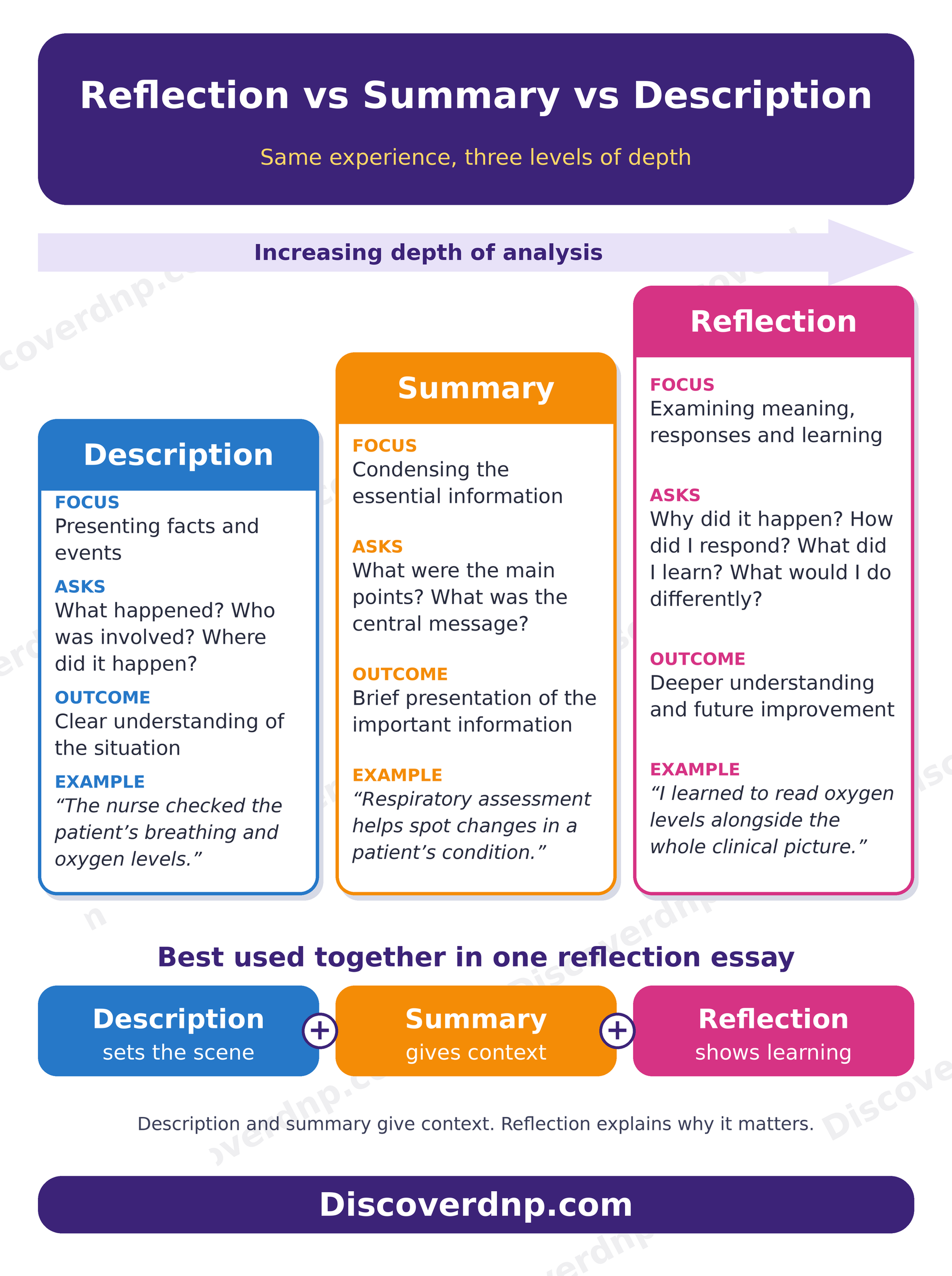
Conclusion
Learning how to start a reflection paper involves more than choosing an interesting opening sentence or describing an experience. It requires identifying a meaningful subject, providing relevant context, and establishing a clear central reflection that guides the entire discussion. An effective introduction gives readers an understanding of what is being examined and why the experience, observation, or text is worth reflecting upon. The strongest reflection papers move beyond recounting events to explore personal reactions, question existing assumptions, connect experiences with academic knowledge, and identify lessons that can influence future decisions.
Successful reflective writing also requires a balance between personal insights and critical analysis. Using an appropriate reflective model, maintaining an academic tone, supporting interpretations with relevant evidence, and organizing ideas into coherent paragraphs all contribute to a well-developed reflection essay. In nursing, these practices are particularly valuable because they help connect theoretical knowledge with clinical experiences, strengthen professional judgment, and encourage continuous improvement in patient care.
Ultimately, a meaningful reflection paper demonstrates not only what the writer experienced but also how that experience changed or reinforced their understanding. By approaching reflective writing with honesty, critical thinking, and a willingness to learn, writers can transform everyday experiences into valuable opportunities for personal and professional development.
Frequently Asked Questions
How to write an introduction for a reflection paper?
Start with an engaging hook, introduce the experience, text, or topic you are reflecting on, provide brief context, and end with a clear thesis statement explaining your main insight or lesson.
What are the best words to start a reflection paper?
Effective opening phrases include:
- “One experience that significantly changed my perspective was…”
- “Before this experience, I believed that…”
- “Reflecting on this situation has helped me understand…”
- “This experience challenged my understanding of…”
- “An important lesson I learned from this experience was…”
How do I start a reflection essay?
Begin by identifying a meaningful experience, observation, or topic. Open with a specific detail, question, or personal insight, explain the relevant context, and introduce the central idea that your essay will explore.
What is the best way to start a reflection?
The best approach is to begin with a specific and meaningful observation that introduces the subject and encourages deeper thought. Rather than simply describing what happened, establish why the experience matters and what you hope to understand or learn from reflecting on it.
