

Different Levels of Nursing: Levels of Nursing Explained, Types of Nursing, Degrees, Salary, and Career Paths
Nursing is a broad and highly structured profession in which education, licensure, clinical preparation, and scope of practice influence the responsibilities a professional can assume. The Different Levels of Nursing reflect distinct stages of preparation and practice, ranging from foundational patient-care roles to advanced clinical practice and professional leadership. Although these roles may work closely together in the same healthcare environment, they are not interchangeable. Each has defined responsibilities, educational requirements, competencies, and legal boundaries that determine the type of nursing care a professional can provide.
The level of nursing is closely associated with the level of education and professional credential a person holds. Depending on the pathway, preparation may include:
- Foundational patient-care education, such as preparation for a certified nursing assistant (CNA) role.
- Practical nursing education, leading to licensure as a licensed practical nurse (LPN) or licensed vocational nurse (LVN).
- Registered nursing education, commonly completed through an associate or bachelor’s degree program followed by the required licensure examination.
- Advanced nursing education, which prepares professionals for advanced practice roles and may involve a master’s or doctoral degree.
These pathways should not be viewed simply as a ladder in which one position is automatically superior to another. Rather, they represent different combinations of education, clinical preparation, authority, and responsibility. The specific requirements and permitted activities can also vary according to jurisdiction and regulatory requirements. Nursing regulatory bodies establish standards for licensure and practice, making it important to distinguish educational qualifications from the legal scope of practice associated with a particular credential.
Education is particularly important when examining the Different Levels of Nursing because each progression can expand the knowledge and competencies required for increasingly complex responsibilities. A registered nurse, for example, receives preparation that differs from that of a licensed practical nurse, while an advanced practice registered nurse receives additional graduate-level preparation beyond registered nursing. These differences influence assessment, clinical decision-making, care coordination, leadership, and other aspects of professional practice.
The distinction between nursing levels also becomes clearer when considering the variety of nursing roles found across healthcare settings. Professionals may work in hospitals, outpatient facilities, community health services, nursing homes, long-term care, specialty clinics, and other environments. Their responsibilities can range from providing direct patient care and implementing a care plan to coordinating complex care, managing specialized services, educating patients and healthcare professionals, or providing advanced clinical services.
Another important consideration is scope of practice. Scope of practice describes the activities and responsibilities that a professional is educated, authorized, and competent to perform. It helps establish appropriate boundaries between different roles and supports safe delegation and collaboration. For example, a healthcare team may include a CNA, LPN, RN, and advanced practice registered nurse, but each professional contributes to patient care according to their education, credential, competence, and applicable regulations. Understanding these boundaries is essential for safe nursing care and effective teamwork.
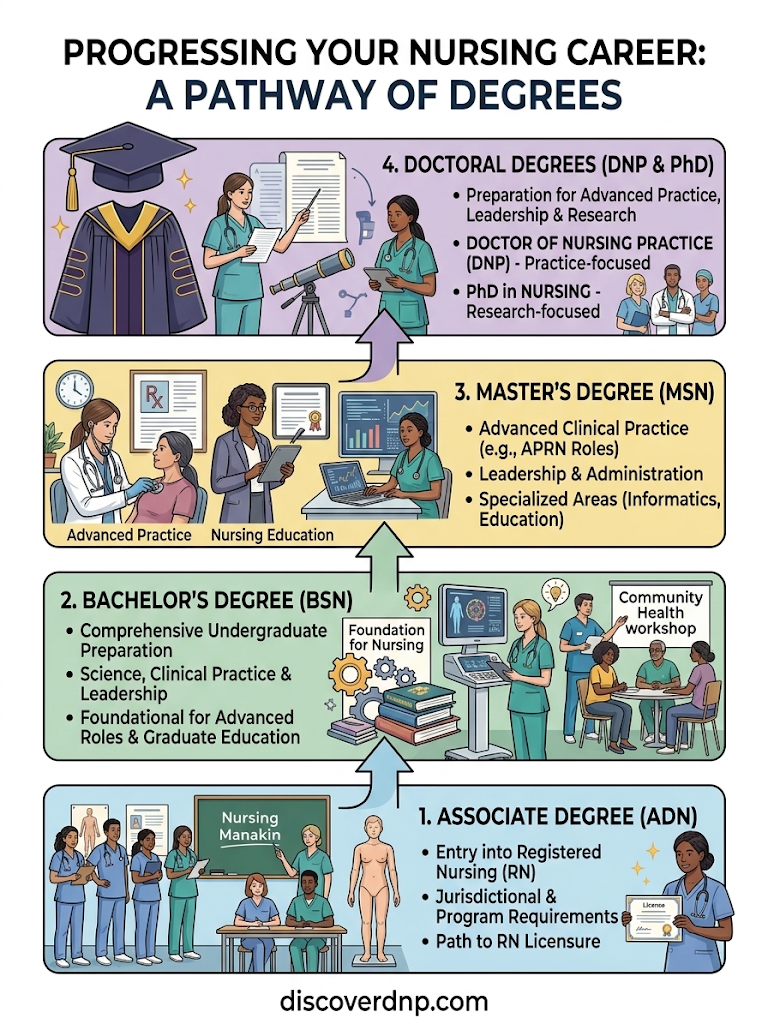
The Different Levels of Nursing are also connected to the many educational and professional pathways available within the nursing field. Common degrees in nursing include:
- Associate degree in nursing (ADN) or associate of science in nursing (ASN), which can provide a pathway into registered nursing.
- Bachelor of Science in Nursing (BSN), which provides broader undergraduate nursing education and can support entry into registered nursing and subsequent professional development.
- Master of Science in Nursing (MSN), which provides graduate-level preparation for selected advanced practice, education, leadership, and other specialized roles.
- Doctor of Nursing Practice (DNP) and other doctoral degree pathways, which provide advanced preparation for clinical practice, leadership, research, education, or other areas of the nursing profession.
A nursing degree, however, should not be confused with licensure or certification. Completing a degree program demonstrates educational achievement, whereas licensure establishes authorization to practice within a defined professional role. Certification may provide additional recognition of specialized knowledge or competence. Keeping these distinctions clear helps explain why two professionals with different educational backgrounds may have substantially different responsibilities even when they work within the same nursing unit.
The Different Levels of Nursing also provide multiple directions for a nursing career. Some professionals may enter healthcare through a CNA pathway and later pursue practical or registered nursing education. Others may enter a registered nursing program directly and subsequently complete a bachelor’s, master’s, or doctoral degree. A registered nurse may also develop expertise through nursing specialties, professional certification, advanced education, or leadership positions. This makes nursing a field with multiple career paths rather than a profession with a single educational route.
Understanding these distinctions is especially useful when considering long-term professional development. A person deciding how to become a nurse must consider not only the desired nursing role but also the education, licensure, clinical experience, certification, and degree level associated with that role. The appropriate pathway depends on the responsibilities a person intends to undertake and the area of practice in which they plan to work.
This article examines the Different Levels of Nursing by focusing on the relationship between education, professional roles, credentials, and nursing practice. It begins with the foundational distinctions between nursing credentials and degree levels before examining the CNA, LPN/LVN, RN, and advanced practice levels. It then considers the major types of nursing degrees, educational pathways, salary considerations, specialties, career advancement, and leadership positions. Understanding these differences provides a clearer picture of how education and professional preparation shape nursing roles throughout the nursing profession.
Understanding the Different Levels of Nursing
The Different Levels of Nursing reflect the varied educational preparation, credentials, responsibilities, and clinical authority found within the nursing profession. Nursing is not a single role with one standardized level of preparation. Instead, healthcare teams may include certified nursing assistants, licensed practical or vocational nurses, registered nurses, and advanced practice registered nurses, each contributing to patient care within a defined role. These distinctions help organize responsibilities across the healthcare team and ensure that patients receive care from professionals whose education, competence, and legal authority match the activities they perform. The National Council of State Boards of Nursing (NCSBN) identifies registered nurses (RNs), licensed practical/vocational nurses (LPN/VNs), advanced practice registered nurses (APRNs), and certified nursing assistants (CNAs) as distinct categories within the nursing and nursing-support workforce.
Understanding the Different Levels of Nursing requires looking at more than job titles. A person’s level of nursing is influenced by several interconnected factors, including:
- Education and training: The formal preparation completed through a nursing program or other approved educational pathway.
- Credential or licensure: The authorization or certification that permits a person to perform a particular role.
- Scope of practice: The activities a professional is educated, competent, and legally authorized to perform.
- Clinical responsibility: The complexity and type of patient care the professional is prepared to provide.
- Certification: Additional validation of specialized knowledge or competence in a particular area.
- Practice setting: Responsibilities can differ according to whether a professional works in acute care, community health, long-term care, nursing homes, outpatient services, or another environment.
- Regulatory requirements: Nursing practice is governed by laws and regulations that vary by state or jurisdiction.
The relationship between these factors is important because a higher degree level does not automatically mean that every professional with that degree can perform every nursing activity. Education provides the foundation for competence, but licensure and applicable laws determine what a professional is authorized to do. The American Nurses Association (ANA) explains that the scope of RN practice depends on factors including education, role, experience, certification, practice setting, population, and lawful authority.
Nursing Credentials, Degree Levels, and Scope of Practice
A nursing credential and a nursing degree are related but are not the same thing. A degree demonstrates completion of a particular level of academic education, while a license establishes legal authorization to practice within a regulated professional role. Certification may provide evidence of additional knowledge or competence in a specialty. Keeping these distinctions clear is essential when comparing the levels of nursing degrees with the different professional roles found in clinical practice.
For example, an associate degree in nursing or associate of science in nursing can provide an educational pathway to registered nursing. A bachelor of science in nursing provides broader undergraduate preparation and can serve as a foundation for graduate education. At the graduate level, a master’s degree in nursing may prepare nurses for advanced practice, education, administration, or other specialized roles. Doctoral education can include a doctor of nursing practice for practice-focused preparation or a doctor of philosophy in nursing for research and scholarly work. AACN describes practice-focused and research-focused doctorates as complementary pathways with different educational purposes.
This means that types of nursing degrees should not be confused with the entire hierarchy of nursing credentials. For example, a CNA generally does not hold the same professional nursing license as an RN, even though the CNA may provide important direct patient care under nursing supervision. Similarly, an RN who earns a master’s or doctoral degree does not automatically become an APRN; advanced practice requires the appropriate graduate preparation, certification, and authorization required by the applicable jurisdiction.
A useful way to understand the relationship is to view nursing development as several connected components:
Education → Credential/Licensure → Competence → Scope of Practice → Nursing Role
Each component serves a different purpose. Nursing education develops the knowledge and skills needed for practice. Licensure establishes legal authorization. Competence concerns the professional’s ability to perform an activity safely and effectively. Scope of practice establishes the boundaries of what the professional may perform. The resulting nursing role describes how those competencies and responsibilities are applied in a particular clinical or professional setting.
The NCSBN’s scope-of-practice framework emphasizes that whether a nurse can safely perform an activity depends on factors such as education, licensure, competence, applicable regulations, and the relevant nurse practice act. This is why the same clinical task should not automatically be assumed to fall within the scope of every person working in nursing.
Education and degree levels
The major degree levels associated with professional nursing education include:
- Associate-level nursing education
An associate degree can provide preparation for entry into registered nursing, depending on the jurisdiction and program requirements. Graduates who meet the applicable requirements may proceed toward RN licensure. - Bachelor’s-level nursing education
The bachelor of science in nursing provides undergraduate preparation in nursing science, clinical practice, health assessment, leadership, research, communication, and population health. AACN describes baccalaureate education as a foundation for professional nursing practice and further graduate education. - Master’s-level nursing education
A master of science in nursing provides graduate preparation for a variety of advanced roles. Depending on the program, this may include advanced clinical practice, nursing education, leadership, administration, informatics, or other specialized areas. - Doctoral-level nursing education
Doctoral education can prepare nurses for advanced clinical practice, leadership, research, education, or scholarly work. The doctor of nursing practice is practice-focused, whereas a PhD in nursing is primarily research-focused.
Importantly, these educational levels should be understood as pathways rather than rigid requirements that apply identically everywhere. Entry requirements and educational expectations can differ between jurisdictions and individual nursing roles.
Credentials and licensure
A certified nursing assistant generally occupies a nursing-support role rather than the same licensed professional nursing category as an LPN or RN. NCSBN describes a CNA as someone certified to assist with the delivery of direct nursing care under the supervision of a nurse.
A licensed practical nurse or licensed vocational nurse completes an approved practical or vocational nursing program and meets the applicable licensing requirements. In the NCSBN model, an LPN/VN provides patient care within the scope established by education, training, and regulation and normally works under the supervision of an RN, APRN, physician, or other authorized provider.
A registered nurse has a different level of professional preparation and legal authority. NCSBN defines an RN as an individual who has completed an approved nursing program, passed the NCLEX-RN, and obtained authorization from a state board of nursing to provide patient care.
An advanced practice registered nurse represents an advanced level built on RN preparation. The APRN framework recognizes four roles: nurse practitioner, certified nurse-midwife, clinical nurse specialist, and certified registered nurse anesthetist. These roles require advanced education, clinical preparation, certification, and regulatory authorization.
Scope of practice
Scope of practice is one of the most important concepts for understanding the Different Levels of Nursing. It establishes the professional boundaries within which an individual can practice. These boundaries are influenced by education, licensure, competence, clinical setting, patient population, employer policies, and applicable law.
Consider a patient admitted to a hospital with multiple care needs. A CNA may assist with activities such as personal hygiene, mobility, positioning, and other delegated direct-care activities. An LPN may provide additional nursing care within the applicable practical nursing scope. An RN may perform comprehensive nursing assessment, develop and evaluate nursing care, coordinate care, and make clinical judgments within RN scope. An APRN may have additional authority for advanced assessment, diagnosis, treatment, and other services depending on the role and jurisdiction.
The important point is not that one professional is simply “better” than another. Rather, different levels of nursing have different responsibilities. Effective healthcare depends on each professional understanding their own scope and recognizing when another member of the team has the appropriate preparation or authority to address a patient’s needs.
Nursing Hierarchy and Types of Nursing Roles
The term nursing hierarchy can be useful for describing differences in education, responsibility, clinical authority, and organizational leadership, but it should not be interpreted as a simple ranking of human worth or professional importance. Nursing teams function through collaboration, delegation, communication, and accountability. A CNA, LPN, RN, and APRN may have different responsibilities, but each can make an important contribution to safe and effective nursing care.
A simplified representation of the various levels of nursing is:
CNA → LPN/LVN → RN → APRN
This sequence can help explain increasing levels of professional preparation, but it is not a universal career ladder. Individuals can enter nursing through different educational pathways, and not every nurse progresses through each credential. For example, someone may enter an RN degree program directly rather than first becoming an LPN. Similarly, an RN may pursue graduate education for an advanced role without having worked as an LPN.
The roles can be broadly distinguished as follows:
| Nursing level or role | Primary focus | Typical preparation |
|---|---|---|
| Certified nursing assistant (CNA) | Basic direct patient support and daily care activities | Approved CNA education and certification |
| Licensed practical/vocational nurse (LPN/LVN) | Practical nursing care within a defined scope | Practical or vocational nursing program and licensure |
| Registered nurse (RN) | Professional nursing assessment, care planning, coordination, and clinical judgment | Approved RN education and RN licensure |
| Advanced practice registered nurse (APRN) | Advanced clinical assessment and management or specialized practice | Advanced graduate nursing education, certification, and licensure |
The exact responsibilities associated with these roles depend on local regulation and the practice environment. The NCSBN model, for example, describes LPN/VN practice as including participation in nursing care, patient teaching, monitoring, implementation of interventions, documentation, and communication while working within the applicable supervision and regulatory framework.
The registered nurse generally has broader professional nursing responsibilities. RN practice can involve assessment, clinical judgment, care planning, implementation and evaluation of nursing interventions, patient advocacy, education, coordination, and collaboration. The ANA emphasizes that RN practice extends beyond bedside care to include leadership, education, advocacy, consultation, and other professional roles.
At the advanced level, an advanced practice registered nurse builds on RN preparation through advanced education and supervised clinical training. The four recognized APRN roles have different areas of focus. A family nurse practitioner, for example, may provide primary or specialty care across populations depending on preparation and authorization. A nurse midwife focuses on reproductive and maternity care, while a clinical nurse specialist combines advanced clinical expertise with responsibilities involving patients, nurses, practice, and healthcare systems. A certified registered nurse anesthetist specializes in anesthesia and related advanced practice services.
Nursing roles also extend beyond direct clinical practice. Graduate-level preparation can support careers as a nurse educator, clinical leader, administrator, researcher, or other nursing professional. AACN notes that nurses with graduate preparation may work in direct care, education, research, policy, administration, and healthcare leadership.
For instance, a nurse educator may use clinical experience and advanced nursing education to prepare future nurses or provide professional development for practicing clinicians. A nurse manager may coordinate staff, resources, quality improvement, and patient-care activities within a nursing unit. At higher organizational levels, nursing leaders may progress into positions such as director of nursing or chief nursing officer, where responsibilities increasingly involve organizational strategy, workforce management, quality, safety, and healthcare leadership.
This illustrates why the Different Levels of Nursing should not be understood solely as a sequence of bedside positions. The nursing profession contains several dimensions of professional development:
- Clinical progression: Developing increasingly advanced clinical knowledge and responsibilities.
- Educational progression: Moving from foundational preparation to undergraduate, graduate, and doctoral education.
- Specialty progression: Developing expertise in areas such as pediatrics, critical care, oncology, mental health, community health, or other nursing specialties.
- Leadership progression: Moving from clinical responsibilities into charge, management, administrative, and executive positions.
- Educational and scholarly progression: Developing careers in nursing education, research, evidence-based practice, or academic leadership.
For example, an RN may remain in direct patient care while developing expertise as a clinical nurse in intensive care. Another RN may pursue a master’s degree and become a nurse educator. A different nurse may complete advanced education and become a nurse practitioner, while another may move into nursing administration and eventually become a chief nursing officer. These are different nursing career directions rather than a single mandatory progression.
Consequently, understanding the Different Levels of Nursing provides a framework for seeing how credentials, education, clinical practice, and professional roles fit together. The distinctions are especially important when considering delegation, supervision, patient safety, career planning, and the transition from one nurse level to another. The next sections examine these levels individually, beginning with the certified nursing assistant and then progressing through practical nursing, registered nursing, and advanced practice.
Certified Nursing Assistant
A certified nursing assistant (CNA) is an important member of the healthcare team who provides hands-on support with basic patient needs and daily activities. Although the CNA role is sometimes included when people discuss the Different Levels of Nursing, it is important to distinguish it from licensed nursing roles such as the licensed practical nurse (LPN) and registered nurse (RN). A CNA is generally a nursing-support professional rather than a licensed nurse. The NCSBN defines a CNA as a person certified to assist with the delivery of direct nursing care and who works under the supervision of a nurse.
CNAs often spend more time with patients than many other members of the healthcare team because their responsibilities involve frequent, direct interaction. Their work can include helping with bathing, dressing, eating, toileting, mobility, positioning, and other activities of daily living. They may also observe patients, measure selected vital signs, document or communicate relevant observations, and report changes in a patient’s condition to the appropriate nurse. The U.S. Bureau of Labor Statistics (BLS) identifies nursing assistants as workers who provide basic care and assist patients with activities of daily living, often as part of a team supervised by LPNs/LVNs and RNs.
The CNA role is therefore an important foundation within the various levels of nursing and nursing-support roles. CNAs do not replace licensed nurses, but their observations and direct assistance can contribute significantly to continuity and quality of patient care.
CNA Role, Education, Certification, and Scope of Practice
The primary nursing role of a CNA is centered on direct, supportive care. This can be particularly important for patients who cannot independently perform everyday activities because of illness, disability, injury, advanced age, surgery, or reduced mobility.
Typical CNA responsibilities may include:
- Assisting patients with bathing, grooming, dressing, and personal hygiene.
- Helping patients eat and drink when assistance is required.
- Assisting with toileting and continence care.
- Turning and repositioning patients to promote comfort and reduce complications associated with immobility.
- Helping patients transfer between beds, chairs, and wheelchairs using appropriate techniques.
- Measuring and recording selected vital signs according to training and facility policy.
- Observing patients and reporting changes or concerns to a supervising nurse.
- Making beds, changing linens, and maintaining a safe and comfortable patient environment.
- Providing emotional support and respectful interaction during routine care.
- Assisting with mobility and encouraging appropriate independence within the patient’s care plan.
For example, consider an older adult receiving long-term care after a stroke. A CNA may help the patient get out of bed, assist with bathing and dressing, provide support during meals, and observe whether the patient appears unusually confused or weak. If the CNA notices a significant change from the patient’s normal condition, the appropriate response is to communicate that observation to the supervising nurse rather than independently diagnose the cause or determine a new treatment.
This illustrates an important principle in the Different Levels of Nursing: direct contact with a patient does not mean that every member of the healthcare team has the same clinical authority. A CNA may notice and report a change, while a licensed nurse evaluates the patient’s condition and determines the appropriate nursing response within the nurse’s scope of practice.
CNA education and training
The educational pathway to become a CNA is generally shorter than the formal preparation required for an LPN or RN. However, the exact education and training requirements vary by jurisdiction. In the United States, nursing assistants commonly complete a state-approved education program that combines classroom instruction with supervised clinical experience, followed by a competency examination where required. The BLS notes that these programs may be offered through high schools, community colleges, vocational or technical schools, hospitals, and nursing homes.
A typical CNA program introduces foundational concepts such as:
- Basic patient care: Personal hygiene, nutrition, elimination, mobility, positioning, and comfort.
- Safety: Fall prevention, infection prevention, safe transfers, and appropriate use of equipment.
- Communication: Communicating respectfully with patients and reporting relevant observations to nurses.
- Vital signs and observation: Measuring selected physiological indicators and recognizing changes that should be reported.
- Ethical and professional conduct: Privacy, dignity, confidentiality, boundaries, and respectful treatment.
- Clinical practice: Applying learned skills under supervision in an appropriate healthcare setting.
The education provides the foundation for the CNA’s responsibilities, but completing a training program does not mean the individual can independently perform every task encountered in a healthcare setting. The person’s certification, employer policies, demonstrated competence, and local regulations all matter.
CNA certification and regulation
Certification is another important distinction between a CNA and other nursing positions. In many U.S. jurisdictions, individuals must complete approved training and pass a competency examination before being placed on a state registry or receiving the applicable certification or authorization. Requirements differ by state, including requirements for renewal, continuing education, background checks, and additional training.
The term certified nurse should also be used carefully. A CNA is a certified nursing assistant, whereas a registered nurse or licensed practical nurse is a licensed professional nurse. Certification and licensure are not interchangeable concepts.
A useful distinction is:
- CNA: Certified to perform specified nursing-support and direct-care activities.
- LPN/LVN: Licensed to practice practical nursing within the applicable scope.
- RN: Licensed to practice professional registered nursing.
- APRN: An RN with advanced preparation, certification, and authorization for advanced practice.
This distinction becomes particularly important when comparing the Different Levels of Nursing because educational preparation, certification, and licensure establish different professional responsibilities.
CNA scope of practice
The scope of practice for a CNA is narrower than that of an LPN/LVN or RN. It is determined by applicable regulations, the CNA’s education and competency, and the policies of the healthcare organization. NCSBN emphasizes that responsibilities within regulated nursing practice should be consistent with education, licensure or authorization, competence, and the nurse practice act and regulations of the relevant jurisdiction.
CNAs commonly perform delegated activities rather than independently making nursing diagnoses, establishing comprehensive nursing care plans, or determining medical treatment. Their contribution is particularly valuable because they can provide continuous observations during routine interactions.
For example, a CNA caring for a patient recovering from surgery might notice that the patient:
- Has become more confused than earlier in the shift.
- Is having difficulty breathing.
- Has developed new weakness.
- Is refusing meals or fluids.
- Appears to be experiencing increased pain.
- Has a significant change in mobility.
The CNA should communicate the observation promptly according to facility procedure. The supervising nurse then assesses the patient’s condition and determines the appropriate nursing intervention or escalation.
The CNA’s role is therefore not simply about performing routine tasks. Observation, communication, dignity, safety, and reliable reporting are important components of effective direct patient care.
CNA Salary and Career Opportunities
CNA salary varies considerably according to geographic location, employer, experience, work setting, shift, and additional qualifications. Because compensation changes over time and differs between countries and jurisdictions, a single salary figure should not be treated as universal.
For current U.S. data, the BLS reported a median annual wage of $42,260 for nursing assistants in May 2025, with the lowest 10% earning below $33,940 and the highest 10% earning above $51,980. Compensation also varied by setting; the May 2025 median was $43,000 in skilled nursing facilities, $42,310 in hospitals, $39,490 in continuing care retirement communities and assisted living facilities, and $38,040 in home healthcare services.
These figures illustrate why salary should always be interpreted alongside the employment setting rather than viewed as a fixed amount for every CNA.
For example, a CNA working in a hospital may have different compensation from someone working in a nursing home or home healthcare. Shift differentials for nights, weekends, or holidays may also affect earnings depending on the employer.
CNA employment settings
CNAs can work in a variety of environments, including:
- Nursing homes and skilled nursing facilities
- Hospitals
- Long-term care facilities
- Assisted living communities
- Home healthcare
- Continuing care retirement communities
- Other healthcare and residential care environments
The BLS reported that nursing care facilities and hospitals were among the largest employers of nursing assistants in 2025. It also noted that nursing assistants frequently work in physically demanding environments and may need to assist with moving or transferring patients.
Working in nursing homes and long-term care can be particularly different from working in an acute hospital. In long-term care, a CNA may develop relationships with residents over months or years and become familiar with their normal routines, preferences, mobility, eating patterns, and communication styles. That familiarity can make changes in a resident’s condition easier to recognize and report.
In a hospital, by contrast, the CNA may interact with patients for a shorter period during an acute illness, surgery, injury, or hospitalization. The pace can be faster, and the patient’s needs may change considerably from one shift to another.
Career opportunities and advancement
The CNA position can serve as an entry point into the broader nursing career for individuals who want early exposure to patient care. Working as a CNA can provide practical experience with communication, teamwork, infection prevention, mobility assistance, documentation, patient dignity, and the realities of clinical practice.
However, becoming a CNA does not automatically require a person to progress into licensed nursing. Some individuals remain CNAs and develop their careers through experience, additional training, specialty credentials, or supervisory responsibilities. Others use the experience as a foundation for pursuing higher degree levels or additional professional credentials.
A possible progression may look like:
CNA → LPN/LVN → RN → Advanced Practice or Other Graduate Nursing Role
This is one possible career path, not a requirement. A person can also enter an RN program without first working as a CNA, depending on admission requirements and the available nursing program.
For someone who begins as a CNA and later wants to become an LPN, an approved practical nursing program provides the education needed for that next professional level. Another individual may choose to pursue an RN education pathway through an associate or bachelor’s program. Later, an RN may pursue graduate education for an advanced nursing role.
The CNA experience can therefore provide useful exposure to the realities of clinical practice, but it should not be mistaken for a substitute for the formal education and licensure required at higher levels. Each progression involves additional education, competencies, examinations or certification requirements, and a broader or different scope of responsibility.
The employment outlook also demonstrates the continuing importance of this role. The BLS projects approximately 3% employment growth for nursing assistants from 2025 to 2035, with about 39,000 additional nursing-assistant positions projected over that period and substantial annual openings arising from replacement needs. The agency also points to population aging and the growing need to care for people with chronic or progressive conditions as factors supporting continued demand.
For someone considering a career in nursing, the CNA role can therefore provide valuable insight into patient-centered care and healthcare teamwork. It offers direct exposure to the needs of patients while allowing individuals to determine whether they want to pursue practical nursing, registered nursing, or another healthcare pathway. At the same time, the role has its own professional value: CNAs are often the healthcare workers who spend significant amounts of time assisting patients with the fundamental activities that affect comfort, dignity, safety, and quality of life.
Licensed Practical Nurse and Licensed Vocational Nurse
A licensed practical nurse (LPN) is a licensed nursing professional who provides practical nursing care within a defined scope of practice. In California and Texas, the comparable credential is generally called a licensed vocational nurse (LVN). Although the titles differ, LPN and LVN roles are broadly comparable in terms of their position within the healthcare team. NCSBN defines an LPN/VN as a person who has completed an approved practical or vocational nursing program, passed the NCLEX-PN examination, and obtained licensure through a state board of nursing. LPN/VNs normally practice under the supervision of an RN, APRN, physician, or other authorized provider, according to applicable regulations.
Within the Different Levels of Nursing, practical nursing occupies a distinct position between nursing-support roles such as the CNA and professional registered nursing. An LPN/LVN has more extensive nursing preparation and legal authority than a CNA, but generally has a narrower scope of practice than an RN. This distinction is important because the LPN/LVN role involves actual licensed nursing practice rather than only supportive patient-care activities.
Practical nurses can work in hospitals, nursing homes, long-term care facilities, physician offices, rehabilitation centers, home healthcare, and other healthcare environments. Their responsibilities may include providing direct patient care, administering medications where authorized, monitoring patient conditions, performing selected treatments, documenting care, reinforcing patient education, and communicating changes in condition to the appropriate member of the healthcare team.
The precise responsibilities of an LPN or LVN vary by state, employer, patient population, and clinical setting. Therefore, the title alone does not determine every activity a practical nurse can perform. Education, licensure, demonstrated competence, facility policy, and the applicable nurse practice act all influence the actual scope of practice.
LPN/LVN Education, Role, and Scope of Practice
Becoming an LPN or LVN generally begins with completion of an approved practical nursing program or vocational nursing program. These programs provide focused nursing education that prepares graduates to provide basic and intermediate nursing care within the practical nursing scope.
The educational content commonly combines classroom instruction, laboratory learning, and supervised clinical experience. Although program structures differ, practical nursing education generally develops knowledge and skills in areas such as:
- Fundamentals of nursing care
- Anatomy and physiology
- Pharmacology and medication administration
- Nutrition
- Infection prevention and control
- Health assessment
- Medical-surgical nursing
- Maternal and child health
- Mental and behavioral health
- Geriatric and long-term care
- Communication and patient education
- Clinical safety and professional responsibilities
Clinical education is particularly important because practical nursing is a hands-on profession. A person does not become competent simply by learning nursing concepts in a classroom. Students must develop the ability to apply those concepts safely when caring for actual patients under appropriate supervision.
For example, a practical nursing student may learn about wound care in class and practice the associated skills in a laboratory before performing the procedure in a clinical setting under supervision. This progression from knowledge to supervised performance helps establish the competence expected before independent practice within the applicable scope.
LPN/LVN licensure
Education is only one part of becoming an LPN or LVN. Graduates must also satisfy the applicable regulatory requirements and pass the licensure examination for practical nurses, the NCLEX-PN in the United States. NCSBN identifies successful completion of an approved practical or vocational nursing program and passage of the NCLEX-PN as part of the pathway to LPN/VN licensure.
The regulatory process exists because nursing involves significant responsibility for patient safety. A graduate may have completed a nursing program but cannot simply assume that completion of coursework grants unrestricted authority to practice. Licensure provides the legal framework under which the individual can work as an LPN or LVN.
Requirements beyond the examination can vary by jurisdiction and may include application procedures, background checks, continuing education, renewal requirements, and other conditions established by the board of nursing.
The practical nursing role
The LPN/LVN provides direct nursing care while working within the boundaries established by education, competence, regulation, and organizational policy. Depending on the jurisdiction and clinical setting, responsibilities may include:
- Monitoring patients
An LPN/LVN may observe patients, measure vital signs, monitor responses to treatment, and identify changes that should be communicated to the supervising nurse or other provider. - Providing direct patient care
Practical nurses can assist with hygiene, mobility, nutrition, elimination, comfort, skin care, wound care, and other nursing interventions appropriate to their scope. - Administering medications and treatments
Where permitted by law and organizational policy, LPNs/LVNs may administer medications and perform prescribed treatments after receiving the necessary education and demonstrating competence. - Documentation
Accurate documentation is an essential part of the practical nursing role. The LPN/LVN records relevant observations, interventions, patient responses, and other required information in accordance with organizational standards. - Patient education and communication
Practical nurses may provide or reinforce education appropriate to their role, communicate with patients and families, and report relevant information to other healthcare professionals. - Collaboration with the nursing team
LPNs/LVNs work as part of an interdisciplinary team and communicate with RNs, APRNs, physicians, therapists, nursing assistants, and other healthcare professionals.
NCSBN’s description of the LPN/VN role emphasizes providing patient care under the applicable supervision framework. The exact degree of supervision and the activities permitted vary according to jurisdiction.
LPN/LVN scope of practice
Scope of practice is one of the most important concepts when examining the Different Levels of Nursing. It describes the activities that a professional is legally and professionally authorized and competent to perform.
An LPN/LVN does not have the same scope of practice as an RN simply because both are licensed nurses. Likewise, an RN does not automatically have the same scope as an APRN. Each level has its own educational preparation and regulatory framework.
A practical nurse’s scope may include providing routine and complex care appropriate to the individual’s training, monitoring patients, implementing nursing interventions, administering medications, and reporting findings. However, activities involving comprehensive assessment, independent clinical judgment, diagnosis, or other advanced responsibilities may be reserved for an RN, APRN, physician, or another authorized professional depending on jurisdiction.
Consider a patient in a long-term care facility who develops a new change in mental status. An LPN may recognize and document the change, obtain appropriate observations or vital signs, provide care within the established plan, and promptly communicate the findings. The RN or other authorized provider may then conduct a more comprehensive assessment and determine the appropriate response according to the applicable practice framework.
This illustrates an important principle: scope of practice is not determined solely by what a nurse has previously performed. A task being familiar does not automatically mean that it is legally or professionally within the individual’s scope. Education, competence, regulation, delegation, supervision, and patient circumstances must all be considered.
LPN and LVN terminology
The difference between the terms licensed practical nurse and licensed vocational nurse is primarily geographic rather than a completely different category of nursing. The term LPN is widely used across the United States, while LVN is used in certain states, notably California and Texas.
Therefore, someone searching for information about licensed practical nursing may encounter both titles. The appropriate title is determined by the jurisdiction in which the professional is licensed.
The distinction is useful when comparing different types of nurses, because professional titles can vary even when the underlying role is similar. It is also one reason why nursing regulations should be checked with the relevant state or jurisdiction rather than relying solely on a general description of the profession.
LPN vs. RN, Salary, and Career Path
The difference between an LPN and an RN is primarily reflected in education, scope of practice, clinical responsibility, licensure, and career opportunities. Both are licensed nursing professionals and both can provide direct patient care, but their preparation and professional responsibilities are not identical.
NCSBN describes an RN as a graduate of a state-approved nursing school who has passed the NCLEX-RN and obtained authorization from a state board of nursing. By comparison, an LPN/VN completes an approved practical or vocational nursing program, passes the NCLEX-PN, and receives LPN/VN licensure.
A simplified comparison is:
| Factor | LPN/LVN | RN |
|---|---|---|
| Education | Practical or vocational nursing program | Approved RN program, such as ADN or BSN pathway |
| Licensure examination | NCLEX-PN in the U.S. | NCLEX-RN in the U.S. |
| Practice focus | Practical nursing care within defined scope | Professional nursing practice with broader responsibilities |
| Scope | Generally narrower | Generally broader |
| Patient care | Direct nursing care and monitoring | Assessment, care planning, implementation, evaluation, coordination, and other RN responsibilities |
| Career options | Practical nursing positions and selected specialty settings | Broader range of clinical, specialty, leadership, education, and further-degree opportunities |
| Advancement | Can pursue an RN pathway | Can pursue BSN, MSN, doctoral, specialty, leadership, or advanced practice pathways |
The table provides a general comparison rather than a universal description of every jurisdiction. State laws and individual employer requirements can create important differences.
LPN education compared with RN education
An LPN/LVN typically completes a practical nursing program designed specifically for entry into practical nursing practice. An individual who wants to become an RN can choose from several educational pathways, including an associate degree in nursing or a bachelor of science in nursing program, depending on the jurisdiction and program requirements.
An ADN or associate of science in nursing can provide a route toward RN licensure. The AACN recognizes associate degree programs as an important entry point into nursing while supporting educational progression toward the baccalaureate and higher degree levels.
The BSN provides a broader undergraduate education that includes nursing science, clinical practice, leadership, population health, research, communication, and other areas of professional preparation. AACN states that baccalaureate education provides a broader foundation for professional nursing practice and subsequent graduate education.
This creates several possible pathways. Someone might:
Practical nursing program → LPN/LVN → RN program → BSN → graduate nursing education
Another person might enter:
BSN program → RN licensure → specialty practice → graduate nursing degree
Neither pathway is inherently appropriate for everyone. The right route depends on career goals, educational circumstances, jurisdictional requirements, finances, time, and the type of nursing role a person intends to pursue.
Differences in patient care responsibilities
The distinction between an LPN and RN becomes particularly apparent in the complexity of patient care responsibilities.
An LPN may provide many hands-on nursing interventions, monitor a patient’s condition, administer authorized treatments and medications, and communicate findings. An RN generally has broader responsibilities for comprehensive assessment, nursing judgment, care planning, coordination, implementation, and evaluation.
For example, imagine a patient admitted with diabetes, heart failure, reduced mobility, and a newly developing wound. An LPN may perform appropriate wound care, monitor vital signs, administer medications within scope, document findings, and report changes. The RN may have broader responsibility for assessing the patient’s overall condition, coordinating the nursing care plan, evaluating responses to interventions, communicating with the interdisciplinary team, and determining when changes require escalation.
The actual division of responsibilities depends on jurisdiction, facility policy, patient needs, and the competencies of the individual professionals. The point is that LPN vs. RN is not simply a difference in job title; it reflects differences in preparation and professional accountability.
LPN vs. RN salary
Salary is another area in which LPN and RN careers differ. According to the U.S. Bureau of Labor Statistics, the median annual wage for licensed practical and licensed vocational nurses was $64,400 in May 2025. The lowest 10% earned less than $49,740, while the highest 10% earned more than $83,440.
Salary varies according to location, experience, specialty, employer, shift, and practice setting. For example, practical nurses working in government or nursing and residential care facilities may have different compensation from those working in physician offices or other healthcare settings. BLS reported a May 2025 median wage of $68,970 for LPNs/LVNs employed in government excluding state and local education and hospitals, and $68,020 in nursing and residential care facilities.
RN compensation is generally higher on average, although the exact amount varies considerably by location and employment setting. Salary should therefore be considered alongside factors such as educational investment, work responsibilities, specialization, scheduling, career mobility, and long-term professional goals.
More importantly, salary comparisons should not imply that one role has greater value to patients. LPNs/LVNs and RNs perform different functions, and both can be essential to safe nursing care.
LPN to RN career path
For an LPN who wants to expand professional responsibilities, an LPN-to-RN pathway can provide an opportunity to progress to registered nursing. These programs are designed to build on existing practical nursing knowledge while adding the education required for RN-level competencies.
The pathway can vary by institution, but it may involve:
- Completing prerequisite courses.
- Applying to an LPN-to-RN or bridge nursing program.
- Completing additional RN-level nursing education and clinical experiences.
- Meeting graduation requirements.
- Applying for RN licensure.
- Passing the required licensure examination for registered nurses, the NCLEX-RN in the United States.
- Obtaining RN authorization from the relevant board of nursing.
Once an individual becomes an RN, additional opportunities become available. An RN may pursue a bachelor’s degree, specialty certification, leadership development, graduate nursing education, or other professional pathways.
AACN supports educational mobility and notes that degree-completion programs allow nurses to build on previous nursing education rather than unnecessarily repeating what they have already learned. RN-to-BSN programs, for example, build on associate-degree or diploma preparation and develop broader professional, analytical, leadership, research, and population-health knowledge.
An LPN therefore does not have to view the practical nursing credential as the endpoint of a nursing career. It can be a professional destination in its own right or a starting point for further advancement.
Long-term career opportunities
The LPN/LVN role can lead to employment in many areas, including:
- Long-term care
- Nursing homes
- Rehabilitation
- Home healthcare
- Outpatient clinics
- Physician offices
- Community healthcare
- Hospitals
- Residential care
- Selected specialty settings
An LPN who wants to continue advancing can pursue RN education and later explore additional nursing specialties, leadership, education, or graduate-level opportunities. An RN may subsequently complete a BSN, master of science in nursing, or doctoral program depending on professional objectives.
For example, an LPN working in a nursing home may develop a strong interest in gerontological care. That experience could lead to additional professional development in long-term care, followed by an LPN-to-RN program and eventual specialization or leadership. Another LPN may discover an interest in acute care and use an RN pathway to qualify for a wider range of hospital-based nursing positions.
The progression from LPN/LVN to RN illustrates an important feature of the Different Levels of Nursing: professional development can occur through both increased clinical responsibility and increased education. The transition is not simply about obtaining a new title. It involves developing broader knowledge, clinical judgment, professional accountability, and the competencies required for RN practice.
At the same time, an LPN does not have to advance to RN practice to have a meaningful career in nursing. Practical nurses provide essential care in settings where their skills and scope are well suited to patient needs. The most appropriate career path depends on the individual’s professional goals, preferred practice environment, desired level of responsibility, and willingness to pursue additional education.
Registered Nurse
A registered nurse (RN) is a licensed nursing professional who provides and coordinates patient care across hospitals, clinics, community settings, nursing homes, outpatient facilities, schools, home health services, and many other healthcare environments. Within the different levels of nursing, the RN level represents a major professional nursing role because RNs combine formal nursing education, clinical judgment, assessment skills, care planning, patient education, coordination, and clinical decision-making.
The RN role is broader than performing individual clinical tasks. A registered nurse is expected to assess a patient’s condition, identify actual or potential health problems, establish priorities, implement appropriate nursing interventions, evaluate responses to treatment, communicate changes to the healthcare team, and contribute to safe and coordinated nursing care. The exact scope of practice depends on the nurse’s education, competence, jurisdiction, employer policies, and applicable board of nursing regulations.
In the United States, the National Council of State Boards of Nursing (NCSBN) defines an RN as an individual who graduates from a state-approved nursing school, passes the NCLEX-RN, and receives licensure from a state board of nursing to provide patient care. This makes RN licensure a regulatory credential rather than simply an academic qualification.
RN Education, Licensure, and Scope of Practice
Becoming a registered nurse requires a combination of nursing education, clinical preparation, examination, and professional licensure. Although educational pathways can differ, the goal is to prepare the nurse to provide safe, evidence-based care and exercise appropriate clinical judgment.
In the United States, common educational routes into RN practice include an associate degree in nursing (ADN), a Bachelor of Science in Nursing (BSN), or a diploma from an approved nursing program. The U.S. Bureau of Labor Statistics recognizes these as the principal education pathways for becoming an RN, although individual employers and jurisdictions may establish additional requirements.
An associate degree in nursing generally provides the foundational nursing education required for entry into RN practice. It typically includes classroom instruction, laboratory learning, and supervised clinical experiences. An ADN can therefore provide a relatively direct route to becoming an RN while also creating a foundation for later educational progression.
A Bachelor of Science in Nursing provides a broader degree-level education. In addition to core nursing concepts and clinical practice, a bachelor’s degree program commonly incorporates subjects such as research, leadership, community and population health, nursing theory, healthcare systems, evidence-based practice, and broader professional preparation. These additional areas can be particularly valuable for nurses who plan to pursue leadership, public health, education, specialty practice, graduate education, or other advanced nursing positions.
The distinction between an ADN and a BSN should not be interpreted as meaning that one RN automatically provides better bedside care than another. Competence depends on education, clinical preparation, experience, continuing professional development, and the nurse’s ability to apply knowledge safely. However, research has identified associations between higher proportions of baccalaureate-prepared RNs and improved patient outcomes in hospital settings. For example, one study found that hospitals with a higher proportion of RNs holding baccalaureate or higher degrees had lower rates of several adverse outcomes, including mortality associated with congestive heart failure and failure to rescue.
The educational pathway also influences long-term career path. An RN who initially completes an associate degree can later enroll in an RN-to-BSN program, while a BSN-prepared nurse can progress into graduate education such as a master’s degree in nursing or a doctor of nursing practice program. Thus, nursing education does not have to end when a person obtains the first RN license.
Licensure and the NCLEX-RN
Education alone does not make someone a licensed registered nurse. After completing an approved nursing program and satisfying the requirements of the relevant regulatory authority, the candidate must meet the jurisdiction’s requirements for RN licensure. In the United States and many Canadian jurisdictions using the examination, this includes the NCLEX-RN.
The NCSBN’s current 2026 NCLEX-RN Test Plan explains that the examination is designed to assess the knowledge, skills, abilities, and clinical judgment needed for safe and effective entry-level RN practice. The examination is therefore not simply a test of memorized facts. Clinical judgment is a central component because newly licensed RNs must make increasingly complex decisions while staying within their nursing scope of practice.
The licensing process is particularly important because nursing is a regulated profession. The board of nursing or other nursing regulatory authority determines whether an individual has met the legal requirements to practice. Licensure also creates professional accountability: an RN is responsible for practicing within the boundaries established by law, regulation, professional standards, employer policies, and personal competence.
Requirements are not identical everywhere. State and territorial boards can differ in areas such as application procedures, continuing education, renewal, endorsement, and specific scope-of-practice rules. Therefore, anyone planning to become a registered nurse should consult the appropriate board of nursing rather than assuming that requirements in one jurisdiction apply everywhere.
RN scope of practice
The scope of practice of an RN describes the activities and responsibilities that the nurse is legally and professionally authorized and competent to perform. It should not be viewed as one universal list of procedures because nursing regulations vary by jurisdiction and individual practice settings.
At the RN level, scope commonly includes responsibilities such as:
- Performing comprehensive or focused nursing assessments.
- Collecting and interpreting relevant patient information.
- Identifying changes in patient condition.
- Developing, implementing, and evaluating nursing care plans.
- Administering medications and treatments within applicable authority.
- Monitoring patients for therapeutic effects and adverse reactions.
- Performing nursing procedures appropriate to education and competence.
- Providing patient and family education.
- Coordinating care with physicians, APRNs, therapists, pharmacists, social workers, and other professionals.
- Delegating appropriate activities to qualified personnel according to applicable rules.
- Documenting assessments, interventions, responses, and communication.
- Participating in discharge planning and continuity of care.
- Advocating for patient safety, informed decision-making, and appropriate care.
For example, consider a patient admitted with pneumonia. The RN does more than administer an antibiotic. The nurse may assess respiratory status, monitor oxygen saturation, evaluate breath sounds, review vital-sign trends, administer prescribed medications, recognize deterioration, communicate significant findings, support airway and oxygenation measures within the care plan, educate the patient about treatment, document the response, and determine whether the patient’s condition requires escalation.
This illustrates why clinical judgment is central to the RN role. The nurse must connect individual findings rather than treating each observation as an isolated task. A rising respiratory rate, declining oxygen saturation, increasing confusion, and worsening work of breathing may collectively indicate deterioration even before a dramatic change in another vital sign occurs. The RN’s responsibility is to recognize the pattern, respond appropriately within scope, and communicate with the healthcare team.
The NCSBN’s current RN practice analysis emphasizes the relevance of clinical judgment to entry-level RN practice and uses contemporary RN practice data to inform the NCLEX-RN framework.
Scope of practice also includes knowing when not to act independently. A registered nurse must recognize situations that require consultation, additional assessment, clarification of an order, collaboration with another professional, or escalation to a more advanced level of care. Safe nursing practice is therefore based not only on what an RN can perform but also on recognizing the limits of individual competence and authority.
RN Roles, Nursing Specialties, Salary, and Career Opportunities
The RN role is highly diverse, which is one reason the registered nurse represents such an important level within the different levels of nursing. RNs can work directly with patients, coordinate complex care, educate patients and healthcare professionals, participate in research, manage nursing units, provide community health services, or develop expertise in a particular clinical specialty.
A newly licensed RN may begin in a general medical-surgical unit and gradually develop expertise in a particular type of nursing. Another RN may enter emergency care, perioperative nursing, maternal-child health, mental health, oncology, critical care, public health, or another area. Some nursing specialties require substantial additional training, experience, certification, or graduate education.
Common RN roles and nursing specialties
The breadth of RN opportunities can be illustrated through several major practice areas:
Medical-surgical nursing: Medical-surgical RNs care for adults with a wide range of acute and chronic conditions. They may manage patients recovering from surgery, infections, cardiovascular problems, gastrointestinal disorders, diabetes, respiratory illnesses, and other conditions. This setting can provide broad clinical exposure because nurses frequently care for patients with multiple simultaneous health needs.
Emergency nursing: Emergency RNs assess and prioritize patients according to urgency, respond to acute illness and injury, administer emergency treatments, monitor rapidly changing conditions, and collaborate with multidisciplinary teams. Strong assessment and prioritization skills are particularly important because the patient’s condition may change rapidly.
Critical care nursing: ICU and other critical-care RNs care for patients requiring close monitoring and advanced interventions. Responsibilities may include continuous assessment, management of complex therapies, monitoring invasive devices, medication titration within authorized protocols, and recognition of subtle changes in critically ill patients.
Pediatric nursing: Pediatric RNs care for infants, children, and adolescents. Their practice requires knowledge of developmental differences, weight-based medication considerations, communication appropriate to age, and family-centered care.
Maternal and newborn nursing: RNs may work in labor and delivery, postpartum care, newborn care, or related areas. They monitor patients during pregnancy and childbirth, recognize complications, provide education, and support mothers and newborns during the transition to home.
Psychiatric and mental health nursing: Mental health RNs care for patients experiencing psychiatric conditions, substance-use disorders, behavioral crises, and other mental health needs. Therapeutic communication, risk assessment, medication monitoring, and maintaining a safe environment are important components of this role.
Oncology nursing: Oncology RNs care for people undergoing cancer treatment and those receiving supportive or palliative care. Their responsibilities can involve treatment administration, symptom management, patient education, monitoring for adverse effects, psychosocial support, and coordination with oncology teams.
Community and public health nursing: Community-based RNs may provide preventive care, health education, screening, chronic disease management, vaccination services, population health interventions, and other services outside the traditional hospital environment.
Home health nursing: A home health RN provides care in a patient’s residence. The nurse may assess the home environment, manage wounds, administer treatments, educate family members, monitor chronic conditions, and coordinate services. This role often requires substantial independence because the nurse may not have immediate access to the resources available in a hospital.
Long-term care and nursing homes: RNs in long-term care settings coordinate nursing care for residents with chronic illness, functional limitations, cognitive impairment, and complex medication or treatment needs. Depending on the organization, the RN may also supervise other nursing personnel and coordinate care plans.
Perioperative nursing: Perioperative RNs support patients before, during, and after surgical procedures. Roles may include preoperative assessment, circulating nurse responsibilities, postoperative monitoring, patient education, and coordination of surgical care.
These examples demonstrate that there is no single RN career. The same nursing degree can serve as the foundation for substantially different professional directions.
RN career opportunities beyond direct bedside care
Direct patient care is an important part of RN practice, but it is not the only possible nursing role. With experience, additional certification, specialized education, or an advanced degree, an RN can move into positions involving leadership, education, administration, research, quality improvement, case management, informatics, or care coordination.
A clinical nurse may develop advanced expertise in a particular specialty while continuing to focus heavily on patient care. A nurse may also become a nurse educator, teaching patients, staff members, or nursing cohorts. An experienced RN may become a nurse manager, responsible for staffing, quality improvement, employee development, resource management, and operational activities within a nursing unit.
Other experienced RNs move into case management, utilization review, infection prevention, occupational health, public health, nursing informatics, research coordination, or healthcare administration. These positions demonstrate that a nursing career can evolve considerably after initial RN licensure.
For nurses interested in higher levels of practice, RN licensure can also provide the foundation for becoming an advanced practice registered nurse (APRN). APRN pathways include nurse practitioner, nurse midwife, clinical nurse specialist, and nurse anesthetist roles. According to NCSBN, an APRN is an RN with graduate-level education and advanced knowledge.
RN salary
Salary is an important consideration when comparing the different levels of nursing, but compensation should never be interpreted as a fixed amount attached to the RN title. Pay varies according to geographic location, experience, specialty, education, shift, employer, union representation, overtime, and practice setting.
For the United States, the U.S. Bureau of Labor Statistics reported a median annual wage of $97,550 for registered nurses in May 2025. The lowest 10% earned less than $68,940, while the highest 10% earned more than $137,470.
The practice setting also influences salary. In May 2025, BLS reported median annual wages of approximately $110,780 for RNs working in government settings excluding state and local education and hospitals, $100,220 in hospitals, $91,230 in ambulatory healthcare services, $84,300 in nursing and residential care facilities, and $78,620 in educational services.
These figures are U.S. national statistics and should not be treated as a universal salary for every registered nurse. Compensation in other countries follows different labor markets, regulatory systems, currencies, and pay structures.
The RN employment outlook is also relatively strong. BLS projects 6% employment growth from 2025 to 2035, with approximately 180,800 RN openings expected per year on average during that period. Many openings are expected to result from replacement needs as nurses retire or leave the occupation, in addition to employment growth.
Career progression for an RN
One of the major advantages of the RN level is its potential to support continued professional development. An RN can deepen expertise without necessarily changing professions. For example, a nurse might begin in medical-surgical nursing, obtain specialty certification, become a preceptor, move into charge nursing, become a nurse manager, and later pursue graduate education.
Another pathway is educational advancement. An RN with an associate degree may pursue a bachelor’s degree, followed by a master’s degree or doctoral degree. A master’s degree can prepare nurses for selected advanced clinical, education, leadership, or specialty roles, while a Doctor of Nursing Practice (DNP) or a research-focused doctoral pathway can support more advanced clinical, systems, academic, or research-oriented careers.
This progression shows why nursing should not be understood as a rigid hierarchy in which one level simply replaces another. Instead, the different levels of nursing represent different combinations of education, licensure, responsibility, specialization, and scope of practice. An RN can remain focused on excellent bedside care or use the RN foundation to move toward leadership, education, research, administration, or advanced practice.
For example, an RN interested in critical care may follow one career path:
RN → ICU experience → critical-care certification → charge nurse/preceptor → nurse manager or advanced specialty education.
Another nurse might choose:
RN → BSN → community health experience → public health leadership → graduate nursing education.
A third may pursue:
RN → BSN → graduate nursing program → APRN preparation → nurse practitioner practice.
The appropriate route depends on professional interests, available degree programs, regulatory requirements, financial considerations, desired patient population, and long-term career goals.
The RN level therefore combines substantial responsibility with considerable flexibility. It provides the knowledge and clinical foundation needed for independent professional nursing practice while also creating multiple pathways into nursing specialties, leadership, advanced education, and other areas of the nursing profession. Research across different settings has also continued to associate nurse education and professional practice characteristics with patient outcomes, reinforcing the importance of well-prepared RNs in safe and effective healthcare delivery.
Advanced Practice Registered Nurse
An advanced practice registered nurse (APRN) is an RN who has completed advanced graduate-level nursing education and developed specialized knowledge and clinical competencies beyond those expected of general registered nurse practice. APRNs occupy an advanced level within the different levels of nursing because their preparation enables them to take on expanded responsibilities in assessment, diagnosis, treatment, disease management, prevention, and specialized patient care.
According to the National Council of State Boards of Nursing (NCSBN), the four nationally recognized APRN roles are the certified nurse practitioner (CNP), certified nurse-midwife (CNM), clinical nurse specialist (CNS), and certified registered nurse anesthetist (CRNA). The APRN Consensus Model also connects each role with a defined patient population focus and requires postgraduate education and national certification for APRN preparation.
APRN practice represents a progression from general RN practice rather than a completely separate branch of healthcare. An APRN first develops the knowledge and skills associated with registered nursing and then builds additional expertise through advanced education and supervised clinical preparation. This progression allows APRNs to manage increasingly complex clinical situations while maintaining the nursing profession’s emphasis on comprehensive, patient-centered care.
For example, an RN working on a medical-surgical unit may assess a patient, administer prescribed medications, monitor the patient’s response, and communicate changes to the healthcare team. An APRN working in an appropriate role and population focus may have additional authority to diagnose conditions, order diagnostic tests, establish treatment plans, prescribe medications, and manage acute or chronic illnesses, depending on the jurisdiction and the APRN’s specific preparation.
APRN Roles and Advanced Nursing Specialties
The APRN category encompasses four principal roles, but each role can lead to numerous areas of specialization. The four roles are distinct because they address different aspects of patient care and healthcare delivery.
Certified nurse practitioner
The nurse practitioner (NP) provides advanced clinical care to a defined patient population. Depending on the population focus and preparation, an NP may provide primary care, acute care, mental health services, pediatric care, adult-gerontology care, women’s health services, neonatal care, or other forms of advanced nursing care.
NP practice can involve health assessment, diagnosis, treatment, disease prevention, health education, medication management, and ongoing management of acute and chronic conditions. NPs may work in primary care clinics, hospitals, urgent care centers, specialty practices, community health centers, long-term care facilities, and other healthcare environments. NCSBN describes CNPs as being prepared to provide comprehensive care within a specified population and to diagnose and manage acute and chronic disease.
Certified nurse-midwife
A nurse midwife, formally a certified nurse-midwife in the U.S. APRN framework, specializes in reproductive, maternity, and related primary healthcare. The role extends beyond attending childbirth. CNMs may provide gynecologic care, family planning, preconception counseling, prenatal care, labor and birth care, postpartum care, and newborn care.
Depending on the setting and applicable regulations, a CNM may practice in hospitals, birth centers, private practices, community clinics, public health settings, and home birth settings. NCSBN describes the CNM role as encompassing a broad range of primary healthcare services for women throughout the lifespan.
For example, a CNM may follow a pregnant patient through prenatal visits, identify potential complications, provide education about pregnancy and nutrition, manage appropriate aspects of labor, assist with childbirth, and provide postpartum and newborn care. The nurse midwife therefore combines advanced clinical practice with education, prevention, counseling, and continuity of care.
Clinical nurse specialist
A clinical nurse specialist (CNS) is an advanced practice nurse whose work can extend across three interconnected areas: the patient, nursing practice, and the healthcare organization or system.
The CNS may provide direct patient care while also helping improve how care is delivered. This can include developing evidence-based protocols, educating nurses, evaluating clinical outcomes, supporting quality improvement, implementing new practices, consulting on complex cases, and contributing to system-wide improvements.
For instance, a CNS specializing in critical care might identify an increase in central-line infections, review current evidence and clinical practices, educate nursing staff, assist in implementing infection-prevention interventions, monitor outcomes, and collaborate with leadership to improve the nursing unit’s performance. The role therefore goes beyond caring for one patient at a time; it can influence the quality of care delivered to an entire population of patients.
NCSBN specifically describes the CNS as having responsibilities related to diagnosis and treatment, disease management, health promotion, prevention, nursing practice, healthcare organizations, and systems.
Certified registered nurse anesthetist
A certified registered nurse anesthetist (CRNA) is an APRN specializing in anesthesia and anesthesia-related care. CRNAs may assess patients before anesthesia, develop and administer anesthesia plans within their scope, monitor patients during procedures, manage physiologic responses, and provide appropriate post-anesthesia care.
CRNAs work with patients across a wide range of ages and levels of acuity. Their practice can occur in surgical suites and other settings in which anesthesia services are required. NCSBN describes CRNAs as being prepared to provide the full spectrum of anesthesia and anesthesia-related care across the lifespan.
The CRNA role requires particularly strong knowledge of physiology, pharmacology, airway management, anesthesia techniques, patient assessment, and rapid clinical decision-making. For example, during surgery, the CRNA must continuously evaluate oxygenation, ventilation, circulation, anesthetic depth, medication effects, and other physiologic variables while responding appropriately to changes in the patient’s condition.
Advanced nursing specialties
Within these four APRN roles, nurses can develop expertise in more focused areas of practice. Examples include oncology, palliative care, nephrology, cardiology, pain management, emergency care, critical care, geriatrics, women’s health, mental health, and other specialty areas.
The APRN Consensus Model distinguishes an APRN role and population focus from an additional specialty. A specialty represents a more focused area of knowledge that builds on the nurse’s existing APRN preparation; it does not replace the underlying role and population preparation or automatically expand the nurse’s legal scope of practice.
This distinction is important when considering the different levels of nursing. A nurse may have an advanced degree and extensive experience in oncology, for example, but the legal authority to practice still depends on the underlying APRN role, population focus, certification, and jurisdictional regulations.
Nurse Practitioner, Nurse Midwife, Clinical Nurse Specialist, and Nurse Anesthetist
Although all four roles are APRN positions, their day-to-day responsibilities can look very different.
A nurse practitioner generally focuses on diagnosing and managing health conditions within a defined patient population. An NP may conduct a comprehensive history and physical examination, order and interpret diagnostic tests, develop treatment plans, prescribe medications when authorized, provide health counseling, and monitor long-term disease management. For example, a family nurse practitioner may manage hypertension, diabetes, respiratory infections, preventive screenings, and other common health concerns across the lifespan.
An acute care nurse practitioner may instead work with patients experiencing complex or rapidly changing conditions in an inpatient or acute-care environment. The focus may include advanced assessment, diagnostic evaluation, treatment planning, and management of patients with significant illness. The appropriate NP population and certification must match the nurse’s educational preparation and applicable regulatory requirements.
A nurse midwife focuses on reproductive and maternity care. Rather than concentrating primarily on disease management, the CNM frequently provides preventive and primary care alongside pregnancy, childbirth, postpartum, and newborn services. For example, a CNM may educate a patient about prenatal health, monitor pregnancy, identify warning signs, support physiologic birth when appropriate, and provide postpartum follow-up.
A clinical nurse specialist has a particularly broad influence because the CNS can work simultaneously with individual patients, nursing professionals, and healthcare systems. A CNS might provide direct care for a patient with a complex condition while also developing clinical guidelines or educating nurses about the same condition. This makes the CNS role especially relevant to evidence-based practice, quality improvement, staff development, and patient outcomes.
A nurse anesthetist specializes in anesthesia and related care. The CRNA’s responsibilities require highly specialized knowledge of anesthetic medications, airway management, physiology, pharmacology, patient assessment, and continuous physiologic monitoring. The role may involve caring for patients undergoing routine procedures as well as those with severe or life-threatening conditions.
The four roles can therefore be summarized by their primary emphasis:
| APRN role | Primary emphasis |
|---|---|
| Nurse practitioner | Advanced diagnosis, treatment, disease management, and primary or acute care |
| Nurse midwife | Reproductive, maternity, gynecologic, and related primary care |
| Clinical nurse specialist | Advanced specialty care, nursing practice, education, quality improvement, and systems |
| Nurse anesthetist | Anesthesia and anesthesia-related patient care |
These roles should not be viewed as a simple ranking in which one is “higher” than another. They are different forms of advanced nursing practice. A CRNA is not inherently above a CNS, and an NP is not inherently above a CNM. Each represents a distinct nursing role with its own educational preparation, competencies, certification requirements, and scope of practice.
The choice among these pathways depends on the type of patient care a nurse wants to provide, preferred clinical environment, population of interest, educational opportunities, certification requirements, and applicable regulations.
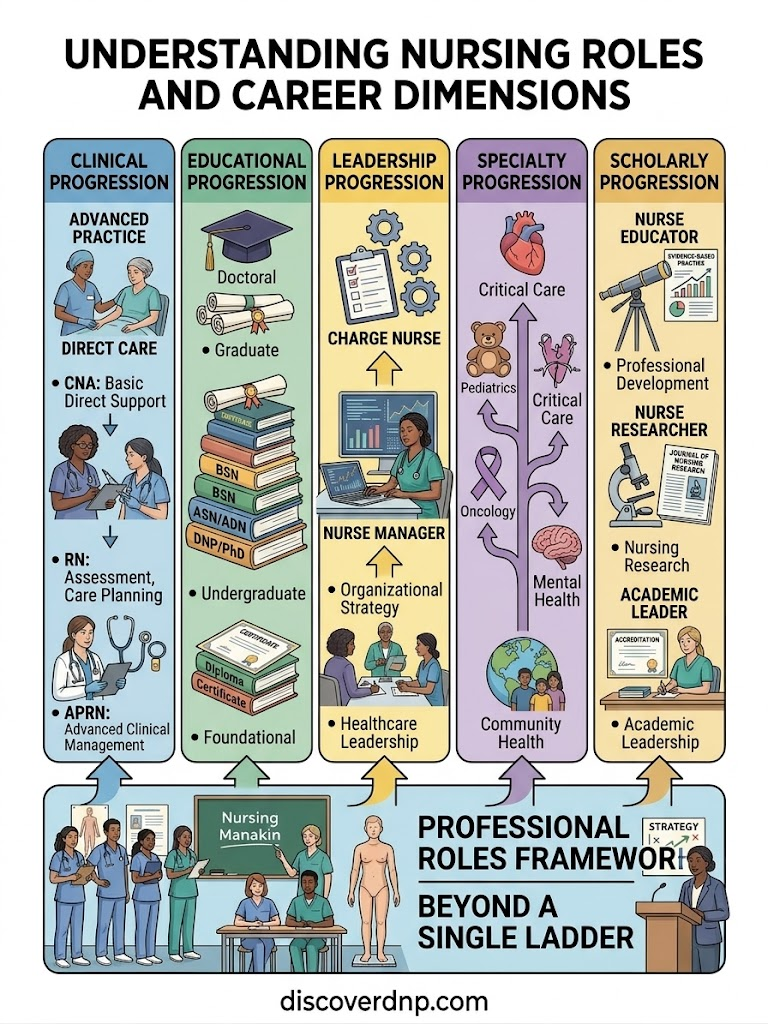
APRN Education, Certification, and Scope of Practice
APRN preparation requires education beyond initial RN preparation. Under the APRN Consensus Model, APRNs are educated in a specific role and patient population at the postgraduate level, and national certification is a core component of APRN preparation.
The pathway generally begins with RN preparation and licensure. The nurse then completes an appropriate graduate-level APRN program that aligns with the intended role and population focus. The program combines advanced nursing theory with specialized clinical education.
Advanced nursing education commonly includes subjects such as advanced health assessment, advanced pathophysiology, pharmacology, diagnostic reasoning, clinical management, evidence-based practice, and role-specific clinical competencies. The exact curriculum differs according to whether the nurse is preparing to become a nurse practitioner, nurse midwife, clinical nurse specialist, or nurse anesthetist.
Graduate education is important because APRN practice involves responsibilities that require a level of knowledge beyond basic RN preparation. The nurse must be able to integrate complex patient information, distinguish among potential diagnoses, understand treatment options, evaluate responses to therapy, and make evidence-informed clinical decisions.
The educational level can also include a master’s degree in nursing, a post-master’s APRN certificate, or doctoral-level preparation depending on the role, program, and current professional and regulatory requirements. The AACN identifies the DNP as a practice-focused doctorate designed to prepare nurses for advanced nursing practice, while research-focused doctoral programs such as the PhD prepare nurse scientists and researchers.
Because APRN education is closely connected to regulation, choosing an accredited and appropriately recognized degree program is important. A program should prepare the graduate for the intended APRN role, population focus, certification examination, and jurisdictional licensure requirements.
Certification
Certification provides another important distinction between a general RN and an APRN. APRN certification demonstrates that the nurse has met defined professional requirements and demonstrated competence through an appropriate national certification process.
Under the Consensus Model, APRNs are nationally certified in their role and population focus. The model identifies six broad population foci: family/individual across the lifespan, adult-gerontology, pediatrics, neonatal, women’s health/gender-related, and psychiatric/mental health. Adult-gerontology and pediatric preparation may be further divided into primary and acute care for applicable NP preparation.
For example, a nurse pursuing family nurse practitioner practice would need preparation aligned with the family/individual across-the-lifespan population. A nurse pursuing psychiatric-mental health NP practice would need preparation aligned with the psychiatric/mental health population.
Certification is different from a specialty credential that a nurse may pursue later. An APRN might first obtain the certification necessary for entry into advanced practice and later obtain an additional specialty certification or credential in an area such as oncology or palliative care. The latter builds upon the APRN’s existing role and population preparation rather than replacing it.
APRN licensure
Certification and licensure are related but are not the same thing. Certification generally demonstrates professional competence through a recognized credentialing process, while licensure is the legal authorization granted by the applicable regulatory authority to practice.
The board of nursing remains central to determining the legal authority of an APRN within a particular jurisdiction. The APRN Consensus Model was developed to promote greater consistency, but NCSBN notes that jurisdictions have not adopted every element uniformly. Consequently, APRNs must understand the laws and regulations of the jurisdiction in which the patient is located. This is particularly important when providing care across state borders through telehealth.
APRN scope of practice
The scope of practice for an APRN can be substantially broader than that of an RN, but it is not unlimited. NCSBN describes APRNs as being prepared to assess, diagnose, and manage patient problems, order tests, and prescribe medications. The exact authority depends on the nurse’s role, population focus, education, competence, certification, and jurisdiction.
Depending on applicable law, an APRN may be authorized to:
- Perform advanced health assessments.
- Diagnose health conditions.
- Order and interpret diagnostic tests.
- Develop and modify treatment plans.
- Prescribe medications and other therapies when authorized.
- Manage acute and chronic diseases.
- Provide advanced patient and family education.
- Perform specialized procedures within the APRN’s preparation.
- Provide preventive and population-based care.
- Coordinate complex care.
- Consult with other healthcare professionals.
- Lead evidence-based practice and quality-improvement initiatives.
- Provide specialty or advanced clinical services.
However, scope of practice should never be determined simply by the title “APRN.” The four APRN roles have different competencies. A nurse practitioner, for example, does not automatically have the same clinical authority or preparation as a nurse anesthetist. Similarly, a CNS specializing in a particular patient population cannot assume that an additional specialty credential automatically permits activities outside the underlying APRN role and population focus.
NCSBN’s scope-of-practice framework emphasizes considering the nurse’s education, licensure, competence, applicable nursing practice act, rules and regulations, and the requirements of the practice setting when determining whether a particular activity is appropriate.
Independent versus collaborative practice
One of the most important considerations when discussing APRN scope is that legal authority differs among jurisdictions. The APRN Consensus Model includes independent practice and independent prescribing as regulatory goals, but NCSBN acknowledges that not all U.S. jurisdictions have adopted all elements of the model.
Therefore, an APRN may have broad independent authority in one jurisdiction while another jurisdiction may require a collaborative or supervisory arrangement for certain activities. This does not mean the nurse’s educational preparation has changed; rather, the legal environment determines how that preparation can be exercised.
For example, an NP may have the education and national certification necessary to diagnose and prescribe, but the jurisdiction in which the NP practices may impose additional requirements governing prescribing authority or collaboration. The NP must therefore practice according to the applicable law rather than assuming that authority granted elsewhere automatically transfers.
The importance of continuing competence
Advanced practice does not end when a nurse completes a graduate program or receives an initial certification. APRNs must maintain competence as healthcare knowledge, technologies, medications, clinical guidelines, and regulations evolve.
Continuing professional development may involve continuing education, specialty training, recertification, clinical learning, evidence-based practice activities, quality improvement, professional conferences, and other activities required by the relevant licensing or certifying organizations.
This ongoing development is especially important because APRNs often manage complex conditions and make decisions that can substantially affect patient outcomes. An APRN must know not only how to perform an intervention but also when it is appropriate, what risks it carries, what alternatives exist, and when consultation or referral is necessary.
The APRN level therefore represents a significant progression within the different levels of nursing. It combines RN preparation with advanced education, specialized clinical training, professional certification, and an expanded scope of practice. Whether the nurse becomes a nurse practitioner, nurse midwife, clinical nurse specialist, or nurse anesthetist, the pathway is built around advanced knowledge and role-specific competence.
For someone planning a career in nursing, the APRN level can open opportunities for advanced clinical practice, specialized patient care, leadership, education, consultation, and other forms of professional contribution. The most appropriate pathway depends on the desired patient population, preferred type of nursing practice, educational goals, certification requirements, and laws governing practice in the jurisdiction where the nurse intends to work.
In this sense, APRN preparation demonstrates that the different levels of nursing are not simply a hierarchy of job titles. They represent progressively specialized combinations of education, licensure, certification, responsibility, and clinical authority. The APRN level builds upon the RN foundation and allows experienced nurses to develop advanced expertise while continuing to provide patient-centered nursing care.
Types of Nursing Degrees and Career Pathways
Nursing education can follow several academic pathways, ranging from entry-level preparation to graduate and doctoral education. The appropriate pathway depends on the desired level of nursing, professional goals, previous education, financial circumstances, and the type of nursing role a person intends to pursue.
In the United States, common degrees in nursing include the associate degree, bachelor’s degree, master’s degree, and doctoral degree. These credentials do not all lead to the same nursing role. For example, an associate or bachelor’s nursing program can prepare a person for RN licensure, while graduate education can prepare nurses for advanced practice, leadership, education, research, or other specialized positions. The exact requirements vary by jurisdiction and program.
The U.S. Bureau of Labor Statistics identifies the bachelor’s degree in nursing, associate degree in nursing, and diploma from an approved nursing program as common educational routes to RN licensure. All of these pathways include supervised clinical experience, although their curricula and educational depth differ.
Understanding the different levels of nursing degrees is important because a nursing degree is more than an academic credential. It can influence the type of nursing role available, eligibility for certification, access to graduate programs, opportunities for advancement, and the long-term career path.
Associate, Bachelor’s, Master’s, and Doctoral Nursing Degrees
Associate degree in nursing
An associate degree in nursing (ADN) is one of the established entry points into professional nursing education. Related titles include Associate of Science in Nursing (ASN), depending on the institution. The program generally combines nursing theory, foundational sciences, laboratory learning, and supervised clinical practice.
An ADN can provide the academic preparation needed to pursue RN licensure where the jurisdiction recognizes that pathway. After completing the approved program and meeting other requirements, the graduate can seek the applicable licensure examination and begin practicing as a registered nurse once licensed.
The associate pathway can be attractive because it may provide a relatively accessible route into professional nursing while allowing a nurse to pursue further education later. It should not, however, be viewed as the end of nursing education. An ADN-prepared RN can progress through an RN-to-BSN program and, depending on the institution, may later enter an RN-to-MSN pathway.
For example, a person might complete an ADN, obtain RN licensure, work in a medical-surgical unit, and later enroll in an RN-to-BSN program. After gaining additional experience, that nurse could pursue a master’s degree in nursing for a leadership, education, specialty, or advanced practice pathway.
The AACN supports degree-completion pathways for ADN- and diploma-prepared RNs and reports that RN-to-BSN programs build on previous preparation by developing broader clinical reasoning, analytical, professional, community, and leadership knowledge.
Bachelor of Science in Nursing
The Bachelor of Science in Nursing (BSN) is a baccalaureate-level nursing degree that provides preparation for professional RN practice while incorporating broader academic and professional content.
In addition to nursing science and clinical practice, a BSN curriculum commonly includes areas such as leadership, communication, research, evidence-based practice, population health, health promotion, nursing theory, and healthcare systems. BLS notes that bachelor’s programs typically include education in communication, leadership, and critical thinking in addition to science and nursing coursework.
The BSN can therefore provide a broader foundation for a nursing career than an entry-level program focused primarily on initial RN preparation. It can also make it easier to meet educational preferences or requirements for particular nursing positions, graduate programs, leadership opportunities, and specialty pathways.
The AACN advocates for baccalaureate-level preparation as the minimum educational preparation it recommends for RNs, while recognizing multiple pathways for nurses to reach that level. It also cites evidence linking baccalaureate and higher educational preparation with better patient outcomes.
A BSN does not automatically make a nurse an advanced practice registered nurse. An RN with a BSN remains an RN unless the nurse completes the additional education, certification, and licensure requirements associated with an advanced practice role.
For example:
BSN graduate → RN licensure → staff RN → specialty certification → graduate nursing education
This pathway allows a nurse to develop substantial clinical expertise before deciding whether a master’s or doctoral degree is appropriate.
Master of Science in Nursing
A Master of Science in Nursing (MSN) is a graduate-level nursing degree that can support several different career directions. The degree does not represent one single nursing role. Instead, master’s programs can focus on advanced clinical practice, nursing education, administration, leadership, informatics, population health, or other areas.
AACN identifies master’s-prepared nurses as working in areas such as advanced clinical care, administration, teaching, research, informatics, leadership, public health, and health policy.
For nurses pursuing advanced practice, the master’s degree has traditionally been an important route into roles such as nurse practitioner, nurse midwife, clinical nurse specialist, or nurse anesthetist. However, educational requirements are changing in some areas, and the appropriate terminal degree depends on the specific APRN role, accrediting requirements, certification body, and jurisdiction.
An MSN can also support careers that do not involve advanced diagnosis or prescribing. For example, a nurse may earn a master’s degree with a focus on nursing education and become a nurse educator, clinical educator, staff-development specialist, or faculty member depending on the employer’s requirements.
Another nurse may pursue nursing administration and move toward roles such as nurse manager, director of nursing, or other healthcare leadership positions.
The important point is that a master’s degree in nursing should be selected according to the intended career outcome rather than simply because it represents a higher academic level.
Doctoral nursing degrees
Doctoral education represents the highest academic level among the major levels of nursing degrees. Nursing has two broad doctoral pathways: practice-focused doctorates and research-focused doctorates.
The Doctor of Nursing Practice (DNP) is a practice-focused doctoral degree. AACN describes DNP education as preparing nurses for advanced practice and other areas requiring high-level clinical, organizational, and evidence-based practice expertise. DNP graduates may work in advanced clinical practice, healthcare leadership, quality improvement, population health, informatics, systems improvement, and other roles depending on their preparation.
The Doctor of Philosophy in Nursing (PhD) is generally research-focused. Rather than concentrating primarily on advanced clinical practice, PhD education emphasizes research methodology, scientific inquiry, theory development, scholarship, and generation of new knowledge. AACN identifies research-focused doctoral programs as preparing nurse scientists and scholars, generally through substantial research and a dissertation or comparable scholarly work.
These two doctoral pathways should therefore not be treated as interchangeable.
A nurse interested in improving healthcare delivery through advanced clinical practice, quality improvement, systems leadership, or evidence-based implementation may find a DNP appropriate.
A nurse interested in conducting original research, developing nursing knowledge, becoming a nurse scientist, or pursuing a research-intensive academic career may instead pursue a PhD.
For example:
BSN → RN → MSN/APRN preparation → DNP
could support a practice-focused career involving advanced patient care and healthcare leadership.
By contrast:
BSN → research-oriented graduate education → PhD
could lead toward nursing research, academic scholarship, scientific investigation, and faculty work.
Thus, the highest degree level is not automatically the best choice for every nurse. The appropriate doctoral pathway depends on what the nurse intends to contribute to the nursing profession.
Bridge Programs and Advancing to Higher Nursing Levels
Nursing education is designed to allow professional progression. A nurse does not necessarily have to start over each time they pursue a higher nursing degree. Bridge and degree-completion programs allow previously completed education to contribute toward the next credential, subject to institutional transfer policies and admission requirements.
These pathways are especially important for nurses who begin their careers with an ADN or diploma and later decide to pursue a bachelor’s or graduate education.
RN-to-BSN programs
An RN-to-BSN program is designed for a registered nurse who already holds an associate degree or diploma and wants to earn a bachelor’s degree. Instead of repeating all initial nursing education, the program builds upon existing RN preparation.
Coursework may emphasize evidence-based practice, leadership, population health, research, professional development, healthcare policy, and broader clinical reasoning.
The length varies by institution and the nurse’s previous academic preparation. AACN reports that many RN-to-BSN programs can be completed in approximately one to two years, although individual requirements differ.
For example, an RN who has worked for several years in a hospital may enroll in an online or hybrid RN-to-BSN program while continuing to work. The additional education can help the nurse qualify for positions where employers prefer or require baccalaureate preparation.
RN-to-MSN programs
An RN-to-MSN pathway allows some ADN- or diploma-prepared RNs to progress directly toward master’s-level education. These programs incorporate the baccalaureate-level material necessary for graduate study before moving into master’s coursework.
AACN reports that RN-to-MSN programs generally take approximately two to three years, although duration varies according to previous coursework and institutional requirements. Some programs award both the bachelor’s and master’s degrees during the pathway, while program structures differ.
This can be particularly useful for an RN who already knows the desired graduate career path. For example, an ADN-prepared RN who wants to become a nurse educator or pursue an advanced nursing specialty may investigate an RN-to-MSN program rather than completing separate degrees sequentially.
However, a nurse should carefully examine whether the program meets the educational requirements for the intended certification and licensure pathway.
LPN-to-RN pathways
A licensed practical nurse can also advance to RN preparation through an LPN-to-RN bridge program. These programs recognize previous practical nursing education and build upon it with the additional knowledge and clinical preparation required for RN practice.
The nurse may progress from:
LPN/LVN → RN → BSN → MSN → doctoral education
This illustrates how the different levels of nursing can form a continuing educational pathway rather than isolated credentials.
The exact structure of an LPN-to-RN program varies. Some lead to an ADN and others may have different institutional arrangements. Admission requirements, prerequisite courses, clinical hours, transfer credit, and licensure requirements should therefore be checked with the individual nursing program and regulatory authority.
Articulation agreements
Articulation agreements can make educational progression easier by establishing how coursework transfers between nursing programs. AACN describes articulation agreements as mechanisms that facilitate transfer between ADN and BSN programs and reduce unnecessary duplication of coursework.
For example, an ADN program may have an established agreement with a university’s BSN program specifying which credits transfer. This can make the transition more predictable than applying to a completely unrelated program without a formal agreement.
Before beginning an ADN or diploma program, it can therefore be useful to investigate whether the school has established articulation arrangements with BSN institutions.
Accelerated nursing pathways
Not every nurse begins with an entry-level nursing degree. A person who already holds a bachelor’s degree in another discipline may be eligible for an accelerated nursing program.
Accelerated baccalaureate programs are designed for individuals who have already completed substantial undergraduate education outside nursing. AACN reports that accelerated BSN programs can provide a relatively fast route to RN preparation, with intensive programs commonly taking around 11 to 18 months depending on prerequisites and program structure.
There are also accelerated entry-level master’s programs for individuals with a non-nursing bachelor’s or graduate degree. These programs combine nursing preparation with accelerated academic progression, although they are intensive and have specific admission requirements.
For example, someone with a bachelor’s degree in biology who decides to enter the nursing field may not need to complete another traditional four-year undergraduate degree from the beginning. Depending on prior coursework and institutional requirements, an accelerated nursing program may provide a more efficient route toward RN preparation.
Bridge programs therefore serve different purposes. One may bridge practical nursing to RN practice, another may bridge an ADN to a BSN, and another may connect RN preparation to master’s education.
Choosing a Nursing Degree and Career Path
Choosing among degrees in nursing should begin with the desired nursing role rather than simply asking which degree is “highest.” The best pathway depends on the type of patient care desired, preferred work environment, financial resources, previous education, time available for study, and long-term professional goals.
A useful first question is: What level of nursing do I want to practice?
Someone interested in becoming a certified nursing assistant will need a very different educational pathway from someone planning to become an RN or APRN. Likewise, an RN who wants to become a nurse manager may need a different graduate focus from an RN who wants to become a nurse practitioner.
The second question is: What type of nursing interests me?
A person who enjoys direct patient care may prefer bedside nursing, emergency care, critical care, pediatric nursing, oncology, maternity care, or another clinical specialty. Someone interested in teaching may prefer a nurse educator pathway. A person interested in healthcare systems may prefer administration, leadership, informatics, or quality improvement.
The third question is: How much education does the intended position require or prefer?
Some nursing positions require initial licensure, while others require bachelor’s, master’s, doctoral, or specialty preparation. It is therefore important to work backward from the desired position.
For example, someone interested in becoming a nurse practitioner might plan:
RN preparation → RN licensure → BSN or appropriate progression → graduate APRN program → national certification → APRN licensure
Someone interested in nursing education might follow:
RN preparation → BSN → MSN or doctoral education → educator/faculty role
A nurse interested in research might consider:
RN/BSN → graduate research preparation → PhD in nursing → nurse scientist or academic research career
These are examples rather than universal requirements. Program and licensure requirements vary.
Consider the cost and time commitment
A nursing program should also be evaluated according to tuition, clinical requirements, transportation, textbooks, examination fees, lost work time, and other expenses. A shorter program may appear less expensive initially but may not provide the degree required for a desired long-term position.
Conversely, pursuing the highest available degree immediately may not be necessary if the immediate goal is to enter the workforce and gain clinical experience.
A practical approach is to compare the total pathway rather than only the first program. For example, an ADN may provide a quicker entry into RN practice, but the nurse may later spend additional time completing an RN-to-BSN program. A BSN may require a longer initial commitment but provide baccalaureate preparation from the beginning.
Neither option is automatically superior for every individual.
Consider accreditation, approval, and licensure eligibility
The quality and recognition of a nursing program matter. Prospective nurses should verify that the program is approved by the relevant regulatory authority and that graduates are eligible for the appropriate licensure examination.
NCSBN emphasizes that nursing licensure is granted by regulatory bodies after determining that applicants have met requirements for safe practice. Requirements are jurisdiction-specific, so prospective nurses should verify current requirements with the relevant nursing regulatory authority.
Accreditation can also be important, particularly for nurses who anticipate progressing to graduate education. A program that is not appropriately recognized may create difficulties when transferring credits, entering another degree program, or meeting requirements for professional certification.
Consider future career flexibility
Another important consideration is whether the chosen degree keeps future options open. A nurse may initially intend to work at the bedside but later discover an interest in leadership, education, public health, research, or advanced practice.
A BSN, for example, can provide a foundation for numerous graduate programs. A master’s degree can open additional pathways into leadership, education, specialty practice, and other graduate-level roles. Doctoral education can support advanced practice, organizational leadership, research, scholarship, and other high-level professional responsibilities. AACN describes graduate nursing education as providing opportunities across direct care, research, education, policy, leadership, and health-system roles.
This makes educational planning particularly important. The goal should not simply be to collect degrees. Each qualification should serve a clear professional purpose.
Consider personal strengths and preferred work environment
Career choice should also account for personal preferences and strengths. Someone who enjoys rapid decision-making and unpredictable clinical situations may be attracted to emergency or critical care. Someone who values long-term relationships with patients may prefer primary care, community health, or chronic disease management. Someone who enjoys teaching may find nursing education rewarding, while someone interested in data and technology may prefer nursing informatics.
There are also nurses who discover their preferred nursing career only after gaining clinical experience. Initial employment can provide valuable insight into which patient populations, specialties, and professional responsibilities are most satisfying.
The pathway can therefore remain flexible. A nurse might start as an RN, gain experience, obtain specialty certification, complete a BSN, and only later decide to pursue an advanced degree.
The central principle is to match education and training with the desired professional role. A higher degree is valuable when it provides knowledge and eligibility for responsibilities that align with a nurse’s goals. The most appropriate nursing degree is therefore not necessarily the longest or most advanced program; it is the one that provides the preparation needed for the intended career in nursing while creating reasonable opportunities for future progression.
Taken together, the different nursing degrees create a framework for lifelong professional development. An associate degree can provide an entry point into RN practice, a bachelor’s degree can broaden professional preparation, a master’s degree can support advanced or specialized roles, and doctoral education can prepare nurses for the highest levels of clinical practice, leadership, scholarship, or research. Bridge programs make it possible to move between these levels without unnecessarily repeating previous education, allowing nurses to develop their careers progressively as their professional goals evolve.
Nursing Salary and Career Advancement
Nursing offers multiple opportunities for professional and financial advancement as education, experience, clinical expertise, certification, and leadership responsibilities increase. However, career advancement does not follow one fixed ladder. A nurse may progress by gaining experience in direct patient care, specializing in a particular clinical area, completing a higher nursing degree, moving into management, becoming an advanced practice registered nurse, entering education or research, or progressing into executive leadership.
Salary is one factor to consider when evaluating the different levels of nursing, but compensation should not be viewed as a guaranteed amount attached to a particular title. Pay can vary considerably according to geographic location, employer, clinical specialty, education, experience, shift, overtime, union representation, and level of responsibility. The U.S. figures discussed below are therefore useful benchmarks rather than universal salaries.
Career advancement can also involve responsibilities that are not reflected immediately in a job title or salary. An experienced RN who becomes a preceptor, for example, may develop leadership and teaching skills before becoming a formal nurse manager. Similarly, a nurse who earns a specialty certification may become a clinical resource for colleagues without leaving direct patient care.
A successful nursing career is therefore often built progressively: developing a strong clinical foundation, identifying an area of interest, acquiring additional education or certification when appropriate, demonstrating leadership, and pursuing positions that match professional goals.
Salary Across Different Levels of Nursing
Salary generally increases as nurses move into roles requiring greater education, specialization, clinical responsibility, or organizational leadership, although this is not a universal rule. Location and employment setting can have as much influence on compensation as the formal level of nursing.
For example, an RN working in a hospital may earn more or less than another RN with the same degree working in a nursing home, outpatient clinic, school, or community setting. Similarly, an experienced staff RN in a high-paying geographic market may earn more than a newly appointed nurse manager in a different region.
Certified nursing assistants
A certified nursing assistant (CNA) generally occupies an entry-level position focused on direct patient care under the direction and supervision of licensed nursing professionals. CNA compensation is therefore typically lower than that of LPNs, RNs, and APRNs, reflecting differences in education, licensure, scope of practice, and responsibility.
According to the U.S. Bureau of Labor Statistics, the median annual wage for nursing assistants was $42,260 in May 2025. The lowest 10% earned less than $33,940, while the highest 10% earned more than $51,980. Pay also varied by setting, with nursing and residential care facilities reporting a median of approximately $43,000 and hospitals approximately $42,310.
A CNA who gains experience may decide to continue along the nursing career path rather than remain at the same educational level. For example:
CNA → practical nursing program → LPN/LVN → RN program → RN
This progression demonstrates how education can affect both scope of practice and earning potential.
Licensed practical and vocational nurses
The licensed practical nurse (LPN) or licensed vocational nurse (LVN), depending on the jurisdiction, has more extensive nursing education and legal responsibilities than a CNA. LPN/LVN salary is therefore generally higher than CNA compensation, although actual pay varies substantially according to location and practice setting.
The role can also serve as a stepping stone for a nurse who wants to become an RN. An LPN may pursue an LPN-to-RN program, obtain RN licensure, and later complete a bachelor’s degree.
Registered nurses
The registered nurse (RN) represents one of the largest professional groups within nursing and has a wide range of employment opportunities. In the United States, the BLS reported a median annual wage of $97,550 for registered nurses in May 2025. The lowest 10% earned less than $68,940, while the highest 10% earned more than $137,470.
The practice setting can make a substantial difference. In May 2025, median annual wages for RNs included approximately:
- $110,780 in government settings, excluding state and local education and hospitals
- $100,220 in hospitals
- $91,230 in ambulatory healthcare services
- $84,300 in nursing and residential care facilities
- $78,620 in educational services
These figures illustrate why it is misleading to describe a single “RN salary.” An RN’s compensation can differ considerably depending on where and how the nurse works.
Specialty and experience can also influence earning potential. An RN who develops expertise in critical care, perioperative nursing, emergency nursing, oncology, or another specialty may become eligible for positions with different compensation structures. Night shifts, weekends, holidays, overtime, call responsibilities, and specialty differentials can also affect total earnings.
Advanced practice registered nurses
The salary difference becomes particularly noticeable in some advanced practice roles. BLS reported a median annual wage of $134,920 in May 2025 for the combined occupational category of nurse anesthetists, nurse midwives, and nurse practitioners. Within that category, median wages were approximately $236,590 for nurse anesthetists, $134,040 for nurse midwives, and $132,300 for nurse practitioners.
These figures demonstrate the potential financial value of advanced education and specialized practice, but they should not be interpreted as a guaranteed return on obtaining an advanced degree. Graduate education requires tuition, clinical preparation, time, certification, and significant professional commitment.
Leadership and executive roles
Salary can also change as a nurse moves from direct clinical practice into management or executive leadership. Positions such as nurse manager, director of nursing, vice president of nursing, and chief nursing officer (CNO) involve progressively greater responsibility for people, budgets, quality, staffing, strategic planning, and organizational performance.
There is no single national BLS salary category specifically representing chief nursing officers, because CNO responsibilities can fall within broader healthcare management or executive classifications. General BLS management data can therefore provide context, but they should not be presented as a specific CNO salary. For example, BLS reported a 2025 median annual wage of $145,260 for management occupations as a broad occupational group, while general and operations managers had an annual mean wage of $134,940.
Actual executive nursing compensation varies widely according to organization size, geographic market, health system, responsibilities, experience, and other factors.
The broader pattern is that salary can increase as a nurse develops specialized expertise or assumes greater responsibility, but salary should be evaluated alongside scope of practice, work environment, schedule, professional satisfaction, and long-term career opportunities.
Nursing Specialties, Certifications, and Professional Growth
Specialization is one of the most practical ways for an RN to develop a distinctive professional identity. Rather than remaining a generalist throughout an entire career, a nurse may develop advanced knowledge in a particular patient population, clinical condition, practice environment, or professional function.
Common nursing specialties include:
- Critical care nursing
- Emergency nursing
- Pediatric nursing
- Oncology nursing
- Psychiatric-mental health nursing
- Medical-surgical nursing
- Perioperative nursing
- Cardiac and vascular nursing
- Community and public health nursing
- Home health nursing
- Geriatric nursing
- Pain management nursing
- Nursing informatics
- Nursing professional development
- Case management
- School nursing
Specialization can begin informally through clinical experience. For example, an RN who spends several years caring for critically ill patients may develop considerable expertise in ventilator management, hemodynamic monitoring, complex medications, and care of patients with multisystem illness.
Certification can provide an additional formal demonstration of specialty competence.
The role of certification
Professional certification differs from basic nursing licensure. Licensure establishes legal authority to practice as a nurse, while specialty certification generally validates knowledge and competence in a particular area of nursing.
The American Nurses Credentialing Center (ANCC), for example, offers certifications covering numerous specialty and advanced practice areas. Its certification program describes certification as a way for nurses to demonstrate specialized knowledge and continuing competence.
Examples of ANCC specialty credentials include certifications in medical-surgical nursing, cardiac-vascular nursing, pediatric nursing, psychiatric-mental health nursing, informatics nursing, nursing professional development, pain management nursing, and nurse executive practice.
Consider an RN working in an intensive care unit. After developing sufficient clinical experience, the nurse may decide to pursue a critical-care specialty certification. Preparing for certification can encourage systematic review of pathophysiology, pharmacology, assessment, patient management, and evidence-based clinical practice.
Certification can also contribute to professional credibility. It may demonstrate to employers, colleagues, patients, and professional organizations that a nurse has pursued formal recognition of knowledge in a particular specialty. However, certification does not replace licensure and does not automatically expand a nurse’s legal scope of practice.
Certification and career development
Certification can be particularly useful when combined with experience and continuing education. A nurse might progress through:
RN → specialty experience → specialty certification → preceptor → charge nurse → nurse manager
Another pathway might look like:
RN → specialty experience → certification → graduate degree → advanced practice or specialty leadership
Certification is therefore not necessarily an endpoint. It can become one component of a larger professional development strategy.
For example, an RN working in oncology may first develop bedside expertise, then obtain an oncology nursing certification, participate in quality-improvement projects, become a preceptor for new nurses, and later pursue graduate education. The nurse’s professional identity evolves without requiring an immediate departure from clinical practice.
Continuing professional development
Healthcare changes continuously. New medications, technologies, treatment protocols, infection-control practices, clinical guidelines, documentation systems, and evidence can change how patient care is delivered. Nurses therefore need continuing professional development throughout their careers.
Continuing education can involve formal courses, conferences, workshops, professional-development programs, academic coursework, clinical training, evidence-based practice projects, research activities, and other learning experiences. The exact requirements depend on the nurse’s license, certification, employer, and jurisdiction.
ANCC’s continuing professional development framework emphasizes evidence-based education and lifelong learning as mechanisms for maintaining continued competence in a changing healthcare environment.
Certification renewal may also require ongoing professional development. For example, ANCC states that its certifications are generally renewed every five years through continuing education and professional-development activities demonstrating continued competence.
This means professional growth should not be viewed as simply completing one nursing degree after another. Growth can occur through education, clinical experience, mentorship, certification, leadership, research, quality improvement, teaching, and participation in professional organizations.
Developing leadership skills
Leadership is another major component of career advancement. A nurse does not have to become a manager to demonstrate leadership.
A bedside RN can demonstrate leadership by:
- Coordinating complex patient care.
- Supporting new nurses.
- Serving as a preceptor.
- Participating in quality-improvement initiatives.
- Identifying patient-safety risks.
- Contributing to evidence-based practice.
- Leading patient education initiatives.
- Participating in committees.
- Helping implement new clinical protocols.
These experiences can provide evidence of leadership ability when applying for more advanced nursing positions.
For example, an RN who notices frequent delays in medication administration may participate in a quality-improvement project to identify the causes, develop an intervention, monitor outcomes, and present the results to the nursing unit. This experience demonstrates leadership, clinical reasoning, communication, data interpretation, and systems thinking even if the nurse does not yet hold a formal management position.
Nurse Manager and Chief Nursing Officer Career Paths
Management and executive leadership represent another important direction within the different levels of nursing. These roles move beyond the care of individual patients to include responsibility for nursing staff, resources, quality, organizational performance, and the broader delivery of nursing care.
Nurse manager
A nurse manager generally has responsibility for a nursing unit, department, or defined clinical service. The position combines clinical knowledge with management, communication, staffing, budgeting, quality improvement, conflict resolution, and organizational skills.
The specific responsibilities vary by employer, but a nurse manager may be responsible for:
- Staffing and scheduling.
- Monitoring patient-care quality.
- Supporting staff development.
- Managing supplies and resources.
- Participating in recruitment and performance evaluation.
- Addressing workplace concerns.
- Monitoring patient-safety indicators.
- Implementing organizational policies.
- Supporting evidence-based practice.
- Coordinating with physicians and other departments.
- Managing budgets or participating in financial planning.
- Ensuring appropriate standards of nursing care.
A nurse manager therefore needs skills that extend beyond bedside clinical practice.
For example, consider a medical-surgical unit experiencing high staff turnover. A nurse manager may need to examine workload, scheduling, orientation, communication, workplace culture, professional development, and staffing patterns. Solving the problem requires organizational analysis rather than simply providing more direct patient care.
Pathway to becoming a nurse manager
There is no single pathway that every nurse manager must follow. However, a common progression is:
RN → experienced staff nurse → charge nurse/preceptor → nurse manager
Additional education may strengthen preparation for management. Some organizations prefer or require a BSN for management positions, while master’s-level education in nursing administration, leadership, healthcare administration, or a related field may be preferred for more advanced roles.
An RN who wants to pursue management should therefore develop both clinical credibility and administrative skills. Experience with staffing, quality improvement, budgeting, performance management, conflict resolution, and interdisciplinary collaboration can be valuable.
Certification can also support this pathway. ANCC offers Nurse Executive and Nurse Executive, Advanced credentials, demonstrating that nursing leadership itself can be a recognized area of professional specialization.
Director of nursing
A director of nursing generally operates at a broader organizational level than a nurse manager. Depending on the organization, the director may oversee several nursing units, departments, or an entire nursing service.
Responsibilities can include developing policies, managing multiple leaders, monitoring quality indicators, coordinating staffing strategies, participating in strategic planning, overseeing regulatory compliance, and working with senior administrators.
In long-term care, for example, a director of nursing may oversee the entire nursing department, coordinate care standards across multiple units, monitor staffing, participate in regulatory processes, and work with administrators to improve resident outcomes.
The role therefore requires a broader understanding of the nursing profession and healthcare operations.
Chief nursing officer
The chief nursing officer represents one of the highest levels of nursing leadership within many healthcare organizations. A CNO is typically responsible for providing strategic leadership for nursing services and ensuring that nursing priorities align with the organization’s broader goals.
The CNO may oversee:
- Nursing quality and patient safety.
- Nursing workforce strategy.
- Professional practice standards.
- Nursing education and development.
- Leadership development.
- Staffing strategy.
- Patient-experience initiatives.
- Quality-improvement programs.
- Nursing budgets and resources.
- Regulatory and accreditation priorities.
- Organizational nursing policy.
- Strategic planning.
The CNO therefore operates at a substantially different organizational level from a staff RN. Instead of primarily coordinating care for an individual patient or one nursing unit, the CNO may influence nursing practice across an entire hospital or health system.
For example, if a health system identifies an increase in hospital-acquired infections, the CNO may work with nursing leaders, infection-prevention specialists, physicians, quality departments, and executive leadership to establish system-wide strategies. The CNO’s role may include reviewing outcome data, allocating resources, supporting education, establishing accountability structures, and evaluating whether interventions produce measurable improvements.
Pathway to CNO leadership
A potential career path may look like:
RN → staff RN → charge nurse/preceptor → nurse manager → director of nursing → senior nursing executive → CNO
This is an example rather than a mandatory sequence. Some nurses enter leadership through specialty management, education, quality improvement, administration, or other routes.
Advanced education can become increasingly important as leadership responsibility expands. A nurse manager may enter management with a BSN, while director- and executive-level positions may favor or require graduate education, such as an MSN, MBA, MHA, or DNP, depending on the organization’s expectations.
The most important preparation is not the degree alone. Executive nursing leadership requires a combination of clinical knowledge, financial understanding, strategic thinking, communication, workforce management, quality improvement, healthcare policy awareness, and the ability to lead organizational change.
Professional growth does not have to mean leaving patient care
An important point when discussing career advancement is that promotion is not the only measure of success. Some nurses deliberately remain in direct patient care because they value clinical practice. A highly experienced clinical nurse can develop extensive expertise, obtain specialty certification, become a preceptor or clinical resource, participate in research or quality improvement, and contribute significantly to patient outcomes without becoming a manager.
Other nurses may find that their interests gradually shift toward education, administration, advanced practice, informatics, research, or executive leadership.
For example, two RNs may begin their careers on the same medical-surgical unit. One may progress toward becoming a clinical nurse specialist, while the other may become a nurse manager. A third may pursue nurse practitioner education, and a fourth may become a nurse educator. All four remain part of the nursing profession, but their career paths develop in different directions.
This flexibility is one of the defining characteristics of nursing. The various levels of nursing, degree pathways, certifications, specialties, and leadership opportunities allow nurses to adjust their careers as their interests and professional responsibilities change.
Salary should therefore be considered alongside the broader value of career development. Higher compensation may accompany some advanced roles, but advancement can also provide greater autonomy, specialized expertise, leadership influence, professional recognition, intellectual challenge, or the opportunity to improve care for larger patient populations.
A well-planned career in nursing is consequently not defined by reaching one particular title. It involves developing the education, experience, certification, clinical competence, and leadership skills needed for the nurse’s chosen direction. Whether that direction is advanced clinical practice, specialty nursing, education, management, research, or executive leadership, continued professional development provides a foundation for meaningful and sustainable growth.
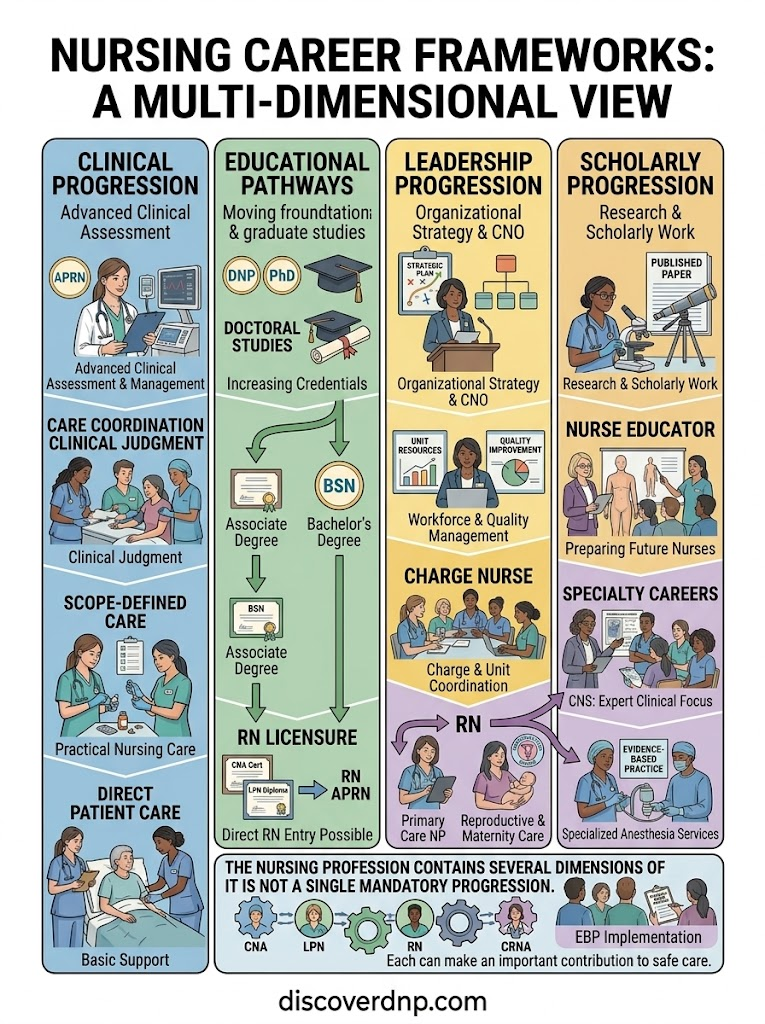
Conclusion
Understanding the different levels of nursing provides a clearer picture of how education, licensure, clinical preparation, scope of practice, and professional responsibility shape a nursing career. From the certified nursing assistant who provides essential supportive care to the licensed practical nurse, registered nurse, and advanced practice registered nurse, each level contributes an important part of the healthcare team. These roles should not be viewed simply as a ranking of importance; rather, they represent different combinations of education, responsibility, clinical authority, and specialized knowledge.
The various levels of nursing degrees also create multiple pathways for professional development. An individual may begin with practical nursing or an associate degree in nursing, become a registered nurse, and later pursue a bachelor’s degree, master’s degree, or doctoral degree. Bridge programs can make this progression more accessible while allowing nurses to build on previous education and clinical experience. For those seeking advanced roles, graduate education can lead to opportunities as a nurse practitioner, nurse midwife, clinical nurse specialist, or nurse anesthetist, depending on the applicable licensure and certification requirements.
Choosing among the different levels of nursing depends on personal career goals, preferred type of nursing, desired scope of practice, educational commitment, and interest in particular nursing specialties. Some professionals may prefer direct patient care, while others may eventually pursue positions in education, leadership, administration, research, or advanced clinical practice. Salary can also vary substantially according to education, experience, specialty, geographic location, work setting, and level of responsibility.
Most importantly, nursing is not a single career destination but a profession with multiple pathways for growth. Understanding the different levels of nursing helps clarify what each credential prepares a person to do, how one nursing role can lead to another, and how continued nursing education can support long-term professional development. Whether the goal is to become an LPN, become an RN, pursue an advanced degree, or move into leadership, a well-planned pathway can provide the education and clinical foundation needed to progress confidently within the nursing profession.
Frequently Asked Questions
What are the 5 levels of nurses?
The five commonly discussed levels are certified nursing assistant (CNA), licensed practical nurse/licensed vocational nurse (LPN/LVN), registered nurse (RN), advanced practice registered nurse (APRN), and nursing leadership or advanced doctoral-level roles. Exact classifications can vary by healthcare system and jurisdiction.
Which type of nurse has the highest level of education?
A nurse with a doctoral degree, such as a Doctor of Nursing Practice (DNP) or Doctor of Philosophy in Nursing (PhD), has the highest level of formal nursing education. A DNP generally emphasizes advanced clinical practice and leadership, while a PhD focuses primarily on research and generating nursing knowledge.
What are the levels of a nursing degree?
The main nursing degree levels are associate degree in nursing (ADN), Bachelor of Science in Nursing (BSN), Master of Science in Nursing (MSN), and doctoral degrees such as the DNP and PhD. Practical nursing programs and CNA education are also nursing education pathways but are not equivalent to these academic nursing degrees.
What are the different levels of nursing roles and ranks?
Common nursing roles progress from CNA → LPN/LVN → RN → APRN, with additional leadership positions such as charge nurse, nurse manager, director of nursing, and chief nursing officer (CNO). However, nursing is not strictly a hierarchy; roles differ according to education, licensure, scope of practice, clinical responsibility, specialization, and leadership authority.
