

The Complete Nurse’s Guide to a PhD in Nursing: Choosing the Right Doctor of Philosophy in Nursing Program and Advancing Nursing Science
A PhD in Nursing represents the highest level of scholarly preparation in the discipline of nursing and is fundamentally centered on the advancement of knowledge through rigorous inquiry. As healthcare systems confront increasingly complex challenges—ranging from chronic disease management to health disparities and evolving models of health care delivery—the demand for doctorally prepared nurses continues to grow. A PhD in Nursing equips a nurse to move beyond the direct application of evidence in clinical settings and instead generate the evidence that shapes nursing practice, informs health policy, and strengthens nursing and healthcare systems.
Within a university school of nursing or college of nursing, a PhD program is intentionally structured to cultivate expertise in nursing science, research design, theoretical development, and advanced analytical methods. The doctor of philosophy in nursing, often shortened to doctor of philosophy, emphasizes the systematic study of phenomena central to nursing and health. Through a carefully designed doctoral program, scholars refine a focused research interest, engage deeply in nursing research, and complete a dissertation that contributes original research to the discipline of nursing. In doing so, the PhD in Nursing plays a pivotal role in advancing nursing knowledge and strengthening the science of nursing as a distinct academic field.
Unlike clinically oriented pathways such as the Doctor of Nursing Practice, a PhD in Nursing is research-intensive. The program is designed to prepare nurse scientists who can conduct research that improves health outcomes, addresses health equity, and informs health policy decisions at institutional, national, and global levels. The distinction is not merely academic; it reflects two complementary but different contributions to nursing and health. While practice-focused doctoral education emphasizes translating evidence into care delivery, the PhD in Nursing concentrates on producing the evidence that guides nursing practice and health science more broadly.
Earning a PhD in Nursing requires engagement with advanced coursework, sustained mentorship from program faculty, and immersion in a research program that aligns with one’s scholarly goals. The pathway may begin through BSN to PhD or MSN to PhD routes, depending on prior preparation, but in all cases the doctoral journey culminates in a dissertation that demonstrates the ability to conduct research independently. Throughout this process, the PhD in Nursing fosters deep expertise in theory development, methodology, and the ethical conduct of research within nursing and health contexts.
The impact of a PhD in Nursing extends well beyond academic institutions. Graduates contribute to nursing education as faculty, lead interdisciplinary research teams, influence health policy, and shape systems of care. By generating evidence that improves health outcomes and informs best practices, the PhD in Nursing directly affects patient care, community health, and the broader infrastructure of nursing and healthcare delivery. In this way, the degree serves not only as an academic milestone but also as a commitment to advancing nursing science and strengthening the future of nursing as a discipline grounded in rigorous, evidence-based inquiry.
This guide examines the PhD in Nursing comprehensively—from understanding the doctoral pathway and meeting admission requirements to selecting the right accredited program, navigating tuition and funding, completing the dissertation, and pursuing long-term career opportunities. Through an in-depth exploration of these components, the complexity and significance of the PhD in Nursing become clear: it is a transformative academic pursuit designed to expand nursing knowledge, elevate research capacity, and improve health across diverse populations.
Understanding the PhD in Nursing Pathway
The PhD in Nursing is a research-intensive doctoral program grounded in the systematic advancement of nursing knowledge. Unlike practice-oriented degrees, this pathway centers on building expertise in theory, research methodology, and scholarly inquiry within the discipline of nursing. A PhD in Nursing prepares scholars to examine complex issues in nursing and health, generate original research, and contribute to long-term improvements in health care delivery and population health.
Within a school of nursing, the PhD program is typically structured around three foundational pillars:
- Advanced coursework in nursing science, research design, and statistics
- Mentored research training under experienced program faculty
- Completion of a rigorous dissertation that contributes new knowledge to the field
The ultimate purpose of the doctor of philosophy in nursing is to prepare independent researchers who can advance nursing science and strengthen the science of nursing as a distinct academic discipline.
What a PhD in Nursing Really Means for a Nurse
For a nurse, earning a PhD in Nursing signifies a shift in professional focus—from primarily delivering care to generating the evidence that shapes care delivery. It represents preparation for intellectual leadership within nursing and health systems.
A PhD in Nursing means:
- Developing the ability to design and conduct research that addresses gaps in nursing and healthcare
- Contributing to theoretical and conceptual frameworks that guide nursing practice
- Influencing health policy through evidence-based scholarship
- Strengthening nursing education through academic leadership
Rather than concentrating solely on individual patient encounters, the PhD in Nursing expands impact to systems-level change, health equity, and policy reform.
Role of the Nurse Scientist
A central outcome of a PhD in Nursing is preparation as a nurse scientist. A nurse scientist leads independent research initiatives that address clinical, organizational, and population-level health concerns.
Responsibilities of a nurse scientist often include:
- Designing and leading funded research studies
- Publishing findings in peer-reviewed journals
- Developing a sustained program of research
- Mentoring doctoral students and junior scholars
- Collaborating across disciplines in nursing and health science
Example:
A nurse scientist may conduct research examining interventions to reduce health disparities in maternal health outcomes. Another may study innovative care models that improve chronic disease management in underserved communities. In both cases, the work generated through a PhD in Nursing directly strengthens nursing knowledge and informs policy and practice.
Focus on Nursing Science and Nursing Research
The PhD in Nursing places strong emphasis on nursing science and nursing research. Nursing science seeks to understand and improve phenomena central to nursing and health, including:
- Patient experiences and symptom management
- Care coordination across health systems
- Health promotion and disease prevention
- System-level healthcare delivery improvements
Through structured engagement in a program in nursing, doctoral scholars:
- Identify a focused research interest
- Develop theoretically grounded research questions
- Conduct research using rigorous methodologies
- Disseminate findings that advance nursing science
For example, a research project in a PhD in Nursing program may explore how culturally responsive care models improve health equity in marginalized communities. Another may examine telehealth interventions designed to enhance healthcare delivery in rural settings. Each study contributes original research that strengthens the discipline of nursing.
Difference Between Clinical and Research-Focused Doctoral Education
Understanding the distinction between the PhD in Nursing and the Doctor of Nursing Practice is essential.
PhD in Nursing (Research-Focused)
- Emphasizes theory development and research design
- Requires completion of a dissertation
- Prepares scholars to conduct research independently
- Advances nursing science through evidence generation
Doctor of Nursing Practice (Clinical-Focused)
- Emphasizes advanced nursing practice
- Focuses on applying research findings to clinical settings
- Centers on quality improvement and systems leadership
- Typically culminates in a practice-focused project
While both are doctoral degrees in nursing, the PhD in Nursing is designed to produce the evidence that informs practice, whereas the Doctor of Nursing Practice emphasizes translating existing evidence into clinical improvement initiatives.
BSN to PhD vs MSN to PhD Pathways
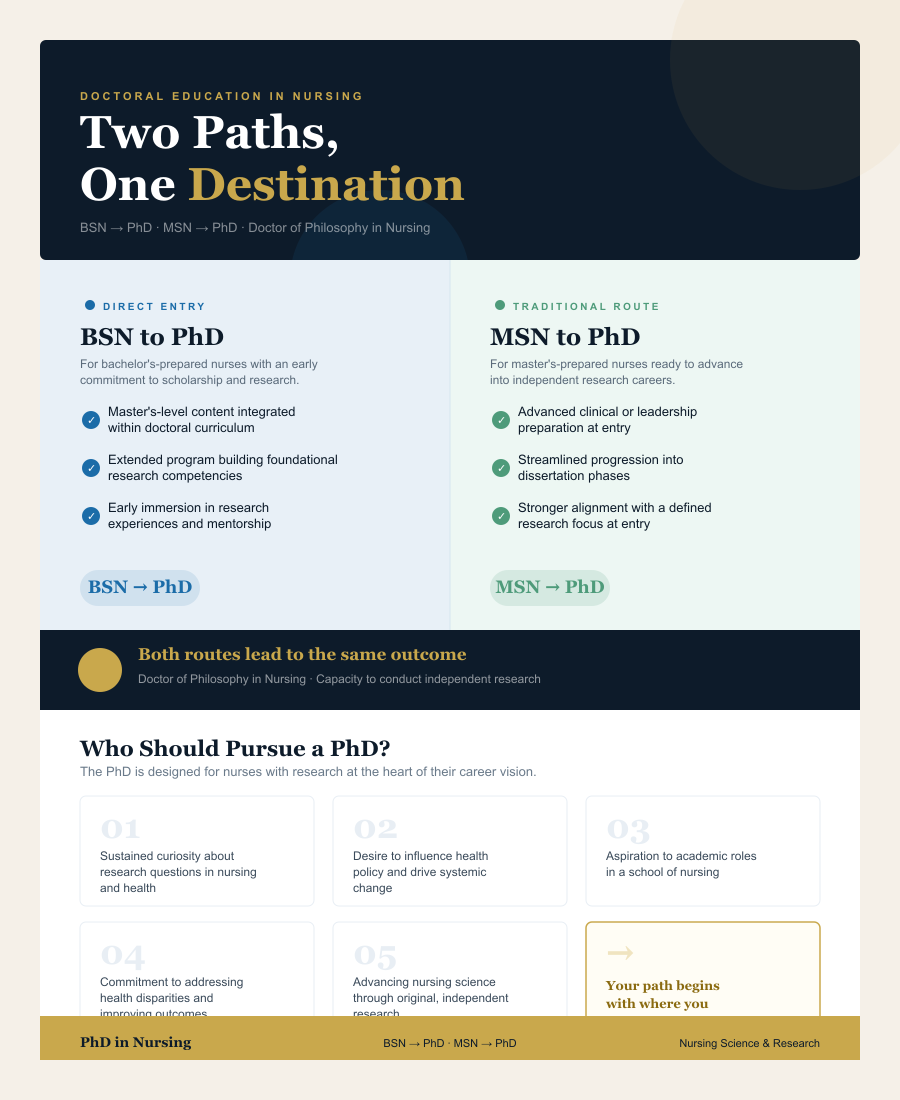
The PhD in Nursing pathway accommodates individuals entering at different educational levels through two primary routes: BSN to PhD and MSN to PhD.
Direct-Entry BSN to PhD Options
The BSN to PhD pathway allows individuals with a bachelor of science in nursing to enter directly into a doctoral trajectory.
Key features include:
- Integration of master’s-level content within the broader doctoral curriculum
- Extended program of study to build foundational research competencies
- Early immersion in research experiences and mentorship
This route is often appropriate for those who identify an early commitment to scholarship and research within nursing and health.
Traditional MSN to PhD Routes
The MSN to PhD pathway is designed for those who hold a master of science in nursing or related graduate degree.
Characteristics include:
- Advanced preparation in clinical or leadership roles prior to doctoral study
- Potential for streamlined progression into dissertation phases
- Stronger alignment with a defined research interest at entry
Both routes culminate in the same outcome: earning a doctor of philosophy in nursing and the capacity to conduct independent research.
Who Should Pursue a PhD and Why
A PhD in Nursing is particularly suited for individuals who:
- Demonstrate sustained curiosity about research questions in nursing and health
- Seek to influence health policy and systemic change
- Aspire to academic roles in a school of nursing
- Aim to address health disparities and improve health outcomes
- Desire to advance nursing science through original research
Because the PhD in Nursing requires long-term scholarly engagement, it aligns best with those committed to shaping the future of nursing and healthcare systems at a structural level.
How a Doctor of Philosophy in Nursing Advances Nursing Science
The doctor of philosophy in nursing strengthens the discipline through structured development of independent scholars capable of sustained inquiry.
Contribution to Research Program Development
Graduates of a PhD in Nursing are prepared to build a coherent program of research rather than conduct isolated studies. This involves:
- Identifying a central research focus
- Designing sequential, theory-driven studies
- Securing research funding
- Publishing cumulative findings that build nursing knowledge
For example, a scholar may begin with a dissertation examining medication adherence among older adults and later expand that inquiry into multi-site trials influencing national care guidelines.
Improving Health Outcomes Through Evidence Generation
The PhD in Nursing contributes directly to improving health outcomes through systematic evidence generation. Research conducted within a PhD in Nursing program may:
- Identify interventions that reduce preventable hospitalizations
- Inform policies that enhance healthcare delivery efficiency
- Develop culturally tailored strategies to promote health equity
- Strengthen patient safety initiatives across health systems
By producing rigorous nursing research, the PhD in Nursing shapes both clinical practice and health policy decisions.
Preparing Future Nursing Faculty
A vital function of the PhD in Nursing is preparing future nursing faculty within a college of nursing or university setting.
Doctoral preparation equips scholars to:
- Teach advanced coursework in graduate nursing programs
- Supervise dissertation research
- Mentor emerging nurse scientists
- Contribute to curriculum innovation and academic leadership
Through this preparation, the PhD in Nursing ensures the sustainability of nursing education and supports the continued advancement of nursing science.
Admission Requirements for a PhD in Nursing Program
Admission into a PhD in Nursing is competitive and highly selective because the doctoral program is designed to prepare independent scholars capable of advancing nursing science. Schools evaluate applicants not only on academic achievement but also on research potential, intellectual maturity, and alignment with the mission of the nursing PhD program.
Unlike many clinical degree programs, admission to a PhD in Nursing program focuses heavily on scholarly readiness. Committees assess whether an applicant demonstrates the capacity to complete rigorous PhD coursework, contribute to a sustained research program, and ultimately complete a dissertation that advances nursing knowledge.
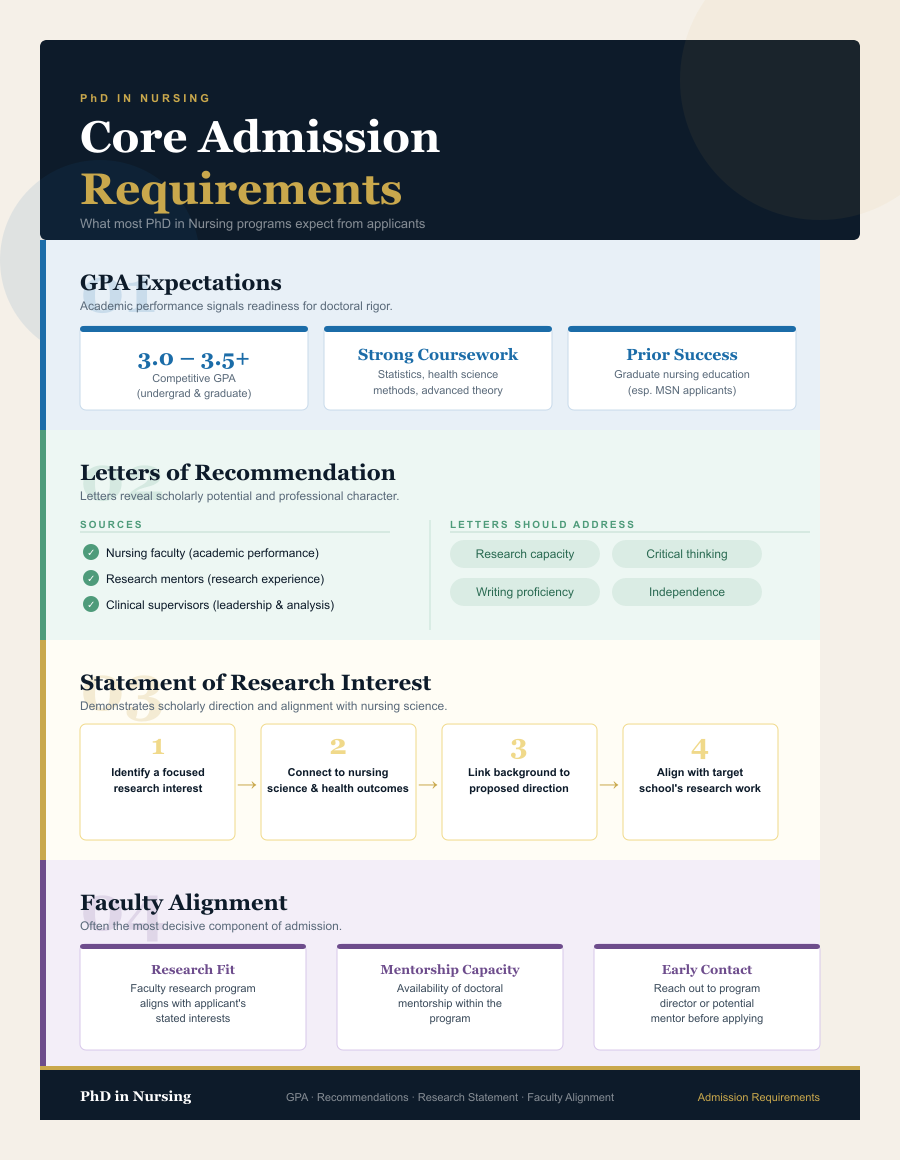
Core Admission Requirements for a PhD Program
While specific criteria vary by school of nursing, most PhD in Nursing programs share several core admission requirements.
1. GPA Expectations
Academic performance is a foundational component of admission requirements.
Most PhD program committees expect:
- A competitive undergraduate and/or graduate GPA (often 3.0–3.5 or higher on a 4.0 scale)
- Strong performance in research-related coursework such as statistics, health science methods, or advanced theory
- Evidence of success in prior graduate nursing education, particularly for MSN to PhD applicants
For example, an applicant to a PhD in Nursing who earned high grades in research methods and advanced statistics demonstrates readiness for the analytical rigor required in a doctoral program. GPA alone does not guarantee admission, but it signals the ability to manage intensive academic demands.
2. Letters of Recommendation
Letters of recommendation provide insight into an applicant’s scholarly potential and professional character.
Strong letters typically come from:
- Nursing faculty familiar with the applicant’s academic performance
- Research mentors who can attest to research experience
- Clinical or administrative supervisors who can speak to leadership and analytical skills
For a PhD in Nursing, recommendation letters should specifically address:
- Capacity to conduct research
- Critical thinking ability
- Writing proficiency
- Independence and perseverance
Because the PhD in Nursing requires sustained intellectual engagement, admissions committees look for evidence that the applicant can thrive in a demanding doctoral environment.
3. Statement of Research Interest
A well-developed statement of research interest is central to admission into a PhD in Nursing program. This document demonstrates scholarly direction and alignment with the discipline of nursing.
A strong statement should:
- Clearly identify a focused research interest
- Connect that interest to nursing science or health outcomes
- Explain how the applicant’s background informs the proposed research direction
- Align with ongoing work within the target school of nursing
For example, an applicant interested in addressing health disparities in maternal care should articulate how prior experience in nursing practice or graduate nursing research informs this focus. The statement should demonstrate familiarity with nursing research priorities and an understanding of how the PhD in Nursing will advance that work.
4. Faculty Alignment and Program Director Review
Alignment with program faculty is often one of the most decisive components of admission. Many PhD in Nursing programs admit applicants based on faculty mentorship capacity and research fit.
Admissions committees may evaluate:
- Whether a faculty member’s research program aligns with the applicant’s interests
- The availability of mentorship within the doctoral program
- Long-term sustainability of the research partnership
In many cases, prospective applicants communicate with a program director or potential faculty mentor before applying. Demonstrating a clear understanding of the faculty’s research focus strengthens the application and shows preparedness for doctoral-level inquiry.
Admission Standards for Different Applicant Backgrounds
Admission standards for a PhD in Nursing account for diverse academic and professional pathways.
BSN-Prepared Nurse Applicants
Applicants entering through a BSN to PhD pathway typically hold a bachelor of science in nursing and may have varying levels of clinical experience.
For BSN-prepared applicants, committees look for:
- Strong academic performance in foundational nursing and science courses
- Evidence of early engagement with nursing research
- Demonstrated commitment to a long-term scholarly trajectory
Because these applicants may not hold a master’s degree, the PhD in Nursing program often integrates advanced graduate coursework into the early phases of the doctoral curriculum.
MSN-Prepared Graduate Applicants
Applicants entering through an MSN to PhD pathway typically hold a master of science in nursing or a related master’s degree.
Expectations for this group often include:
- Prior completion of graduate-level research methods courses
- Experience with scholarly writing or capstone projects
- A clearly defined research interest
These applicants may have prior exposure to research activities in graduate nursing education, which can strengthen their readiness for a PhD in Nursing.
International and Nontraditional Nursing Students
International applicants and nontraditional candidates bring diverse perspectives to the PhD in Nursing.
Admission considerations may include:
- Evaluation of international transcripts for academic equivalency
- Proof of English language proficiency where required
- Demonstration of readiness for research within the U.S. or host-country health system
Nontraditional applicants—such as those returning to academia after extended clinical practice—may need to demonstrate current academic preparedness through recent coursework or research involvement.
Strengthening Your PhD in Nursing Application
Because admission to a PhD in Nursing is competitive, applicants benefit from proactively strengthening their scholarly profile.
1. Research Experience
Direct research experience significantly enhances an application. Examples include:
- Assisting faculty with data collection or analysis
- Participating in funded nursing research projects
- Serving as a research assistant within a college of nursing
Engagement in research demonstrates familiarity with study design, ethical review processes, and dissemination of findings—all critical competencies for success in a PhD in Nursing program.
2. Publications or Scholarly Writing
Evidence of scholarly writing strengthens credibility. This may include:
- Co-authoring peer-reviewed articles
- Publishing in graduate nursing journals
- Presenting at professional conferences
- Producing high-quality master’s-level theses or capstone projects
For a PhD in Nursing, writing ability is essential, as the doctoral program culminates in a dissertation that requires sustained academic rigor.
3. Demonstrating Readiness for Doctoral Study
Beyond grades and credentials, readiness for a PhD in Nursing involves intellectual commitment and long-term vision.
Applicants can demonstrate readiness by:
- Articulating clear professional goals aligned with advancing nursing science
- Showing familiarity with contemporary issues in nursing and health
- Demonstrating resilience and time-management capacity
- Identifying how the chosen doctoral program prepares scholars to improve health outcomes
Admission committees ultimately seek individuals who can complete the program, contribute to nursing knowledge, and sustain a meaningful research program beyond graduation.
Selecting the Right School of Nursing and PhD Program
Evaluating a School of Nursing or College of Nursing
Choosing the appropriate school of nursing and PhD program is one of the most critical steps in a nurse’s doctoral journey. Selecting a program that aligns with professional goals, research interests, and career aspirations ensures that the PhD in Nursing experience is rigorous, supportive, and impactful. The decision requires a comprehensive evaluation of the institution’s reputation, faculty expertise, research infrastructure, and outcomes for doctoral graduates.
Assessing Program Faculty and Research Fit
When considering a college of nursing or school of nursing for a PhD in Nursing program, several key factors should guide evaluation:
1. Accreditation
Accreditation is a foundational criterion for selecting a PhD program. Accredited programs demonstrate adherence to rigorous educational standards, ensuring that graduates are prepared for leadership, scholarship, and nursing research. Two major accrediting bodies for doctoral nursing programs in the United States are:
- Commission on Collegiate Nursing Education (CCNE): Evaluates the quality and effectiveness of doctoral programs in nursing and ensures alignment with national standards.
- Accreditation Commission for Education in Nursing (ACEN): Assesses program design, faculty qualifications, and student outcomes.
Example: An accredited school of nursing PhD ensures that the curriculum, faculty qualifications, and research resources meet national standards, which is critical for obtaining research funding, licensure recognition, and academic credibility.
2. Program Reputation
Program reputation influences both scholarly opportunities and career trajectory. Factors affecting reputation include:
- National rankings of the school of nursing
- Recognition for innovative research programs or contributions to nursing science
- Alumni placement in academia, research, or policy roles
Example: A PhD in Nursing program with a strong reputation in health disparities research may provide increased opportunities for mentorship and collaborations with leading scholars in that field.
3. Nursing Science Strengths
Different PhD programs emphasize distinct areas of nursing science. Evaluating program strengths ensures alignment with the applicant’s research interest. Consider:
- Focus on population health, chronic disease management, or health systems research
- Opportunities for interdisciplinary research with health science or public health departments
- Support for innovative methodologies, such as implementation science or clinical trials
Example: A nurse interested in improving maternal health outcomes might prioritize doctoral programs with faculty leading funded research in obstetric nursing and perinatal health interventions.
Assessing Program Faculty and Research Fit
Faculty mentorship is essential to success in a PhD in Nursing program. Evaluating program faculty ensures the doctoral experience supports development as a nurse scientist.
1. Identifying Faculty Research Interests
Applicants should review faculty profiles to identify scholars whose research interests align with their own. Alignment enables:
- Mentorship during dissertation and early research projects
- Participation in ongoing nursing research initiatives
- Access to research funding and laboratory resources
Example: A PhD student focusing on health equity may seek mentorship from a faculty member conducting research on social determinants of health in vulnerable populations.
2. Reviewing Active Research Programs
Understanding the scope of ongoing research within the program in nursing provides insight into the program’s priorities and resources. Consider:
- Availability of funded research projects for doctoral involvement
- Collaboration opportunities with interdisciplinary health science teams
- Laboratory facilities, statistical support, and data management resources
Example: A PhD in Nursing program with an active research program in telehealth interventions may offer doctoral students opportunities to co-author manuscripts or lead sub-studies.
3. Contacting the Program Director
Engaging directly with the program director offers insight into program expectations, research opportunities, and fit. Questions may include:
- How are doctoral students matched with faculty mentors?
- What support exists for dissertation development and funding?
- How does the program support career advancement post-graduation?
Direct communication ensures that prospective PhD nursing students understand program culture, mentorship availability, and research priorities.
Comparing Doctoral Program Outcomes
Evaluating program outcomes helps determine whether a PhD in Nursing program supports long-term goals.
1. Time to Complete the Program
- Examine the average duration for doctoral students to complete coursework and dissertation research
- Consider whether the program offers full-time, part-time, or accelerated options
Example: A PhD program designed for full-time PhD nursing students may take 4–5 years, while part-time or BSN to PhD programs may extend longer.
2. Graduate Placement
- Assess the career trajectories of alumni, including positions in academia, research institutes, and policy organizations
- Evaluate success in obtaining faculty appointments, postdoctoral fellowships, and leadership roles
Example: A PhD in Nursing graduate employed as a nurse scientist at a research-intensive university demonstrates program effectiveness in preparing doctoral scholars for independent research careers.
3. Research Funding Success
- Review faculty and program history of securing grants from institutions like the National Institutes of Health (NIH) or private foundations
- Programs with strong research funding provide PhD students access to assistantships, project leadership opportunities, and early exposure to grant writing
Example: A PhD student in a program with robust funding may participate in NIH-funded studies, gaining experience in data collection, analysis, and manuscript preparation, which strengthens readiness as an independent nurse scientist.
Structure of a PhD in Nursing Program
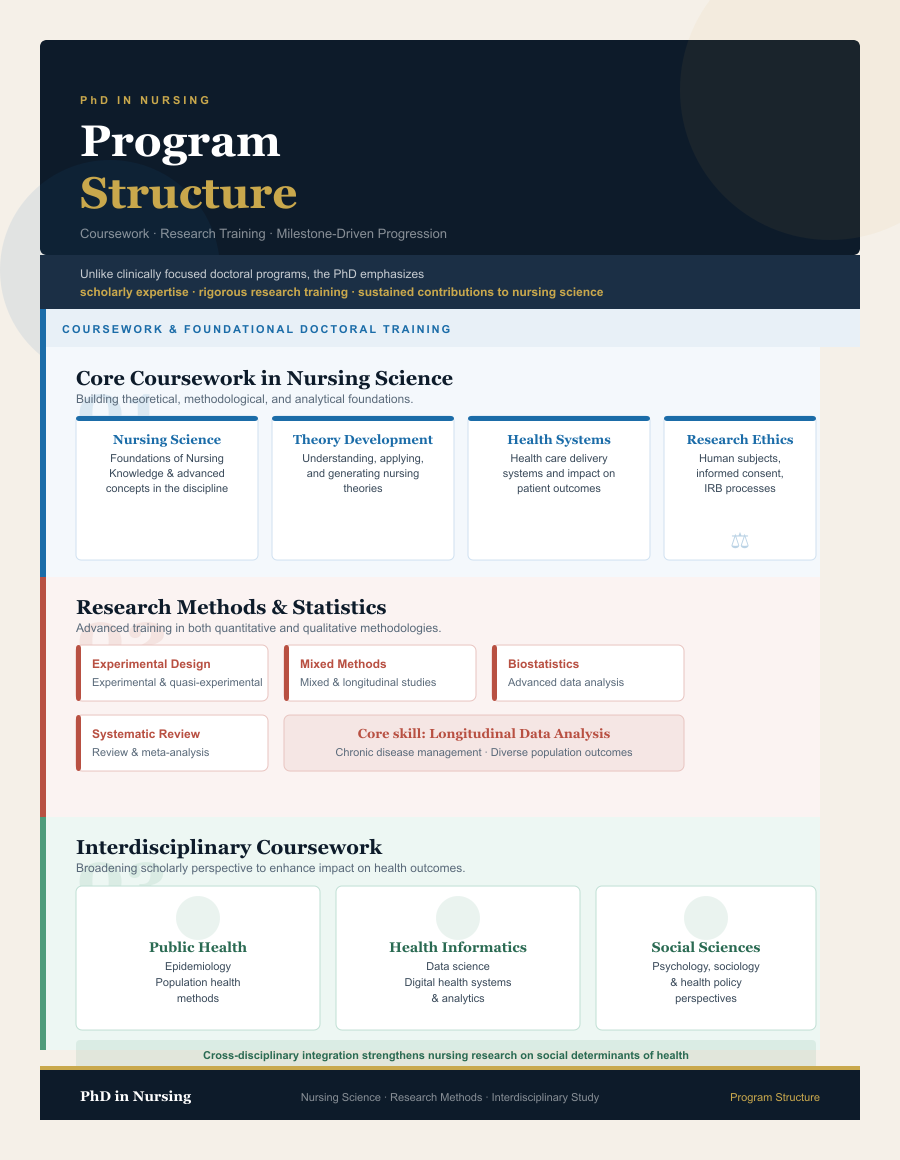
Understanding the structure of a PhD in Nursing program is essential for prospective PhD nursing students. Unlike clinically focused doctoral programs, a PhD in Nursing emphasizes the systematic development of scholarly expertise, rigorous research training, and sustained contributions to nursing science. The program structure combines foundational coursework, intensive research preparation, and milestone-driven progression toward the dissertation.
Coursework and Foundational Doctoral Training
Coursework in a PhD in Nursing program establishes the theoretical, methodological, and analytical foundation required for independent nursing research. The doctoral curriculum is designed to prepare nurses to function as nurse scientists capable of advancing the discipline and improving health outcomes.
1. Core Coursework in Nursing Science
Core PhD coursework covers essential aspects of nursing science and the discipline of nursing. Typical courses include:
- Foundations of Nursing: Advanced concepts in nursing knowledge and the science of nursing
- Theory Development: Understanding, applying, and generating nursing theories
- Health Systems and Policy: Examination of health care delivery systems and their impact on patient outcomes
- Ethics in Nursing Research: Ethical considerations in human subjects research, informed consent, and IRB processes
Example: A doctoral student may take a course in nursing theory to explore models of patient-centered care, laying the foundation for dissertation research on interventions to reduce hospital readmissions.
2. Research Methods and Statistics
A central component of any PhD in Nursing program is advanced training in research methods and statistics. Courses focus on both quantitative and qualitative methodologies:
- Experimental and quasi-experimental design
- Mixed methods and longitudinal studies
- Biostatistics and advanced data analysis
- Systematic review and meta-analysis
Example: A student may complete coursework in longitudinal data analysis to prepare for a research project in a PhD in Nursing program studying chronic disease management outcomes in diverse populations.
3. Interdisciplinary Coursework
Many PhD programs incorporate interdisciplinary learning to broaden scholarly perspective and enhance impact on health outcomes. Interdisciplinary coursework may include:
- Public health and epidemiology
- Health informatics and data science
- Psychology, sociology, or health policy
Example: A doctoral nursing student may collaborate with faculty in the school of health sciences to examine social determinants of health affecting rural populations, integrating perspectives from multiple disciplines into nursing research.
Milestones in the Doctoral Program
Progression in a PhD in Nursing program is typically structured around key academic and research milestones. These provide measurable goals to ensure doctoral students are prepared to conduct independent scholarship.
1. Comprehensive Exams
- Assess mastery of nursing science, research methods, and foundational theory
- May be written, oral, or both
- Ensure readiness to move from coursework to dissertation development
Example: After completing core coursework, a student may sit for a comprehensive exam focused on nursing theories, statistics, and methodology relevant to their planned research.
2. Proposal Defense
- Marks the formal approval of a dissertation proposal
- Involves presentation and defense of research questions, methodology, and theoretical framework before a faculty committee
- Confirms alignment with program standards and faculty expertise
Example: A PhD nursing student proposing a study on health equity in maternal care will defend the proposal, demonstrating that the study is methodologically sound and theoretically grounded.
3. Dissertation Credits
- Typically consist of sequential enrollment in dissertation courses
- Support the development, execution, and dissemination of original nursing research
- May involve participation in funded projects or independent data collection
Example: A student may enroll in dissertation credits while conducting multi-site research on interventions to reduce hospital-acquired infections, under the mentorship of program faculty.
Timeline and Expectations for PhD Nursing Students
1. Full-Time vs Part-Time Enrollment
- Full-time PhD students typically complete the program in 3–5 years, with continuous engagement in coursework and research
- Part-time students, often working clinicians, may take 6–8 years, balancing professional responsibilities with doctoral demands
Example: A BSN to PhD student pursuing full-time enrollment may complete core coursework in two years, followed by dissertation research and defense in subsequent years.
2. Average Time to Complete the Program
- Duration varies based on prior academic preparation, research complexity, and program structure
- MSN to PhD students often complete the program faster due to prior graduate-level coursework
- Universities may provide structured timelines for completion of milestones to support student progress
Example: Many PhD nursing students in research-intensive schools of nursing complete their dissertation within 12–18 months after comprehensive exams and proposal approval.
3. Balancing Academic and Research Responsibilities
- PhD students must manage simultaneous demands of coursework, teaching responsibilities, research projects, and dissertation work
- Effective time management, mentorship, and structured planning are critical
- Programs often provide workshops, peer support, and faculty guidance to facilitate balancing responsibilities
Example: A doctoral student may schedule coursework in the first two years while initiating pilot studies, then focus on dissertation research and manuscript preparation in the final years, ensuring both nursing research output and timely program completion.
Funding, Tuition, and Financial Planning
Financing a PhD in Nursing program is a critical consideration for prospective doctoral students. Understanding tuition costs, funding opportunities, and strategies for financial management is essential for completing the program while minimizing debt and ensuring a sustainable career as a nurse scientist. A well-structured financial plan enables PhD nursing students to focus on rigorous coursework, nursing research, and dissertation projects without undue financial stress.
Understanding Tuition and Degree Program Costs
The cost of earning a PhD in Nursing varies widely depending on the school of nursing, program structure, residency status, and duration of study. Tuition and associated fees can represent a significant investment in professional development.
1. Tuition Structure in a PhD in Nursing Program
- Per-credit tuition: Many universities charge by credit hour, with doctoral courses typically more expensive than undergraduate or master’s-level courses.
- Flat-rate tuition: Some programs offer a flat rate per semester for full-time doctoral students, simplifying financial planning.
- Program-level differences: BSN to PhD programs may require additional coursework, increasing total tuition, whereas MSN to PhD programs may reduce the number of credits required.
Example: At a research-intensive university, tuition for a full-time PhD nursing student may range from $20,000 to $35,000 per year, excluding fees or living expenses.
2. Fees and Living Expenses
Beyond tuition, students should account for:
- Student activity, library, technology, and health service fees
- Books, software, and research materials
- Housing, transportation, and personal expenses
Example: A PhD nursing student relocating to attend a university school of nursing may face additional costs for health insurance, relocation, and specialized data analysis software for research projects.
Funding Opportunities for PhD Students
Many PhD programs in nursing offer financial support designed to reduce the burden of tuition and living costs. Funding mechanisms often include assistantships, scholarships, and research grants.
1. Assistantships
- Teaching assistantships (TA): Involve supporting faculty in undergraduate or graduate courses, grading, and mentoring students.
- Research assistantships (RA): Allow students to contribute to faculty-led nursing research while receiving tuition remission and stipends.
- Provides hands-on experience in nursing science and early exposure to grant-funded projects
Example: A PhD nursing student serving as an RA on a health equity research project may gain experience conducting data analysis and manuscript preparation while offsetting tuition costs.
2. Scholarships
- Offered by universities, foundations, professional nursing organizations, and state programs
- May be merit-based, need-based, or targeted to underrepresented populations in nursing research
- Some programs, such as the Nurse Faculty Loan Program, provide tuition support with loan forgiveness in exchange for service in academic roles
Example: A scholarship awarded by the Association of Colleges of Nursing may provide partial tuition funding for a PhD student focusing on improving health outcomes through nursing interventions.
3. Research Grants
- Doctoral students can be funded through faculty-led grants from NIH, HRSA, or private foundations
- May provide stipends, tuition support, and resources for research projects
- Participation strengthens skills in grant writing, study design, and project management
Example: A PhD nursing student involved in a federally funded research program examining chronic disease management can receive salary support and access to laboratory or data resources.
4. Federal and Institutional Funding
- Federal programs may include stipends for underrepresented groups or for specific research priorities in nursing and health
- Universities may offer institutional fellowships or awards that support full-time doctoral students in nursing research
Example: An institutional fellowship might provide two years of full-time support for PhD nursing students conducting dissertation research on reducing hospital-acquired pressure injuries.
Managing Finances While Completing the Doctoral Program
Balancing finances while pursuing a PhD in Nursing requires careful planning and strategic decision-making.
1. Working While Enrolled
- Many PhD nursing students work part-time as clinical nurses or in research positions
- Programs often recommend limiting outside work to maintain focus on doctoral coursework, research, and program of research development
Example: A full-time PhD student may work as a nurse educator for 10 hours per week while participating in a research assistantship.
2. Reducing Debt
Strategies include:
- Leveraging assistantships, scholarships, and federal funding
- Planning a timeline to minimize extended enrollment and avoid extra tuition
- Budgeting for living expenses and personal costs to prevent reliance on high-interest loans
Example: A PhD nursing student who secures a research assistantship and institutional fellowship may complete the program with minimal debt, positioning them for a sustainable career as a nurse scientist.
3. Long-Term Return on Investment
Although the initial costs can be substantial, the PhD in Nursing represents an investment in a career with long-term benefits:
- Opportunities in academia, research leadership, policy, and health systems
- Competitive salaries for nurse scientists and faculty positions
- Ability to lead funded research and advance nursing science, creating broader systemic impact
Example: A PhD nursing graduate leading health equity research may secure grant funding, publish widely, and influence national health policy, producing returns that extend well beyond the cost of tuition.
Dissertation and Research Training in a Nursing PhD
The dissertation and research training component of a PhD in Nursing is the cornerstone of doctoral education. It transforms students into independent nurse scientists capable of advancing nursing science, generating evidence to improve health outcomes, and addressing critical issues such as health equity. A structured and well-supported approach to dissertation and research training ensures that doctoral students not only complete the program but also contribute meaningful scholarship to the field.
Choosing a Dissertation Topic and Research Focus
Selecting a dissertation topic is the first step in defining a program of research during the PhD in Nursing program. The topic sets the trajectory for scholarly identity and establishes the foundation for future contributions to nursing research.
1. Aligning with Nursing Research Priorities
- The dissertation should reflect national and international priorities in nursing science, such as patient safety, chronic disease management, or care delivery innovations.
- Aligning with funded research programs or faculty interests can enhance mentorship opportunities and access to resources.
Example: A PhD nursing student interested in reducing hospital-acquired infections may align their dissertation with ongoing infection prevention initiatives at the university’s school of nursing and local health systems.
2. Addressing Health Outcomes and Health Equity
- Dissertations often focus on improving health outcomes for specific populations.
- Research may examine disparities, access to care, or interventions designed to promote health equity.
- Integrating these priorities ensures the research has real-world impact beyond academic completion.
Example: A dissertation exploring culturally tailored interventions to manage diabetes in underserved communities exemplifies how a PhD in Nursing project can address both health outcomes and health equity.
Conducting Original Research in Nursing Science
Original research distinguishes a PhD in Nursing from other doctoral degrees. It requires methodical planning, rigorous study design, and ethical conduct.
1. Study Design
- Doctoral students must select an appropriate study design to address their research questions effectively.
- Options include quantitative, qualitative, or mixed-methods approaches, often guided by the theoretical framework developed in nursing science courses.
Example: A student studying patient adherence to heart failure management may use a mixed-methods design to combine survey data with qualitative interviews, providing both breadth and depth.
2. Data Collection
- Data collection strategies depend on study design and may include surveys, clinical observations, interviews, or secondary data analysis.
- Students must ensure data integrity, reliability, and validity in alignment with best practices in nursing research.
Example: A PhD nursing student conducting a multi-site study on telehealth interventions might coordinate with hospital partners to collect standardized patient outcome measures.
3. Ethical Approval
- Approval from an Institutional Review Board (IRB) is required before initiating research involving human subjects.
- Ethical considerations include informed consent, confidentiality, and minimizing risk to participants.
Example: Prior to data collection, the student submits a detailed research protocol to the university IRB, including plans for protecting patient information in compliance with HIPAA regulations.
Defending the Dissertation and Publishing as a Nurse Scientist
The dissertation is both a culmination of the PhD program and a launching point for scholarly contribution.
1. Dissertation Defense Process
The defense typically involves presenting the research methodology, results, and implications before a committee of faculty and external reviewers.
The committee evaluates rigor, clarity, and contribution to nursing science.
Example: A PhD nursing student defending a study on patient-centered care models must demonstrate how findings advance evidence-based practice and provide actionable recommendations for improving health outcomes.
2. Manuscript Preparation
Publication of dissertation findings is a key step in establishing a career as a nurse scientist.
Students often convert chapters of their dissertation into peer-reviewed articles for submission to nursing or interdisciplinary journals.
Example: A PhD nursing student publishes a manuscript in a journal focusing on nursing research, sharing evidence on interventions that reduce health disparities in chronic disease management.
3. Building a Long-Term Research Program
Beyond the dissertation, doctoral students are encouraged to develop a sustained research agenda.
Early participation in grant writing, collaboration with faculty, and presentation at conferences lays the groundwork for an independent program of research.
Example: A graduate may continue to investigate social determinants of health, leveraging dissertation findings to secure NIH funding, mentor doctoral students, and influence health policy through evidence generation.
Career Pathways After Earning a Doctor of Philosophy in Nursing
Earning a Doctor of Philosophy in Nursing opens diverse career pathways, positioning graduates as leaders in nursing science, nursing research, education, and health policy. Unlike clinical doctorates, a PhD in Nursing emphasizes the generation of knowledge, evidence-based practice, and scholarly leadership. Understanding the potential trajectories helps nurses align their doctoral training with long-term professional goals.
Academic and Faculty Roles
Academic positions are a common pathway for PhD nursing graduates, focusing on teaching, mentoring, and advancing the next generation of nurses.
1. Teaching in a School of Nursing
- PhD in Nursing graduates often join faculties of university schools of nursing or colleges of nursing to teach undergraduate and graduate courses.
- Courses may include nursing science, research methods, health policy, and evidence-based practice.
- Faculty members contribute to shaping curriculum, integrating nursing research, and fostering critical thinking in students.
Example: A nursing PhD graduate may teach courses in advanced nursing theory and mentor students in BSN to PhD or MSN to PhD pathways, preparing them for research-intensive careers.
2. Mentoring Nursing Students
- Mentorship is central to academic roles, helping students navigate doctoral programs, research projects, and dissertation development.
- Faculty provide guidance on developing programs of research, grant writing, and publishing scholarly work.
Example: A PhD nursing student mentor supports junior students in designing a research study on patient-centered care outcomes, sharing expertise in research methodology and ethics.
3. Leading Doctoral Education
- Graduates may serve as program directors or faculty leads for PhD programs in nursing, shaping admissions, curriculum, and program outcomes.
- Leadership roles include developing research collaborations, overseeing faculty mentorship, and aligning programs with nursing science priorities.
Example: A program director may guide PhD nursing students in completing comprehensive exams, research proposals, and dissertation milestones, ensuring alignment with the school’s mission and national research standards.
Research, Policy, and Leadership Careers
Beyond academia, PhD in Nursing graduates often pursue research and leadership roles where they influence practice, policy, and health systems.
1. Nurse Scientist Roles
- PhD graduates serve as nurse scientists, leading research teams, securing grant funding, and conducting original studies to advance nursing knowledge.
- Focus areas include chronic disease management, health equity, patient safety, and health care delivery innovation.
Example: A nurse scientist may lead an NIH-funded project on reducing hospital readmissions for older adults, producing evidence that informs practice guidelines.
2. Research Institutes
- Opportunities exist in academic and independent research centers, including translational science laboratories, public health organizations, and interdisciplinary research institutes.
- PhD nursing students often gain early exposure to these environments through assistantships or collaborations during their doctoral program.
Example: A graduate may join a health systems research institute, examining policy interventions to improve maternal and child health outcomes in underserved communities.
3. Health Policy and Systems Leadership
- PhD in Nursing graduates may engage in health policy, advocating for evidence-based initiatives that improve population health and promote health equity.
- Roles include advising government agencies, leading policy research, or contributing to professional associations focused on nursing and health care.
Example: A PhD nursing graduate may serve as a policy analyst for a state health department, translating nursing research findings into actionable policies to reduce disparities in chronic disease care.
PhD in Nursing vs Doctor of Nursing Practice
Understanding the distinction between a PhD in Nursing and a Doctor of Nursing Practice (DNP) is critical when considering career goals:
- PhD in Nursing: Focused on generating new knowledge, conducting nursing research, and building scholarly careers. Graduates often pursue academic, research, and policy roles.
- DNP: Emphasizes advanced clinical practice, translating research into clinical interventions, and improving health outcomes in practice settings.
Example: A nurse interested in leading clinical innovations in a hospital may choose a DNP, while a nurse aiming to conduct studies that inform national care standards may pursue a PhD in Nursing.
Research vs Clinical Leadership Focus
- Research leadership: Developing grant-funded studies, mentoring doctoral students, and shaping nursing science agendas.
- Clinical leadership: Leading practice improvements, quality initiatives, and health system innovations without primary focus on research.
Example: A PhD nursing graduate may lead a multi-site research program on telehealth interventions, while a DNP-prepared nurse may implement those interventions directly in clinical settings.
Career Trajectory Differences
- PhD in Nursing graduates typically transition into faculty, postdoctoral, or independent research positions.
- DNP graduates often advance to executive clinical roles, nurse administration, or advanced practice leadership.
Example: Over a decade, a PhD nursing graduate may become a program director for doctoral nursing students, publish extensively, and influence national nursing guidelines, while a DNP may become a chief nursing officer overseeing hospital-wide clinical programs.
Choosing the Right Doctoral Degree
- Decisions should align with personal and professional goals: research, education, policy, or clinical leadership.
- Nurses seeking to advance nursing science and develop as nurse scientists should pursue a PhD in Nursing.
Example: A nurse passionate about generating evidence to reduce health disparities and mentor future scholars would benefit from a PhD in Nursing, positioning them for a career in research-intensive academia or leadership roles in nursing and health research.
Transitioning From PhD Student to Independent Scholar
Completing a PhD in Nursing marks a significant milestone, but the transition from doctoral student to independent scholar involves deliberate planning, advanced research engagement, and strategic career development. This phase emphasizes consolidating expertise in nursing science, establishing a sustainable program of research, and contributing meaningfully to evidence-based practice and health outcomes. For many PhD nursing students, postdoctoral experiences, fellowships, and grant-supported research provide critical platforms for growth and professional impact.
Postdoctoral Training and Advanced Research Opportunities
Postdoctoral training allows newly minted PhD nursing graduates to deepen research skills, expand scholarly networks, and transition from student-led projects to independent research leadership.
- Focus areas may include specialized methodologies, interdisciplinary health science collaborations, or leadership in large-scale research initiatives.
- Postdoctoral positions often provide mentorship from established nurse scientists, offering guidance on building an independent program of research.
Example: A PhD nursing graduate completing a postdoctoral fellowship in geriatric nursing may lead investigations on interventions to reduce falls in long-term care settings, expanding the scope of their dissertation work into multi-site research studies.
Fellowships
Fellowships provide structured support for doctoral graduates to gain advanced research training while developing an independent scholarly trajectory.
- Types of fellowships: Institutional, federal, or foundation-supported programs focused on specific populations or health priorities.
- Fellowships often include salary support, research resources, and protected time for publishing and grant writing.
Example: An NIH-funded fellowship may allow a PhD nursing graduate to explore health disparities in maternal care, providing mentorship, access to patient populations, and opportunities to collaborate with interdisciplinary teams.
Expanding a Research Program
Transitioning to an independent scholar requires building a sustainable program of research beyond the dissertation.
- Early efforts involve refining research questions, identifying funding sources, and establishing collaborations with faculty and research institutes.
- Expansion may include mentoring doctoral students, participating in multi-site studies, and integrating translational research approaches.
Example: A nurse scientist who studied telehealth interventions during their PhD may expand their research program to evaluate national implementation strategies, influencing policy and practice standards.
Securing Grants and Improving Health Outcomes Through Research
Funding is essential for advancing nursing science and implementing research that directly improves health outcomes.
1. Grant Writing Basics
- Successful grant applications require clear articulation of study aims, methodology, significance, and impact on health outcomes.
- Attention to alignment with funding priorities, feasibility, and interdisciplinary collaboration increases the likelihood of award.
Example: A PhD nursing student transitioning to a faculty role may write a grant proposal to HRSA focusing on improving rural maternal health through nurse-led interventions.
2. Funding Agencies
- Primary funding sources include NIH, HRSA, AHRQ, foundations, and private organizations supporting nursing research.
- Securing funding demonstrates the capacity to lead independent studies and sustain a research program.
Example: Receiving an NIH R01 award allows a nurse scientist to conduct a multi-year study on chronic disease management, with direct implications for patient care practices.
3. Translating Evidence to Improve Health
- Independent scholars bridge research findings with nursing practice, policy, and health system interventions.
- Knowledge translation ensures that nursing science informs real-world solutions and improves health outcomes at local, national, and global levels.
Example: Research on interventions to reduce hospital-acquired pressure injuries may inform clinical protocols across multiple hospitals, demonstrating the direct impact of a PhD in Nursing on patient care.
Long-Term Impact of a Nursing PhD
A PhD in Nursing enables graduates to contribute to nursing knowledge and shape the profession for decades.
1. Advancing Nursing Science
- Independent scholars develop new theories, refine methodologies, and conduct original research that drives innovation in nursing science.
- Publications, presentations, and mentorship of doctoral students ensure the ongoing growth of the discipline.
Example: A PhD nursing graduate develops a longitudinal study on community health interventions, producing data that shapes evidence-based nursing practices nationally.
2. Improving Health Outcomes Globally
- Research generated by nurse scientists addresses pressing global health issues, including chronic disease, maternal and child health, and health disparities.
- Findings inform policies and programs that enhance health equity and access to care.
Example: A nurse scientist may collaborate with the WHO to implement interventions in low-resource settings, translating research from a doctoral program into global impact.
3. Shaping the Future of Nursing Practice
- Independent scholars influence nursing education, health policy, and clinical standards, ensuring that evidence-based care is embedded in practice.
- Mentorship, dissemination of findings, and policy engagement allow PhD nursing graduates to shape the next generation of nurses and researchers.
Example: A PhD in Nursing graduate leading a research program on telehealth in rural communities can advocate for nationwide adoption of evidence-based practices, improving care delivery and patient outcomes.
Conclusion
Earning a PhD in Nursing represents more than an academic achievement; it is a commitment to advancing nursing science, generating meaningful evidence, and shaping the future of healthcare. Through rigorous doctoral programs, students develop expertise in nursing research, theoretical foundations, and methodological rigor, positioning themselves as independent nurse scientists capable of addressing complex health challenges and promoting health equity.
From selecting the right school of nursing and navigating admission requirements to completing intensive coursework, conducting original research, and defending a dissertation, the journey of a PhD nursing student is structured to cultivate both intellectual and professional growth. Beyond graduation, the opportunities for impact are vast: graduates contribute to academia, policy, clinical leadership, and interdisciplinary research, translating evidence into interventions that improve health outcomes locally and globally.
Ultimately, a PhD in Nursing is a transformative pathway. It empowers nurses to not only expand nursing knowledge but also to mentor the next generation, shape evidence-based practice, influence health policy, and lead innovations in care delivery. By completing this journey, nurses join a global network of scholars dedicated to advancing the science of nursing and driving meaningful improvements in patient care and population health.
Frequently Asked Questions
What do you need to get a PhD in Nursing?
To pursue a PhD in Nursing, you typically need:
- A BSN (Bachelor of Science in Nursing) or MSN (Master of Science in Nursing) degree.
- Competitive GPA (usually 3.0 or higher for graduate programs).
- Strong letters of recommendation from nursing faculty or supervisors.
- A statement of research interest or personal statement.
- Evidence of research experience, publications, or scholarly writing.
- Alignment with faculty research interests and program goals in nursing science.
Can a nurse become a doctor in Kenya?
Yes, a nurse in Kenya can earn a doctoral degree such as a PhD in Nursing or a Doctor of Nursing Practice (DNP). These programs are offered by universities such as the University of Nairobi School of Nursing, allowing nurses to pursue advanced research, academic, or leadership careers. Becoming a medical doctor (MD) is a separate pathway requiring medical school.
What is a good GPA for a PhD in Nursing?
A competitive GPA for admission into a PhD nursing program is typically 3.0 to 3.5 or higher on a 4.0 scale. Some highly selective programs may prefer a GPA of 3.5+, especially for research-intensive tracks or direct-entry BSN to PhD applicants.
What is a Doctor of Philosophy in Nursing?
A Doctor of Philosophy in Nursing (PhD in Nursing) is a research-focused doctoral degree that prepares nurses to:
- Conduct original nursing research and develop new knowledge.
- Lead programs of research that improve health outcomes.
- Contribute to nursing science, education, and policy.
- Mentor future nurse scientists and influence evidence-based nursing practice.
