

MD vs NP: Understanding the Differences Between a Medical Doctor and a Nurse Practitioner in Modern Healthcare
The discussion surrounding MD vs NP has become increasingly prominent as healthcare systems adapt to rising patient needs, workforce shortages, and evolving models of care delivery. In many clinical environments, both the medical doctor and the nurse practitioner serve as essential healthcare providers responsible for evaluating patients, managing treatment plans, and delivering high-quality clinical services. Although these professionals often work collaboratively and share some overlapping responsibilities, important distinctions exist in their education and training, professional responsibilities, and regulatory authority. Understanding these differences is critical for appreciating how modern healthcare teams function and how different professionals contribute to patient outcomes.
At its core, the MD vs NP comparison reflects two distinct professional pathways within healthcare. A physician, also referred to as an MD or doctor of medicine, follows a traditional medical training route that begins with undergraduate education and continues through four years of medical school, followed by specialized residency training. This pathway prepares physicians to diagnose complex conditions, develop treatment plans, and provide comprehensive patient care across a wide range of clinical environments. Physicians may also pursue additional fellowship training to focus on a particular specialty, such as cardiology, pediatrics, surgery, or internal medicine. Through this extensive training process, physicians obtain a medical license that allows them to practice independently and deliver specialized healthcare services.
In contrast, a nurse practitioner represents a highly trained clinician within the field of advanced practice nursing. The pathway typically begins when an individual first becomes a registered nurse, gaining foundational experience in clinical practice before pursuing graduate-level education through an np program. Many professionals complete a Master of Science in Nursing (MSN) or a Doctor of Nursing Practice degree, which prepares them to function as an advanced practice registered nurse capable of managing many aspects of clinical care. In many healthcare systems, nps are authorized to diagnose and treat common conditions, manage chronic illnesses, and prescribe medication while working independently or with varying degrees of physician oversight, depending on state or national regulations.
The growing interest in MD vs NP comparisons is closely linked to broader changes in healthcare delivery. Modern systems increasingly rely on interdisciplinary teams that include nurse practitioners and doctors, along with professionals such as physician assistants, pharmacists, and other specialists. Within these teams, clinicians collaborate to deliver coordinated services ranging from preventative care to complex acute care interventions. This collaborative model recognizes that different types of clinicians bring complementary expertise to the care team, allowing healthcare organizations to expand access to services while maintaining high standards of clinical quality.
Another factor influencing discussions of MD vs NP is the growing demand for primary care services. In many regions, shortages of physicians have created challenges for healthcare systems attempting to provide timely access to care. As a result, nurse practitioners and medical doctors often work together to address these gaps, with NPs frequently serving as a primary care provider for many patients. This role may involve conducting health assessments, managing chronic diseases such as diabetes or hypertension, and providing family care and routine health screenings. At the same time, physicians remain essential for managing complex diagnoses, performing specialized procedures, and coordinating advanced specialty care when necessary.
Professional organizations and workforce analyses have also contributed to the growing visibility of the MD vs NP discussion. For example, the American Association of Nurse Practitioners emphasizes the expanding contributions of advanced practice nurses in improving access to care and promoting patient-centered services. Similarly, the American Medical Association highlights the central role of physicians in leading medical teams and managing complex medical conditions. Data from the Bureau of Labor Statistics further indicate that both professions are expected to remain in high demand, reflecting the critical need for qualified clinicians capable of delivering safe and effective care across diverse healthcare environments.
Despite the shared goal of improving health outcomes, confusion often arises regarding the difference between an md and an advanced practice clinician. Patients may wonder whether they should see a nurse practitioner or see a doctor for a particular concern, while healthcare organizations must carefully define professional roles within their systems. Questions about scope of practice, clinical authority, and collaborative models of care frequently arise in these discussions, shaping both policy decisions and workforce planning.
Exploring the MD vs NP comparison therefore provides valuable insight into how healthcare professions evolve to meet changing societal needs. Rather than representing competing roles, physicians and nurse practitioners function as complementary members of a broader clinical network dedicated to delivering quality care. By examining the key differences in training, responsibilities, and professional scope, it becomes possible to better understand how these clinicians contribute to modern healthcare and how their collaboration supports effective, patient-centered care across diverse clinical settings.
Overview of NP vs MD: Key Differences Between Nurse Practitioners and Physicians
The comparison between nurse practitioners (NPs) and medical doctors (MDs) is a fundamental discussion in modern healthcare, reflecting differences in education, clinical responsibilities, and scope of practice. While both professions are integral to direct patient care, understanding their distinct roles clarifies how care providers function individually and collaboratively within healthcare systems.
The evolving roles of doctors and nurse practitioners in modern healthcare
Over the past several decades, the roles of doctors and nurse practitioners have expanded and adapted to meet growing healthcare demands. Traditionally, MDs have served as the primary authority in patient care, responsible for diagnosing conditions, prescribing treatments, and managing complex or specialized cases. They often lead care teams that include nurse practitioners, physician assistants, and registered nurses, coordinating interventions across multiple specialties.
In parallel, nurse practitioners have evolved from a supportive role into autonomous providers capable of prescribing medication, diagnosing and treating common acute and chronic conditions, and managing comprehensive patient care, especially in primary care and family care settings. For example:
- In a community health clinic, a family nurse practitioner may conduct routine wellness checks, administer vaccinations, and manage chronic diseases such as diabetes or hypertension, while collaborating with an MD for complex cases.
- In hospital settings, NPs may manage post-operative care or oversee patient rounds in coordination with attending physicians.
This evolution reflects the growing recognition that NPs and MDs can complement one another, improving access to care while maintaining quality care standards.
Why the NP vs MD comparison matters for primary care providers and healthcare systems
Understanding the differences between NPs and MDs is essential for workforce planning, patient allocation, and efficient healthcare delivery. In many primary care environments, physician shortages have increased reliance on NPs to provide routine care, preventive services, and chronic disease management. This allows physicians to focus on high-complexity cases, specialty care, and advanced diagnostics.
Key considerations in the NP vs MD dynamic include:
- Access to Care: NPs often expand patient access, especially in rural or underserved areas.
- Regulatory Oversight: Scope of practice laws dictate whether NPs operate independently or under physician oversight.
- Resource Allocation: Health systems benefit from balancing NPs and MDs to optimize patient flow and reduce wait times.
For instance, a primary care clinic staffed by NPs and physicians can serve a larger patient population while maintaining high standards of preventive care and direct patient care. This illustrates the practical importance of understanding the key differences between these roles for both administrators and clinicians.
Understanding the key differences between physicians, nurse practitioners, and other healthcare professionals
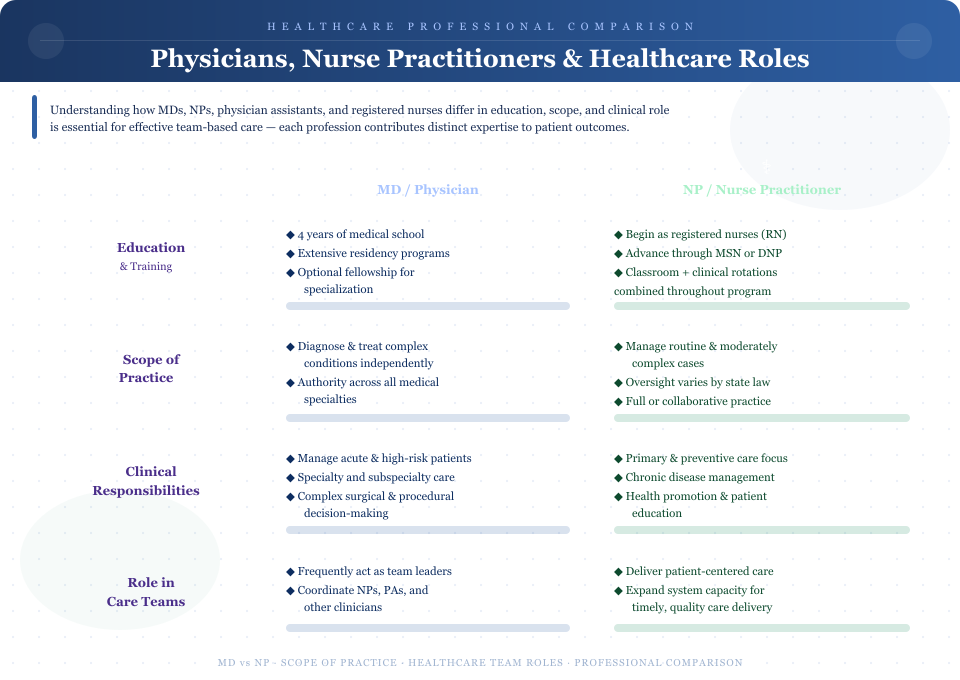
The NP vs MD comparison also highlights how each profession differs from other healthcare providers such as physician assistants and registered nurses. The distinctions can be summarized as follows:
- Education and Training:
- MDs complete four years of medical school, extensive residency programs, and optional fellowships for specialization.
- NPs begin as registered nurses and advance through MSN or DNP programs, combining classroom instruction with clinical rotations.
- Scope of Practice:
- MDs have authority to diagnose and treat complex conditions independently across all medical specialties.
- NPs may manage routine or moderately complex cases, often with variable degrees of physician oversight, depending on state or institutional regulations.
- Clinical Responsibilities:
- Physicians manage acute, high-risk, or specialty care patients, while NPs often focus on primary care, chronic disease management, and health promotion.
- Role within Healthcare Teams:
- MDs frequently act as team leaders, coordinating the work of NPs, physician assistants, and other clinicians.
- NPs provide essential patient-centered care, expanding the system’s capacity to deliver timely, quality care.
For example, in a hospital acute care unit, an MD may diagnose a complex cardiac condition, while the NP oversees follow-up care, medication management, and patient education. Similarly, in primary care settings, an NP may conduct routine health assessments and screenings, referring patients to an MD for specialty evaluation when needed.
This comparison demonstrates that the NP vs MD discussion is not about superiority, but about understanding how both roles contribute uniquely to patient care. Recognizing these distinctions ensures effective deployment of healthcare professionals, improves care delivery, and enhances patient outcomes in both primary care and specialty care environments.
Medical Doctors (MDs): Education, Training, and Physician Responsibilities
Medical doctors (MDs) are highly trained healthcare professionals who play a central role in delivering direct patient care across diverse healthcare settings. Their responsibilities encompass diagnosing complex medical conditions, developing treatment plans, performing procedures, and leading healthcare teams. Understanding the training, responsibilities, and career pathways of physicians provides a foundation for comparing the roles of MDs and nurse practitioners (NPs).
What a medical doctor is and the role of a physician in healthcare
A medical doctor is a licensed physician trained to manage all aspects of patient care. Physicians hold a doctor of medicine degree and are qualified to provide independent clinical judgment, including diagnosing and treating complex medical conditions. Their role is multi-dimensional and often includes:
- Clinical Leadership: Physicians often oversee care teams, including nurse practitioners, physician assistants, and registered nurses, ensuring coordinated patient care across primary care and specialty settings.
- Patient Assessment and Diagnosis: MDs evaluate patients with acute, chronic, or complex conditions using clinical reasoning, diagnostic testing, and medical history analysis.
- Treatment Planning and Management: Physicians develop individualized treatment plans, prescribe medications, and order procedures or tests to optimize patient outcomes.
- Preventive and Long-Term Care: Physicians provide guidance on preventative care, wellness strategies, and chronic disease management, ensuring patients maintain optimal health over time.
For example, in a hospital cardiology unit, an MD may diagnose and treat a patient with heart failure while collaborating with an NP who monitors medication adherence and patient education, illustrating the complementary roles of physicians and advanced practice nurses in healthcare.
Medical school and residency training required to become a doctor of medicine
Becoming an MD requires extensive education and clinical training, typically involving several stages:
- Undergraduate Education:
- Pre-medical coursework in biology, chemistry, physics, and mathematics.
- Preparation for medical school admission exams.
- Medical School (Four Years of Medical School):
- Years 1–2: Focus on foundational medical sciences, including anatomy, physiology, pharmacology, and medical ethics.
- Years 3–4: Clinical rotations across specialties such as internal medicine, pediatrics, surgery, psychiatry, and primary care, providing hands-on direct patient care experience under supervision.
- Residency Training:
- Postgraduate training in a chosen specialty, ranging from 3 to 7 years depending on the field.
- Residents gain advanced clinical skills, procedural expertise, and experience managing complex patient cases.
- Licensing and Certification:
- MDs must pass the United States Medical Licensing Examination (USMLE) or equivalent to obtain a medical license.
- Many pursue board certification in their specialty to demonstrate expertise and competence.
This rigorous pathway ensures that MDs acquire the knowledge, technical skills, and clinical judgment necessary to provide high-quality patient care and lead care teams effectively.
Clinical responsibilities of physicians in diagnosis, treatment, and patient care
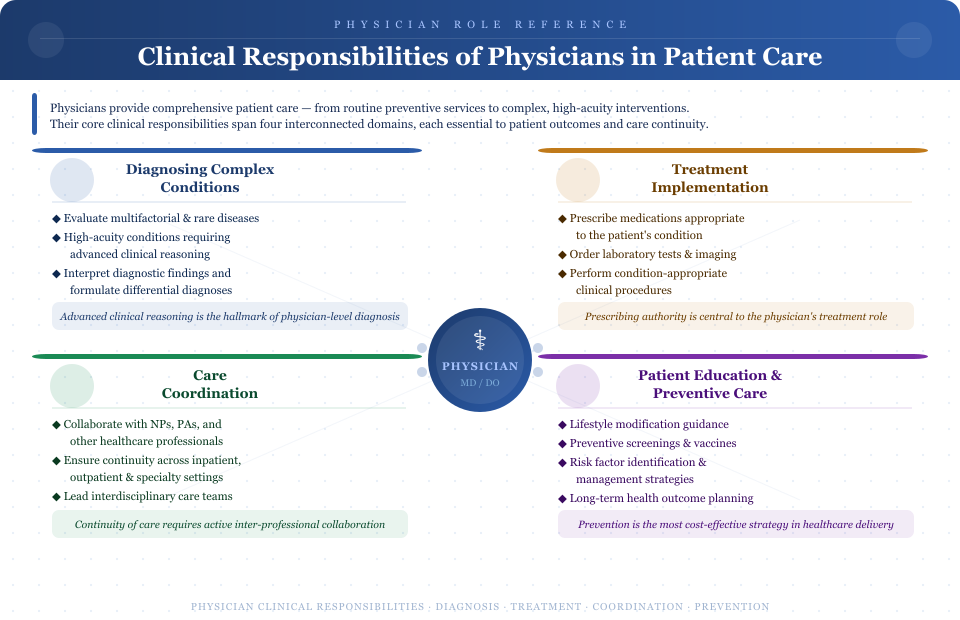
Physicians are responsible for providing comprehensive patient care that ranges from routine preventive services to complex interventions. Their core clinical responsibilities include:
- Diagnosing Complex Conditions: MDs evaluate patients with multifactorial illnesses, rare diseases, or high-acuity conditions that require advanced clinical reasoning.
- Treatment Implementation: Physicians prescribe medications, order laboratory tests and imaging studies, and perform procedures appropriate to the patient’s condition.
- Care Coordination: Physicians collaborate with nurse practitioners, PAs, and other healthcare professionals to ensure continuity of care across inpatient, outpatient, and specialty settings.
- Patient Education and Preventive Care: Physicians provide guidance on lifestyle modifications, preventive screenings, and risk factor management, which are essential for long-term health outcomes.
For instance, a physician managing a patient with diabetes may adjust medications, coordinate referrals to an endocrinologist, and oversee an NP or registered nurse who provides patient education on diet, exercise, and self-monitoring of blood glucose. This demonstrates the physician’s role in integrating direct patient care with collaborative team-based approaches.
Medical specialties and career paths for MDs
Physicians have diverse career paths, allowing them to specialize in areas that align with their interests and expertise. Common specialties include:
- Primary Care Specialties:
- Family medicine, internal medicine, and pediatrics.
- Focus on routine preventive care, chronic disease management, and overall patient wellness.
- Surgical Specialties:
- General surgery, orthopedic surgery, neurosurgery.
- Require advanced procedural training to perform complex surgical interventions.
- Medical Subspecialties:
- Cardiology, endocrinology, oncology, nephrology.
- Focus on complex diagnostic evaluation and management within a specific organ system.
- Hospital-Based Specialties:
- Emergency medicine, critical care, anesthesiology.
- Provide acute care and manage patients with high-acuity conditions.
- Academic and Research Roles:
- Physicians may engage in clinical research, teaching, or policy development, contributing to the broader medical knowledge base.
Physicians’ annual salaries vary by specialty, geographic location, and level of experience. According to the Bureau of Labor Statistics, physicians in high-demand specialties such as cardiology or orthopedic surgery earn significantly more than those in primary care, reflecting the extensive training, procedural skills, and responsibility required for these roles.
Nurse Practitioners (NPs): Role, Education, and Advanced Practice Nursing
Nurse practitioners (NPs) are advanced practice nurses who provide direct patient care across a variety of healthcare settings, including primary care, acute care, and specialty care. The role of the NP has evolved significantly to address physician shortages, expand access to healthcare providers, and deliver quality care in collaboration with medical doctors (MDs) and other members of the care team. Understanding the development of the NP role, the education pathways, and their clinical responsibilities is essential for recognizing the key differences between nurse practitioners and physicians.
What a nurse practitioner is and how the NP role developed in healthcare
A nurse practitioner is an advanced practice registered nurse (APRN) who can diagnose and treat a range of medical conditions, provide preventive care, and prescribe medications in many states. The role of NPs was developed in the 1960s to address primary care provider shortages and improve healthcare access in underserved communities. Key features of the NP role include:
- Patient-Centered and Holistic Care: NPs focus on the patient’s overall health, integrating health nurse practitioner principles and health education into care plans.
- Advanced Clinical Responsibilities: Ability to prescribe medication, order diagnostics, and manage both acute and chronic conditions.
- Practice Settings: NPs deliver care in primary care clinics, hospitals, specialty care facilities, and community health centers.
For example, a family nurse practitioner in a rural community may manage chronic conditions like diabetes and hypertension, provide preventive care, and refer patients to MDs when specialized intervention is required, demonstrating the NP’s crucial role in expanding access to healthcare providers.
Education pathways for nurse practitioners: MSN and DNP programs
Education is central to the NP’s ability to provide quality patient care. NPs typically follow one of two graduate-level pathways:
- Master of Science in Nursing (MSN):
- Usually a 2–3 year program after obtaining a BSN.
- Includes courses in advanced practice nursing, pharmacology, pathophysiology, and patient assessment.
- Offers supervised clinical rotations in primary or specialty care settings.
- Doctor of Nursing Practice (DNP):
- A 3–4 year terminal degree emphasizing clinical leadership, evidence-based practice, and healthcare systems.
- Prepares NPs to lead care teams, implement quality improvement, and influence healthcare policy.
- Includes extensive advanced practice clinical hours to refine direct patient care skills.
Both MSN and DNP programs ensure that NPs acquire the knowledge and expertise to function effectively as primary care providers or in specialty areas like acute care, family care, or pediatrics.
From registered nurse to nurse practitioner: steps required to become an NP
The journey from registered nurse (RN) to nurse practitioner follows a structured process:
- Become a Registered Nurse:
- Earn a BSN or ADN degree and pass the NCLEX-RN for licensure.
- Gain experience providing direct patient care in hospitals, clinics, or community health settings.
- Enroll in an NP Program (MSN or DNP):
- Choose a specialty track such as family nurse practitioner, acute care NP, or adult-gerontology NP.
- Complete graduate coursework and clinical rotations under the supervision of physicians and experienced NPs.
- Certification and Licensure:
- Pass a national certification exam in the chosen specialty.
- Obtain state licensure to practice as an NP, which may allow independent practice or require physician oversight depending on state regulations.
This structured pathway ensures NPs are fully prepared to provide care across diverse clinical settings while maintaining quality care standards.
Clinical roles and responsibilities of NPs in primary care and specialty practice
Nurse practitioners have versatile roles in healthcare, bridging the gap between registered nurses, physician assistants, and MDs. Their responsibilities include:
- Primary Care and Preventive Services:
- Conduct health assessments, physical exams, and screenings.
- Manage chronic diseases like hypertension, diabetes, and asthma.
- Provide preventive care and patient education.
- Specialty and Acute Care:
- NPs may work in specialty care areas such as cardiology, oncology, or pediatrics.
- Collaborate with MDs to manage complex or high-acuity patients.
- Prescriptive Authority:
- NPs can prescribe medications and adjust treatment plans based on patient response, often without physician oversight in certain states.
- Patient Advocacy and Education:
- Promote holistic care, empower patients with knowledge, and ensure access to health services.
- Serve as a vital component of the care team, coordinating with MDs and physician assistants to enhance direct patient care quality.
For example, an NP in a primary care clinic may evaluate a patient presenting with respiratory complaints, order diagnostic tests, initiate treatment, and coordinate follow-up with a physician if the condition requires specialized intervention. This demonstrates the NP’s ability to provide quality care and expand healthcare access, particularly in primary care settings.
Education and Training Differences Between NP and MD
Understanding the differences in education and training between nurse practitioners (NPs) and medical doctors (MDs) is critical for appreciating their respective roles in direct patient care, scope of practice, and healthcare delivery. While both professions provide patient care, the depth, length, and focus of training significantly shape the responsibilities and capabilities of each provider.
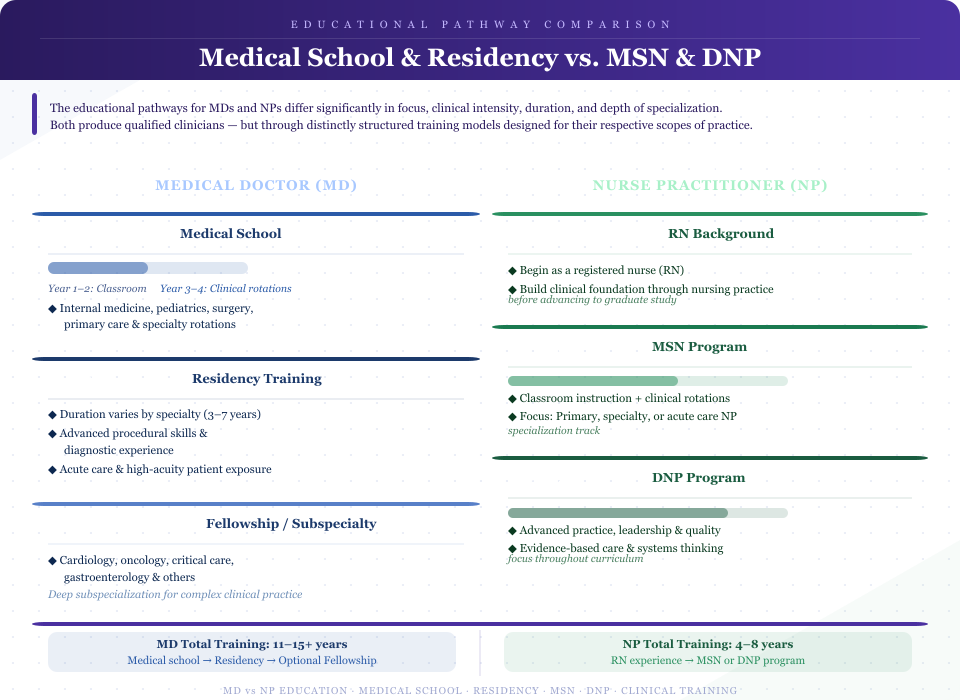
Comparing medical school and residency with MSN and DNP education
The educational pathways for MDs and NPs differ in focus, intensity, and duration:
- Medical Doctors (MDs):
- Complete four years of medical school, combining two years of classroom instruction with two years of clinical rotations across specialties such as internal medicine, pediatrics, surgery, and primary care.
- Follow medical school with residency training, which lasts 3–7 years depending on the chosen specialty, providing advanced procedural skills, diagnostic experience, and acute care exposure.
- Optional fellowships allow further specialization in areas such as cardiology, oncology, or critical care.
- Nurse Practitioners (NPs):
- Begin as registered nurses (RNs) and advance through either a Master of Science in Nursing (MSN) or Doctor of Nursing Practice (DNP) program.
- MSN programs typically last 2–3 years, while DNP programs extend to 3–4 years and emphasize advanced practice, leadership, and evidence-based care.
- Clinical rotations provide supervised experience in primary care, specialty care, or acute care, though the intensity and volume are generally less than in medical residencies.
Example: An NP in a family practice may complete hundreds of clinical hours in outpatient primary care, managing common conditions and preventive care, whereas an MD in internal medicine completes thousands of hours during medical school and residency, including inpatient rounds, emergency care, and specialty rotations.
Clinical training requirements for physicians and nurse practitioners
Clinical training prepares providers for independent or collaborative patient care, but the scope and depth vary:
- Physicians (MDs):
- Exposure to complex cases in multiple specialties.
- Extensive hands-on experience with diagnostic procedures, surgeries, and critical care interventions.
- Leadership of care teams, including NPs, PAs, and RNs.
- Nurse Practitioners (NPs):
- Supervised clinical rotations focused on assessment, management of common illnesses, preventive care, and chronic disease management.
- Depending on state regulations, NPs may practice independently or under physician oversight.
- Preparation emphasizes patient-centered care, health education, and chronic disease management rather than high-acuity procedural training.
Example: In a hospital setting, an MD may perform invasive procedures and manage life-threatening emergencies, while an NP provides ongoing patient care, medication management, and health education for chronic conditions. Both contribute to patient outcomes, but the scope of clinical training defines the depth of their responsibilities.
How long it takes to become a physician compared to becoming an NP
The timeline to practice independently differs substantially:
- Medical Doctors (MDs):
- Undergraduate degree: 4 years
- Medical school: 4 years
- Residency training: 3–7 years (depending on specialty)
- Total: 11–15 years before practicing independently in specialty care
- Nurse Practitioners (NPs):
- Undergraduate nursing degree (BSN): 4 years
- MSN program: 2–3 years or DNP program: 3–4 years
- Total: 6–8 years after undergraduate education to become a licensed NP
This comparison highlights that MDs undergo more extensive medical school and residency training, which prepares them for complex patient care, specialty procedures, and leadership roles within healthcare teams. NPs, in contrast, reach practice readiness faster while focusing on primary care, preventive care, and holistic management of common conditions.
How education and training influence the differences between nurse practitioners and doctors
The differences in education and training have direct implications for scope of practice, patient care responsibilities, and clinical decision-making:
- Scope of Practice: MDs have full authority to diagnose, treat, perform procedures, and manage complex or high-risk patients. NPs may have restricted practice depending on state regulations and often collaborate with MDs for complex cases.
- Clinical Decision-Making: Physicians are trained to handle complex diagnostic dilemmas, surgical procedures, and acute care scenarios. NPs focus on preventive care, chronic disease management, and primary care delivery.
- Team Roles: Extensive MD training positions physicians as team leaders, while NPs often serve as frontline primary care providers who extend the reach of healthcare systems.
- Patient Access and Outcomes: The combination of MDs’ advanced training and NPs’ ability to provide direct patient care improves healthcare access, continuity of care, and patient outcomes, particularly in underserved or rural settings.
Example: In a primary care clinic, an NP may provide routine health assessments, manage hypertension, and educate patients on lifestyle modifications, while the MD focuses on patients with complex cardiovascular disease requiring advanced diagnostics or interventions. Together, their complementary training enhances the efficiency and quality of patient care.
Scope of Practice: What Nurse Practitioners and Physicians Are Authorized to Do
The scope of practice defines the responsibilities, privileges, and limitations of healthcare providers in patient care. For MDs and NPs, understanding their respective scope of practice is critical to ensuring safe, effective, and efficient care delivery. Differences in training, licensure, and state regulations create distinctions in what nurse practitioners and physicians are authorized to do in clinical practice.
Understanding the nurse practitioner scope of practice
Nurse practitioners (NPs) are advanced practice nurses authorized to provide a broad range of healthcare services, often mirroring physician responsibilities within their areas of competency. The NP scope of practice typically includes:
- Assessing, diagnosing, and managing common acute and chronic conditions in patients of all ages.
- Prescribing medications and ordering diagnostic tests in accordance with state laws.
- Providing preventive care, including immunizations, health screenings, and counseling on lifestyle and disease prevention.
- Patient education and advocacy, empowering individuals to participate in their care and make informed decisions.
Example: A family nurse practitioner in a community clinic may independently manage a patient with type 2 diabetes, adjusting medications, monitoring blood sugar levels, providing dietary guidance, and coordinating care with a physician for complex complications.
The scope of practice varies depending on the NP’s level of advanced practice, specialty, and clinical experience. NPs in acute care or specialty practices may manage higher-acuity patients in collaboration with MDs or within structured clinical protocols.
Physician authority and decision-making responsibilities in medical practice
Medical doctors (MDs) are licensed physicians with full authority to provide independent clinical judgment and decision-making across all areas of medicine. Key aspects of physician authority include:
- Diagnosis and Treatment of Complex Conditions: MDs are trained to manage multi-system illnesses, surgical interventions, and high-acuity cases that require advanced medical judgment.
- Leadership of Care Teams: Physicians supervise NPs, physician assistants (PAs), and registered nurses, coordinating care for patients with complex needs.
- Medical Decision-Making: MDs evaluate diagnostic results, interpret laboratory and imaging studies, and determine the most appropriate treatment plans, often in collaboration with specialists.
Example: In a hospital intensive care unit, a physician may manage a patient with sepsis, determining the need for invasive interventions, while an NP assists by monitoring vital signs, administering medications, and providing patient education.
State regulations and how they affect NP practice authority
NP practice authority is strongly influenced by state regulations, which define the level of independence NPs have in delivering direct patient care. These regulations typically fall into three categories:
- Full Practice:
- NPs can evaluate, diagnose, treat, and prescribe medications without physician oversight.
- Common in states like Oregon, Arizona, and New Hampshire.
- Reduced Practice:
- NPs must have a collaborative agreement with a physician to perform at least one element of their practice, often prescribing medications.
- Restricted Practice:
- NPs require supervision or delegation from a physician for at least one critical element of practice, including diagnosis or treatment.
Example: In a full practice state, an NP can manage an entire primary care panel independently, while in a restricted state, the NP must consult with an MD before initiating certain treatments or prescribing controlled medications. These regulatory differences significantly affect how NPs and MDs collaborate in patient care.
Prescribing medications, ordering diagnostic tests, and managing treatment plans
A critical component of scope of practice is the ability to prescribe, order tests, and manage treatment plans:
- Nurse Practitioners:
- Authorized to prescribe medications, including chronic and preventive therapies, depending on state law.
- Can order laboratory tests, imaging, and screenings relevant to patient care.
- Develop treatment plans for common and chronic conditions, collaborating with MDs for complex or high-acuity cases.
- Medical Doctors:
- Have full authority to prescribe any medication and order any diagnostic test.
- Responsible for managing complex treatment plans across multiple specialties.
- Lead multidisciplinary care teams, guiding nurse practitioners and physician assistants in treatment implementation.
Example: A patient with hypertension may see an NP for ongoing management, medication adjustment, and monitoring. If complications like renal impairment arise, the NP consults the supervising MD, who may order additional imaging, adjust medications for comorbidities, and coordinate specialty referrals.
Roles in Patient Care: Comparing Nurse Practitioners and Doctors in Clinical Practice
The roles of nurse practitioners (NPs) and medical doctors (MDs) in direct patient care are complementary but differ in scope, focus, and decision-making. Both professions contribute significantly to healthcare delivery, yet their training, regulatory authority, and clinical focus shape the ways they interact with patients, manage care, and make clinical decisions.
How nurse practitioners and doctors provide patient care in healthcare settings
Nurse practitioners (NPs):
- Provide comprehensive patient care in a variety of settings, including primary care clinics, hospitals, outpatient specialty care, and community health centers.
- Focus on patient-centered and holistic care, assessing physical, psychological, and social factors affecting health.
- Deliver care that includes diagnosis, management of common acute and chronic illnesses, preventive care, and patient education.
- Collaborate with MDs, physician assistants (PAs), registered nurses (RNs), and other healthcare professionals to ensure continuity of care.
Medical Doctors (MDs):
- Provide care in specialty and primary care settings, often handling complex or high-acuity cases.
- Responsible for diagnosing, treating, and managing patients with conditions that may require advanced interventions or procedural care.
- Lead care teams, guiding NPs, PAs, and other healthcare providers in patient management.
- Evaluate diagnostic results, imaging studies, and laboratory findings, integrating them into advanced treatment plans.
Example: In an outpatient clinic, an NP may independently manage a patient with well-controlled asthma, adjusting medications and providing education on inhaler use. If the patient develops complications requiring specialty evaluation, the MD intervenes to provide advanced diagnostics and treatment planning.
The role of NPs in primary care, preventive medicine, and chronic disease management
Primary Care and Preventive Services:
- NPs often serve as the first point of contact for patients, providing routine check-ups, vaccinations, and screenings.
- Emphasize health promotion, disease prevention, and patient education, which reduces hospitalizations and improves long-term outcomes.
Chronic Disease Management:
- NPs manage conditions such as diabetes, hypertension, asthma, and cardiovascular disease, ensuring ongoing monitoring, medication adjustments, and lifestyle counseling.
- Provide continuity of care in both inpatient and outpatient settings, often coordinating with MDs for patients with complex comorbidities.
Specialty Practice:
- NPs may work in acute care, cardiology, oncology, pediatrics, or family care, applying advanced clinical knowledge to manage patient care collaboratively with physicians.
Example: A family nurse practitioner in a community health center monitors patients with type 2 diabetes, adjusting medications, providing dietary counseling, and coordinating referrals to endocrinologists or cardiologists as necessary.
Differences in clinical decision-making between NP and MD providers
While NPs and MDs share overlapping responsibilities, differences in clinical decision-making reflect the depth and focus of their respective training:
- Nurse Practitioners:
- Focus on managing common conditions, preventive care, and holistic patient-centered decision-making.
- Utilize evidence-based protocols and collaborative agreements with physicians when handling complex cases.
- Decision-making emphasizes patient education, adherence to treatment plans, and preventive strategies.
- Medical Doctors:
- Handle complex, multi-system diagnoses requiring advanced clinical reasoning.
- Make decisions involving surgical interventions, high-risk procedures, and specialty-specific care.
- Lead care teams and assume final responsibility for patient outcomes, particularly in acute care and specialty settings.
Example: In a patient with heart failure, an NP may adjust diuretics and manage daily symptoms, while an MD decides on advanced interventions like device implantation, advanced imaging, or hospital admission.
When patients may see a nurse practitioner versus a physician
The choice between seeing an NP or an MD depends on patient needs, condition complexity, and healthcare setting:
- Seeing a Nurse Practitioner:
- Suitable for routine primary care, preventive services, wellness visits, and management of stable chronic diseases.
- Ideal for holistic care, patient education, and lifestyle counseling.
- Frequently utilized in underserved areas where physician access is limited.
- Seeing a Physician (MD):
- Necessary for complex or acute conditions, specialty care, or situations requiring advanced diagnostic or procedural interventions.
- Appropriate for patients with multi-system comorbidities, surgical needs, or high-acuity illnesses.
Example:
- A patient with controlled hypertension may see an NP for regular follow-ups, lab monitoring, and medication adjustments.
- If the patient experiences chest pain and requires advanced diagnostics or intervention, an MD or cardiologist evaluates and manages the care.
This complementary model highlights the collaborative nature of modern healthcare, where nurse practitioners and physicians work together to improve access, efficiency, and patient outcomes.
Salary and Career Outlook for Nurse Practitioners and Physicians
The salary and career outlook for nurse practitioners (NPs) and medical doctors (MDs) reflect differences in education, training, scope of practice, and responsibilities. Understanding these differences is essential for healthcare workforce planning, career decision-making, and evaluating the sustainability of primary care and specialty care services.
Average nurse practitioner salary compared with physician salary
- Nurse Practitioners:
- According to the Bureau of Labor Statistics, the median annual salary for NPs in 2025 is approximately $120,000, though this varies widely depending on specialty, experience, and location.
- Family nurse practitioners and those in primary care settings may earn slightly less than NPs in acute care or specialty practice, such as cardiology or oncology.
- Example: An NP working in a rural primary care clinic may earn $110,000 annually, while an NP in a metropolitan acute care facility may earn $135,000 due to higher patient acuity and demand.
- Physicians (MDs):
- Physicians have a broader range of salaries based on specialty and experience. The median annual salary for primary care physicians is approximately $220,000, whereas specialists such as cardiologists, anesthesiologists, or orthopedic surgeons may earn between $350,000 and $500,000+ annually.
- Example: A primary care MD in a community clinic may earn $210,000 annually, while a surgical specialist in a hospital setting may earn $450,000 due to procedural complexity and demand.
These differences reflect the longer training periods, higher education costs, and expanded scope of practice that MDs and physicians undertake compared to nurse practitioners.
Factors influencing salary including specialty, experience, and location
Several factors impact compensation for both NPs and MDs:
- Specialty:
- NPs in family care or primary care typically earn less than those in acute care or specialty NP roles.
- MD salaries vary dramatically; specialists consistently earn more than primary care physicians.
- Experience and Advanced Practice:
- Years of experience, advanced certifications, or holding a DNP or doctor of nursing practice degree can increase NP salaries.
- Physicians with fellowship training, board certification, and leadership roles in hospitals or clinics may earn higher salaries.
- Location and Care Settings:
- Urban areas with high demand for healthcare providers may offer higher salaries.
- Rural or underserved areas often provide loan repayment programs, signing bonuses, and competitive salaries to attract both NPs and MDs.
Example: An NP with a DNP working in a metropolitan cardiology practice may earn $140,000 annually, whereas an MD in the same specialty in a rural hospital may earn $180,000, supplemented with incentives for working in an underserved area.
Job demand for nurse practitioners, physicians, and physician assistants
- Nurse Practitioners:
- Demand is growing rapidly due to primary care shortages, aging populations, and increasing prevalence of chronic diseases.
- The BLS projects a 31% growth in NP employment from 2025–2035, significantly higher than the national average for all occupations.
- Physicians (MDs):
- Demand is steady, with higher growth in primary care, geriatrics, and underserved areas.
- Physician shortages, particularly in family medicine and internal medicine, create opportunities for collaborative practice with NPs.
- Physician Assistants (PAs):
- Also experiencing high demand due to healthcare expansion and reliance on team-based care models.
Example: A hospital system in a rural county may employ both NPs and MDs to manage chronic disease patients. NPs handle routine follow-ups and preventive care, while MDs focus on complex or acute cases, reflecting complementary workforce utilization.
Workforce trends affecting primary care providers and advanced practice professionals
Several trends are shaping the career outlook for both NPs and MDs:
- Team-Based and Collaborative Care Models:
- Hospitals and clinics increasingly rely on nurse practitioners, physician assistants, and MDs working together to expand access to care and improve efficiency.
- Expansion of NP Autonomy:
- Many states are moving toward full practice authority, allowing NPs to provide primary care without physician oversight, increasing job opportunities and responsibilities.
- Aging Population and Chronic Disease Burden:
- The growing prevalence of chronic illnesses like diabetes, hypertension, and cardiovascular disease increases demand for both NPs and MDs.
- Telehealth and Remote Care:
- NPs and MDs are increasingly utilizing telemedicine to provide care, particularly in rural or underserved areas, expanding both patient access and workforce flexibility.
Example: An NP in telehealth may manage virtual appointments for chronic disease follow-ups, while an MD provides specialized consultation for complex cases. This collaborative model enhances patient outcomes, job satisfaction, and care efficiency.
Choosing the Right Healthcare Provider: NP vs Physician for Patient Needs
Selecting the appropriate healthcare provider is essential for ensuring safe, effective, and timely care. Understanding the differences between nurse practitioners (NPs) and physicians (MDs) can help patients make informed decisions and optimize direct patient care, especially in primary care and specialty settings.
When patients should see a nurse practitioner for primary care services
Nurse practitioners are highly trained advanced practice nurses who can manage a wide range of primary care needs. Patients may choose an NP when:
- Routine Health Maintenance and Preventive Care:
- NPs provide wellness exams, vaccinations, screening tests, and lifestyle counseling.
- Example: A patient seeking routine check-ups, cholesterol screening, or annual wellness exams may be effectively managed by an NP.
- Chronic Disease Management:
- NPs manage conditions such as hypertension, diabetes, asthma, and chronic obstructive pulmonary disease (COPD).
- Example: A family nurse practitioner in a primary care clinic monitors blood pressure, adjusts medications, and educates a patient with type 2 diabetes on diet and exercise.
- Patient Education and Holistic Care:
- NPs emphasize health education, disease prevention, and patient empowerment, helping individuals make informed choices about their care.
- Example: An NP may counsel patients on smoking cessation, weight management, or stress reduction strategies.
- Accessible and Continuous Care:
- NPs often offer same-day appointments, telehealth consultations, and flexible scheduling, increasing patient access to care.
Situations where a medical doctor or specialist may be necessary
While NPs provide extensive primary and specialty care, physicians are essential in managing:
- Complex, Acute, or High-Risk Conditions:
- Situations requiring specialized diagnostic evaluation, surgical procedures, or intensive inpatient care.
- Example: Chest pain potentially indicating a myocardial infarction requires evaluation by a licensed physician or cardiologist.
- Multi-System or Severe Comorbidities:
- Patients with multiple chronic illnesses or unstable conditions benefit from an MD’s advanced decision-making and comprehensive care planning.
- Example: A patient with heart failure, kidney disease, and diabetes may require physician-led coordination for complex medication management and specialist referrals.
- Specialty Care Needs:
- Certain procedures, imaging interpretations, and treatments are within the exclusive purview of physicians or specialists, including surgeons, oncologists, and anesthesiologists.
Advantages of nurse practitioners and physicians in patient-centered care
Both NPs and MDs bring unique strengths to patient-centered care:
- Nurse Practitioners:
- Provide holistic care emphasizing prevention, patient education, and continuity of care.
- Enhance access to care in underserved or rural areas where physicians may be limited.
- Often spend more time in consultations, improving patient understanding and adherence.
- Physicians (MDs):
- Offer advanced clinical expertise, managing complex conditions and performing procedures.
- Lead multidisciplinary care teams, coordinating NPs, physician assistants, and other healthcare professionals.
- Provide high-acuity care and specialist referrals that NPs may not be authorized to handle independently.
Example: In a primary care clinic, an NP may provide follow-up care and preventive counseling for a patient with asthma, while an MD evaluates acute exacerbations requiring hospitalization or advanced diagnostics. This team-based approach ensures comprehensive and high-quality care.
Understanding the difference between a nurse practitioner and a doctor when selecting a healthcare provider
Patients should consider the following when choosing between an NP and an MD:
- Complexity of Medical Needs:
- For routine, preventive, or chronic care, NPs are highly effective providers.
- For complex, acute, or specialty needs, an MD or specialist may be required.
- Scope of Practice and Authority:
- NPs may prescribe medications, order tests, and manage treatment plans, but state regulations may require physician oversight for certain procedures or high-risk cases.
- Physicians have full authority to diagnose, treat, and prescribe across all areas of medicine.
- Access and Continuity of Care:
- NPs often provide faster access and longer consultation times, enhancing preventive care and chronic disease management.
- MDs provide expert decision-making for complex cases, ensuring patient safety and comprehensive management.
- Collaborative Care Models:
- Many healthcare settings use team-based approaches, where NPs and MDs work together to maximize efficiency, access, and patient outcomes.
- Example: A patient may see an NP for routine follow-ups and education while receiving physician oversight for advanced diagnostics or complex interventions.
Collaborative Healthcare: How Nurse Practitioners and Physicians Work Together
Modern healthcare increasingly relies on collaborative, team-based models, in which nurse practitioners (NPs), medical doctors (MDs), and physician assistants (PAs) work together to provide high-quality, efficient, and patient-centered care. Collaboration optimizes the strengths of each provider, enhances direct patient care, and ensures access to both preventive and specialty services.
Team-based care involving nurse practitioners, physicians, and physician assistants
Interdisciplinary collaboration has become the standard in healthcare delivery, particularly in primary care, acute care, and specialty settings.
- Roles within the team:
- Nurse Practitioners: Provide primary care, preventive services, chronic disease management, patient education, and follow-ups.
- Medical Doctors: Lead complex diagnostic and treatment planning, manage high-acuity patients, and supervise clinical decision-making.
- Physician Assistants: Support physicians and NPs by performing procedures, assisting in surgeries, and managing patient care under supervision.
- Example: In a hospital cardiology unit, an MD may oversee complex heart failure cases, a PA performs routine follow-ups and imaging interpretation, and an NP manages patient education, lifestyle counseling, and medication adjustments. This integrated approach ensures continuous monitoring and comprehensive care.
How collaboration between NPs and MDs improves patient care outcomes
Collaboration between nurse practitioners and physicians results in measurable benefits for patients and healthcare systems:
- Enhanced Access to Care:
- NPs expand patient access, especially in underserved or rural areas, allowing physicians to focus on complex or high-risk cases.
- Improved Chronic Disease Management:
- NPs provide ongoing monitoring for diabetes, hypertension, asthma, and cardiovascular disease, while physicians manage complications and advanced interventions.
- Reduction in Hospital Readmissions:
- Shared responsibility between NPs and MDs ensures timely follow-ups, patient education, and adherence to care plans, reducing readmissions and adverse events.
- Holistic and Patient-Centered Care:
- NPs contribute patient-centered communication and preventive care strategies, complementing the physicians’ focus on clinical expertise and advanced interventions.
Example: In a primary care clinic, a patient with COPD sees an NP for routine management, smoking cessation counseling, and medication adherence. The supervising MD reviews complex cases of exacerbation, adjusts treatment protocols, and coordinates specialist referrals. This partnership enhances quality of care and patient outcomes.
Interdisciplinary healthcare teams in hospitals and primary care settings
Hospitals and primary care practices increasingly rely on interdisciplinary teams to manage diverse patient populations:
- Composition of teams:
- NPs, MDs, PAs, registered nurses (RNs), pharmacists, social workers, and other allied health professionals.
- Functions:
- Coordinating care across inpatient and outpatient settings, ensuring continuity, and addressing social determinants of health.
- Implementing protocols and evidence-based practices collaboratively to improve safety and efficiency.
Example: In a hospital setting, an NP may lead patient education rounds on medication adherence, an MD oversees complex surgical patients, and PAs assist with procedures and documentation. Together, the team reduces errors, improves patient satisfaction, and optimizes resource use.
The future of collaboration between doctors and nurse practitioners in modern healthcare
The future of healthcare emphasizes collaborative practice, leveraging the strengths of NPs and MDs to address evolving patient needs:
- Expansion of NP Autonomy:
- As more states adopt full practice authority, NPs increasingly manage primary care independently while collaborating with MDs for complex cases.
- Telehealth Integration:
- NPs and MDs are jointly delivering remote consultations, chronic disease monitoring, and follow-up care, extending access to rural and underserved populations.
- Focus on Preventive and Population Health:
- Collaborative teams can implement community-based programs, preventive screenings, and chronic disease education, reducing overall healthcare costs and improving population health outcomes.
- Educational and Mentorship Opportunities:
- Physicians mentor NPs and PAs in specialty practice, while NPs contribute expertise in holistic care, patient engagement, and primary care innovation, fostering professional growth and cross-disciplinary learning.
Example: A healthcare system may implement a collaborative chronic care program, where NPs manage diabetes education and routine follow-ups, MDs oversee treatment adjustments for complications, and PAs assist with lab monitoring and patient communications. This model improves patient adherence, reduces hospitalizations, and enhances team efficiency.
Conclusion
The comparison between MDs and NPs highlights the evolving landscape of modern healthcare, where nurse practitioners, physicians, and other healthcare professionals work together to meet the diverse needs of patients. While medical doctors (MDs) bring extensive education, residency training, and specialized expertise to manage complex and high-acuity cases, nurse practitioners (NPs) contribute advanced practice skills, preventive care, and patient-centered management of chronic diseases. Both providers are essential to creating accessible, efficient, and high-quality care systems.
Key differences between NPs and MDs lie in education, scope of practice, clinical decision-making, and patient care responsibilities. MDs complete four years of medical school, residency, and often fellowships, enabling them to diagnose and treat complex conditions across multiple specialties. NPs follow a path from registered nurse to advanced practice nurse, typically completing MSN or DNP programs, allowing them to independently provide primary care, manage chronic conditions, prescribe medications, and deliver holistic care.
The scope of practice for NPs varies by state, with some jurisdictions granting full practice authority and others requiring physician oversight. MDs, as licensed physicians, have full authority to diagnose, treat, and manage patient care in all clinical settings. These differences influence how patients interact with care providers and determine the appropriate professional for specific health needs.
Collaboration between NPs and MDs has become a cornerstone of effective healthcare delivery. Team-based care models allow NPs to extend access to primary care, preventive services, and chronic disease management, while MDs provide leadership, advanced diagnostics, and specialty interventions. Integrating nurse practitioners into care teams improves patient outcomes, reduces hospital readmissions, and enhances the overall efficiency of healthcare systems.
From a workforce perspective, both professions offer promising career opportunities. NPs are experiencing rapid growth in demand due to primary care shortages, while MDs continue to be sought after in specialty areas and for complex patient management. Salary and employment trends reflect differences in education, training, and scope of practice, but both careers remain critical for sustaining high-quality, patient-centered care.
Ultimately, understanding the differences and complementary roles of NPs and MDs empowers patients, healthcare administrators, and policymakers to optimize care delivery. By leveraging the unique expertise of each provider and fostering collaboration, healthcare systems can ensure accessible, comprehensive, and high-quality services for all populations. Whether in primary care clinics, hospitals, or specialty practices, the integration of nurse practitioners and physicians represents the future of effective, team-based, and patient-focused healthcare.
Frequently Asked Questions
What does NP mean for a doctor?
NP stands for Nurse Practitioner, an advanced practice registered nurse who can diagnose, treat, and manage patient care, often in collaboration with a physician. For a doctor, NPs are colleagues and care partners who extend access to primary care and help manage patient populations.
What is the lowest rank of a doctor?
The lowest rank of a doctor in clinical practice is typically a resident physician—a medical doctor who has completed medical school and is undergoing supervised residency training in a specialty.
Which one is better, MD or PhD?
- MD (Doctor of Medicine): Focused on clinical practice, patient care, diagnosis, and treatment.
- PhD (Doctor of Philosophy): Focused on research, academia, and generating new knowledge in a field.
Neither is “better”; it depends on career goals—MDs treat patients, while PhDs conduct research and teach.
Which doctor is better, MD or MS?
- MD (Doctor of Medicine): A licensed physician authorized to diagnose and treat patients.
- MS (Master of Science): A master’s degree, not a medical license, usually in a science or healthcare-related field.
For practicing medicine, an MD is required. MS is not a clinical physician degree, so an MD is “better” for patient care.
